-
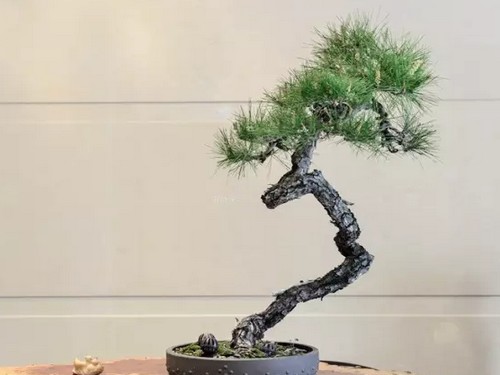
A Complete Guide to Sourcing and Cultivating Huangshan Pine Bonsai
The Huangshan pine (Pinus hwangshanensis) is lush and green, full of vitality, with upright trunks reaching straight up to the sky, slender needle-like leaves that comb the wind and screen the emerald green, and evergreen through all four seasons. It is one of the best ornamental tree species among pines. The great Tang dynasty poet Bai Juyi once praised its character, saying: Graceful are the pines on the mountain, each one facing the morning sun, dense and towering to the heavens, with branches a hundred chi long; at year's end the mountain is covered in snow
-
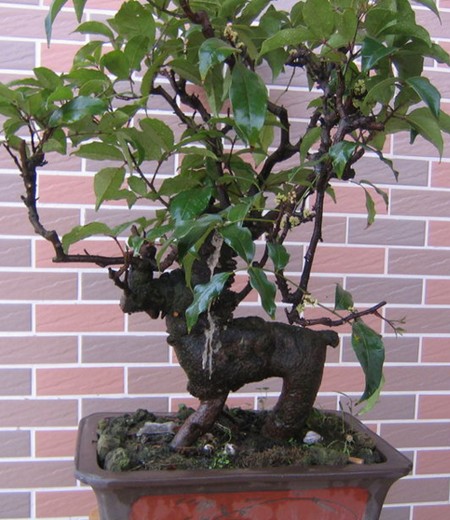
Detailed Explanation of Key Cultivation Techniques for Shuangmianzhen (Zanthoxylum nitidum) Bonsai
Shuangmianzhen (Zanthoxylum nitidum) is a woody vine of the genus Zanthoxylum in the family Rutaceae; hooked prickles grow on both surfaces of the stems, branches, lower leaf rachises and the midribs of the leaflets. Shuangmianzhen has a thick main root with many branch roots; the outer bark of the root is mud-yellow, the inner bark is sulfur-yellow, soft, with a very bitter taste that numbs the tongue. It is best to choose a sunny site with good drainage
-
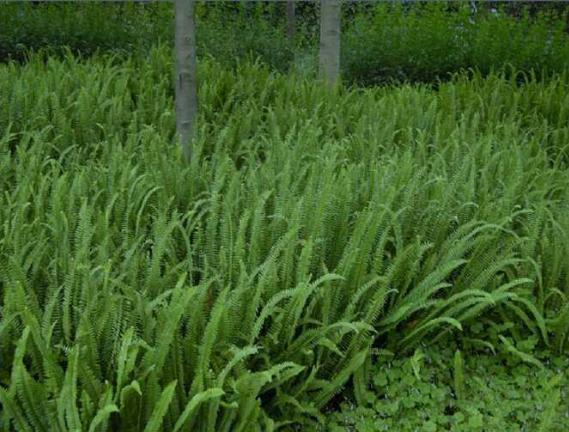
Can the Tuberous Sword Fern (Shi Huang Pi) Be Eaten? Benefits, Effects, and Care Methods
Tuberous sword fern leaves grow in clusters, dark brown, slightly glossy; the blade is linear-lanceolate or narrowly lanceolate, once-pinnate, lanceolate, with sparse shallow blunt serrations along the leaf margin. So can the tuberous sword fern (Shi Huang Pi) be eaten? What are the benefits and effects of the tuberous sword fern? How do you care for the tuberous sword fern? Can the tuberous sword fern (Shi Huang Pi) be eaten? Yes, it can be eaten.
-
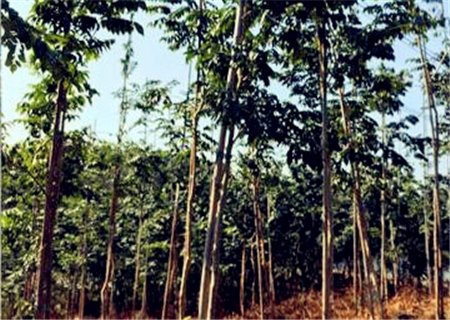
What is the current price per jin of Huanghuali (rosewood) and the price per sapling, and how is it planted?
Huanghuali saplings range in color from orange-yellow to purplish-red, and those with yellowish-brown heartwood are considered the best. The wood is hard in texture and beautiful in grain, and has long been regarded as the finest of woods. Most of what we commonly see are Vietnamese Huanghuali saplings produced in Vietnam. So what is the current market price of Huanghuali per jin?
-
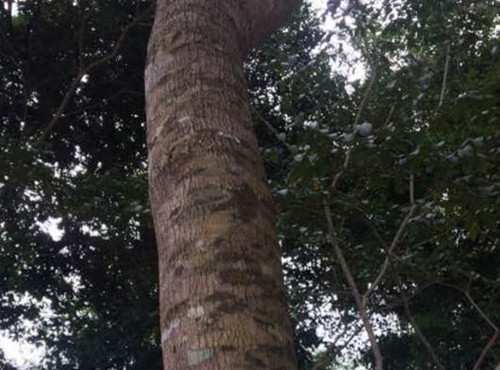
Huanghuali tree sapling prices and planting methods, and why they are so expensive, plus their effects and functions
Huanghuali trees generally refer to Dalbergia odorifera, native to Hainan, China (central and southern parts). They grow in sparse forests on hillsides at mid-altitude, at forest edges, or on open ground beside markers. They have relatively high economic value and medicinal value. So, how much does one Huanghuali sapling cost? How are they planted? Why are they so expensive? It is understood that
-
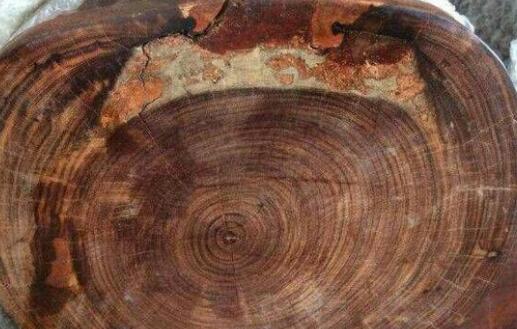
How much does precious Huanghuali wood generally cost, and how do you tell real from fake and care for beads?
Huanghuali wood, whose scientific name is Dalbergia odorifera, also known as Hainan rosewood or Hainan Huanghuali. Huanghuali was the main material for Ming and Qing hardwood furniture, and because of its warm yellow color, fine dense texture, soft and beautiful grain, and refreshing fragrance, it was greatly favored by Ming and Qing craftsmen. So how much does Huanghuali wood cost? How do you tell real from fake?
-
What are the key technical points for growing Jinsi Huangju (Golden Silk Imperial Chrysanthemum)?
How to Grow Jinsi Huangju (Golden Silk Imperial Chrysanthemum) 1. Choosing and Preparing the Site. Chrysanthemums are not demanding about soil. They grow best in well-drained, fertile, loose soil rich in humus. Land that is low-lying or saline-alkaline is not suitable, and continuous cropping should be avoided.
-

Zhonghuang 13, the new high-yield soybean variety with the largest promotion area
The new high-yield soybean variety "Zhonghuang 13", supported by the national "Institute Directors Fund" (basic research operating expenses for public welfare research institutes), has now become the soybean variety with the largest promotion area in China, reaching a record 10.87 million mu in 2007. Zhonghuang 13 (National Approved Soybean 2001009) was bred under the leadership of the famous Chinese soybean breeder, Researcher Wang Lianzheng of the Chinese Academy of Agricultural Sciences, and was recommended by the Ministry of Agriculture as a national key soybean variety for three consecutive years from 2005 to 2007. It was developed by sexual hybridization using Yudou 8 as the female parent and Zhongzuo
-
Introduction to the New Soybean Variety Qi Huang 26
Qi Huang 26 was bred by the Crop Research Institute of the Shandong Academy of Agricultural Sciences and was approved by the Shandong Provincial Crop Variety Approval Committee in 1999. Characteristics: This variety is a medium-late maturing high-yield soybean, with a growth period of 103 days, determinate podding habit, erect and compact plant type, plant height 75.3 cm, 2.5 effective branches, 14.5 nodes on the main stem, podding height 12.6 cm, 46 effective pods per plant, and 99 seeds per plant. It is moderately resistant to soybean cyst nematode and resistant to mosaic virus disease and downy mildew. It is semi-deciduous, does not shatter pods, and has strong lodging resistance. Suitable
-
Introduction to the soybean variety Jihuang 13 (formerly Jihuang 103)
Characteristics: White flowers, brown pubescence, lanceolate leaves, semi-determinate podding habit. Average growth period 139 days, plant height 102.7 cm, effective branches 1.3, effective pods per plant 41.2, seeds per plant 91.6, seed weight per plant 17.8 g, 100-seed weight 19.9 g. Yellow seed coat, brown hilum, round seeds. Upon inoculation identification by the Soybean Research Center of the Jilin Academy of Agricultural Sciences, moderately resistant to soybean mosaic virus strain SMV1, moderately susceptible to mixed SMV strains, and moderately susceptible to soybean cyst nematode race 4. Average
条件筛选