Can the Tuberous Sword Fern (Shi Huang Pi) Be Eaten? Benefits, Effects, and Care Methods
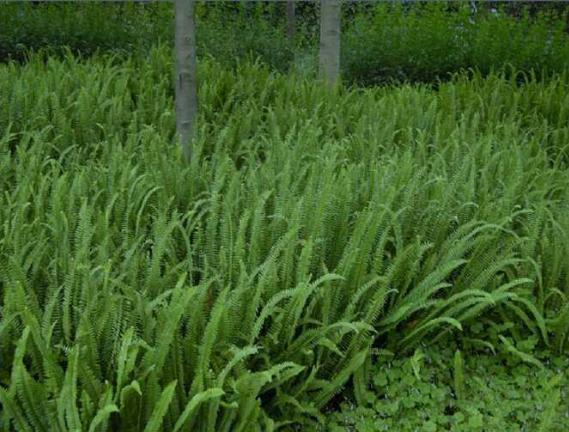
Tuberous sword fern leaves grow in clusters, dark brown, slightly glossy; the blade is linear-lanceolate or narrowly lanceolate, once-pinnate, lanceolate, with sparse shallow blunt serrations along the leaf margin. So can the tuberous sword fern (Shi Huang Pi) be eaten? What are the benefits and effects of the tuberous sword fern? How do you care for the tuberous sword fern?
I. Can the Tuberous Sword Fern (Shi Huang Pi) Be Eaten?
Yes, it can be eaten. The tuberous sword fern is also called centipede fern, round bird's-nest fern, comb fern, and Shi Huang Pi; it is native to tropical and subtropical regions. It often grows on the ground and as an epiphyte in rock crevices and on tree trunks beneath forest by streams. It prefers a warm, moist, and semi-shaded environment. The tuberous sword fern is an ornamental fern widely used in China and abroad. Besides garden applications, the tuberous sword fern is also a traditional Chinese medicinal herb and can be eaten.
The fruit of the tuberous sword fern can also be eaten. The part that can be eaten is the tuber; it can be eaten raw or cooked. Its taste is mild with no obvious odor. Eating it when thirsty can help replenish water.
II. What Are the Benefits and Effects of the Tuberous Sword Fern?
1. Rich in nutrients
It is the leaf or whole plant of the tuberous sword fern, a plant of the family Davalliaceae. The root tubers contain fern-9(11)-ene, β-sitosterol, diploptene, β-sitosterol-β-D-glucoside, β-sitosterol palmitate, and cycloartenol; the above-ground parts contain sequoyitol. The whole plant also contains 24-ethylcholesterol, 24-methylcholesterol, 24-ethylcholesta-5,22-dienol, cholesterol, and trace amounts of 24-methylcholesta-5,22-dienol.
2. Benefits and effects
(1) Clears heat, drains dampness, reduces swelling, and removes toxins. Treats jaundice, strangury with turbid urine, painful difficult urination, dysentery, hernia, acute mastitis, scrofula, scalds, and cuts. For internal use: decoct in water, 2 to 5 qian (1 to 2 liang if fresh). For external use: pound and apply.
(2) "Guizhou Folk Medicines": Clears heat. Treats cuts, vomiting blood, strangury with turbid urine, and infertility.
(3) "Sichuan Chinese Materia Medica": Treats acute mastitis and postpartum breast swelling.
(4) "Quanzhou Materia Medica": Clears heat and removes toxins, promotes urination. Treats damp-heat jaundice, difficult urination, regurgitation and dysphagia, and hernia.
(5) "New Selection of Practical Chinese Herbal Medicines of Guangxi": Treats lung-heat cough, centipede bites, scald and burn injuries, infantile malnutrition, and lymphoid tuberculosis.
3. Clinical applications
(1) To treat strangury with turbid urine, dribbling urination, and unbearable pain: centipede fern (dried) 5 qian, Chinese fir tips 21 pieces, common selfheal 5 qian, wild radish greens 4 qian. Simmer in water and take with white sugar. ("Guizhou Folk Medicines").
(2) To treat cuts: pound the tender leaves of centipede fern and apply. ("Guizhou Folk Medicines").
(3) To treat breast swelling and pain: pound the tender stems and leaves of the tuberous sword fern into a paste and apply. ("Sichuan Chinese Materia Medica").
(4) To treat damp-heat jaundice: dried whole plant of round bird's-nest fern 5 qian to 1 liang. Decoct in water and take.
(5) To treat dysphagia and regurgitation: dried whole plant of round bird's-nest fern ground into powder, 3 qian. Take three times daily, swallowed with wine.
(6) To treat chronic dysentery: fresh leaves of round bird's-nest fern 3 liang. Pound them, mix well with rice wash water, and squeeze out the juice to take. (Formulas ④ and below are from "Fujian Chinese Herbal Medicines").
III. How Do You Care for the Tuberous Sword Fern?
The tuberous sword fern is an ornamental fern widely used in China and abroad. It is easy to cultivate and grows vigorously, and is widely used for open-field cultivation and indoor potted foliage display. It is especially interesting when grown as a hanging basket. The tuberous sword fern is also a major cut-foliage material. Its tubers contain starch and are used medicinally to treat colds, coughs, enteritis, and diarrhea, while the whole plant treats five types of strangury, white turbid urine, abnormal uterine bleeding, and leukorrhea.
Many cultivated species of the genus Nephrolepis are among the most widely used ferns in the world. China has 5 species, distributed across the vast region south of the Yangtze River. They grow beneath forest by streams, in rock crevices, or as epiphytes on tree trunks, and often form patches in the wild. The main ornamental species include: the tall tuberous sword fern, which has produced hundreds of cultivars; the first mutant discovered in 1870 is the famous Boston fern. These cultivars are extremely suitable for potted and hanging cultivation and are ideal materials for interior decoration, popular around the world, but most species are sterile and must be propagated vegetatively; and the long-leaf sword fern, a large fern, terrestrial or epiphytic, with very strong growth vigor.
The tuberous sword fern prefers bright indirect light and can be placed beside a north-facing indoor window. Its suitable growing temperature is 15°C to 21°C at night and 24°C to 26°C during the day. The tuberous sword fern is relatively drought-tolerant, but during the growing season it needs sufficient water and moist air, with humidity of 506f}"60bf} being enough. The tuberous sword fern is suitable for loose, breathable neutral or slightly acidic soil. The growing medium can be made from 1 part leaf mold, 1 part plain sand, and 2 parts vermiculite. During vigorous growth, apply liquid fertilizer 1 to 2 times per month. The tuberous sword fern grows very fast, and its roots quickly fill the pot, so it must be repotted every year. The most common way to propagate the tuberous sword fern is by division in spring together with repotting. The tuberous sword fern has many horizontal creeping stolons; press them with a clod of soil or fix them to the soil surface with wire hooks, and they will produce small plantlets, which can be separated from the mother plant and planted once they reach a certain size. The fern's spherical tubers can also develop into small plantlets. When cultivated on land, the tuberous sword fern can quickly establish natural colonies through the growth of its stolons. Spore propagation is also a widely used method.
IV. How to Select the Tuberous Sword Fern
The tuberous stem is spherical or oblate, about 2cm in diameter; the surface is densely covered with yellow-brown woolly scales, and circular scars left after the scales fall from the rhizome can be seen; after the scales are removed, the surface appears bright yellow with obvious irregular wrinkles; the texture is hard. Leaves grow in clusters; the petiole is slightly twisted, 6-9cm long, with bright brown scales on the lower part; the leaf rachis is brownish yellow, and the blade is often shrunken, linear-lanceolate when flattened, 30-60cm long and 3-5cm wide, once-pinnately divided; the pinnae are sessile, lanceolate, about 2cm long and about 6mm wide, with sparse shallow blunt teeth along the margin; the lateral veins on both sides each have 1 row of sori at the tip. Slight odor, bitter taste.
V. How to Store the Tuberous Sword Fern
It can be placed in a cool, ventilated place and kept in a dry place.