How much does precious Huanghuali wood generally cost, and how do you tell real from fake and care for beads?
Huanghuali wood, whose scientific name is Dalbergia odorifera, also known as Hainan rosewood or Hainan Huanghuali. Huanghuali was the main material for Ming and Qing hardwood furniture, and because of its warm yellow color, fine dense texture, soft and beautiful grain, and refreshing fragrance, it was greatly favored by Ming and Qing craftsmen. So how much does Huanghuali wood cost? How do you tell real from fake? How do you care for Huanghuali bead bracelets?
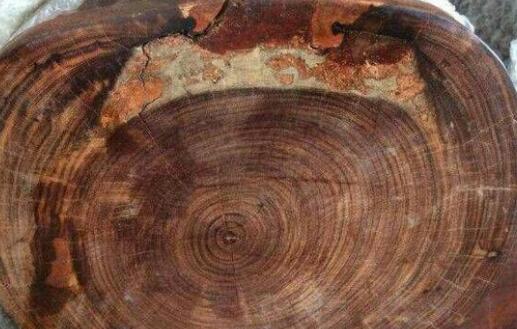
Huanghuali can also be made into bead bracelets, with a fragrant scent. It is very popular with the public. The grain and color of Hainan Huanghuali bead bracelets. Generally speaking, Huanghuali has the grain of rosewood and the base color of rosewood. That noble and elegant, steady and imposing perfectly combined pattern is an important part of it. The grain changes in many ways, like floating clouds and flowing water, giving people a sense of softness and quietness; or the irregular scars formed during growth create the ever-changing "ghost face," but not all Huanghuali has ghost faces. The color of Huanghuali always has a touch of golden yellow, and over time it becomes purplish red or brownish red. Huanghuali bead bracelets have clear grain and elegant color.
Huanghuali is not only a precious wood but also a traditional Chinese medicinal material, with special medicinal effects. Li Shizhen's "Compendium of Materia Medica" from the Ming Dynasty, as well as "Hainan Materia Medica" and "Classified Materia Medica," all record that Jiangxiang has the effects of promoting qi and activating blood, stopping bleeding and relieving pain, and dispelling foulness, and can treat vomiting, heart and stomach qi pain, coronary heart disease, high blood pressure, skin allergies, and other conditions. The Li people of Hainan use Huanghuali wood shavings to make pillows that can relax muscles and activate blood; teapots and water cups made from Huanghuali can promote qi and resolve phlegm, and their fragrant scent makes people feel refreshed.
What is the market price per jin of Huanghuali raw wood?
The current market price of Hainan Huanghuali wood is tens of millions of yuan per ton, Vietnamese Huanghuali wood is 600,000 to 1,000,000 yuan per ton, the market price of Hainan Huanghuali wood is 5,000 yuan per jin, and Vietnamese Huanghuali wood is 300 to 500 yuan per jin.
Among Huanghuali woods, the most precious is none other than Hainan Huanghuali, known as "wood gold." Huanghuali wood is mainly produced in Hainan Province, China, and its wood is more precious than red sandalwood.
Huanghuali wood is extremely stable in nature; regardless of cold or heat it does not deform, crack, or bend, and it has a certain toughness, making it suitable for all kinds of shaped furniture, such as three-curved legs, whose curvature is very great and can only be made with Huanghuali wood, while other woods are hard-pressed to match.
Huanghuali wood bead bracelet prices
The prices of different grades of Huanghuali bead bracelets vary greatly. Today let us take the price of a 2.0cm*12-bead bracelet as an example:
1. Huanghuali scrap-material bead bracelets
Huanghuali bead bracelets made from scrap material are fairly ordinary, with inconsistent colors, and are also relatively the most cost-effective in price. Market prices range from 300 to 1,000 yuan. They cannot be considered aesthetically pleasing and can only be used for simple handling and play.
2. Same-material
Same-material Huanghuali bead bracelets are those with almost no grain. Current market prices range from 600 to 2,000 yuan. Although such Huanghuali bead bracelets are slightly better than those made from scrap material, they cannot be considered beautiful, because they lack the grain unique to Huanghuali and are missing this iconic beauty.
3. Huanghuali with grain
Such Huanghuali bead bracelets are the most popular and accepted by consumers, because they have both the iconic grain of Huanghuali and a moderate price, and they are also the most common Huanghuali bead bracelets on the market now. The price of such Huanghuali bead bracelets ranges from 2,000 to 6,000 yuan.
4. Oil pear Huanghuali
Such Huanghuali bead bracelets can be considered upper-grade among Huanghuali. In addition to having the aesthetic grain that Huanghuali also has, they also have the oily feel that many people desire. Such Huanghuali bead bracelets are rare, and whether for handling and play or for collection, they are very rare. The current market price ranges from 6,000 to 20,000 yuan.
5. Ghost-eye Huanghuali bead bracelets
Such Huanghuali bead bracelets are of an even higher grade. The key point is that in recent years the price increase of such Huanghuali bead bracelets on the market has been astonishing. At present, the price fluctuates between 10,000 yuan and 30,000 yuan, and for high-quality ones there is no upper limit. People who own such bracelets can be considered rich.
6. Burl bead bracelet prices
Burl is an extremely scarce variety. Burl, whether Vietnamese or Hainanese, is equally precious, so it is rarely distinguished whether it is Vietnamese or Hainanese. At present, the price of a 20mm burl bead bracelet is between 15,000 and 80,000, which can be considered top-grade Huanghuali, fascinating countless people, and the price is also very high.
How to care for Huanghuali wood bead bracelets
In the process of wearing Huanghuali bead bracelets, maintenance is also very important. Because Buddhist bead bracelets are made of Huanghuali wood, and wooden products themselves have the characteristics of not being corrosion-resistant and being prone to cracking, the maintenance of wooden products becomes relatively difficult and important.
First, try to avoid the Buddhist beads getting wet, because after the beads take in water they will expand and are also prone to breeding large amounts of bacteria, and over time the beads will rot.
Second, Huanghuali bead bracelets should avoid prolonged exposure to the sun, so as to prevent the wood from cracking or developing fine lines and finally breaking apart. Keeping the Buddhist beads clean is also very important, but as stated in the first point, the beads cannot be washed with water. When necessary, you can gently wipe them with a soft, clean dry cotton cloth!
Finally, the handling method matters. Do not handle and play with a newly bought bracelet with your bare hands first. It is best to use white cotton thread work gloves to handle it. After about a week, once the bracelet has a certain luster, switch to handling with bare hands. Remember that your hands must not be sweaty, because wooden bracelets swell when damp, and after drying the wood grain will become coarse and may even crack. If the bracelet accidentally gets wet, it should be wiped dry immediately and then handled with white cotton thread gloves for a few days. It must not be sun-dried or air-dried.
In addition, bead lovers with sweaty hands often handle their bracelets until they turn black yet lack luster, mainly because of sweat. The solution is to wear the bracelet on your wrist and slide and turn it on your other arm (when wearing short sleeves in summer), which can also give the bracelet a polished finish.
Maintenance misconceptions
First, you must use a dry cotton cloth to wipe it. Do not overdo "maintenance" by using wet cloths, alkaline water, alcohol, or other organic solutions to wipe it, lest the wood fibers be damaged and the handled piece be ruined.
Second, Hainan Huanghuali has a very strong self-protection ability. When disturbed by the surrounding environment, it will form a beautiful patina over its whole body, but the formation of patina is a slow process. Some people, in order to stimulate it to quickly form a "patina," "roughly" handle and play with the piece. This practice is wrong, and the result will only be the opposite of what is desired.
Third, if you feel it lacks luster or does not feel good, you can use frequent touching, cotton cloth wiping, or slight polishing. Remember that you must not use walnut oil, olive oil, or other oily substances to "nourish" it, nor do you need to wax or varnish it. These things will only reduce the natural luster and oily feel of the Hainan Huanghuali wood itself and bring damage to the handled piece.
Real and fake Huanghuali wood
How can you buy genuine Huanghuali wood? Ten key points for the reference of the many rosewood lovers.
"Smell": The fragrance is mellow and belongs to a pungent aroma; those with a good nose can also smell a bit of sourness.
"Taste": Tasting it with the tongue, the flavor is slightly bitter.
"Look": The grain is smooth. After polishing, new material has clear and beautiful grain and looks excellent, with wheat-ear grain and crab-claw grain, and the grain may be hidden or visible, vivid and varied.
"Touch": Huanghuali wood is hard and feels good to the touch, coarse but not prickly, and you can feel its oiliness. After touching, a lingering fragrance remains on the hands.
"Pour": Shave off some shavings with a small knife, put them in a cup, and pour boiling water over them; a very strong fragrance will be released.
"Color": The heartwood of Huanghuali wood is reddish brown to dark reddish brown or purplish reddish brown, uneven in shade, often with dark brown streaks, while its sapwood is grayish yellow-brown or light yellowish brown.
"Find fault": Plane Huanghuali wood flat, and there will be some "ghost faces" on the surface.
Ghost faces are caused by scars formed during growth. Their scars present beautiful patterns, which people call "ghost faces," but not all Huanghuali wood has ghost faces.
"Ask": If anyone says they have a large amount of Hainan Huanghuali wood handicrafts, especially if they say they are new, then you should be careful! Because Hainan Huanghuali wood has long been a nationally protected plant, and felling is not allowed!
"Plane": Strong toughness and very small internal stress are prominent characteristics of Huanghuali wood.
It is not as brittle as rosewood. With a very thin plane edge, only Huanghuali wood can produce long spring-shaped shavings, while rosewood only produces fragment-like shaving scraps.
"Pure": Because the material is precious, the production of top-grade Huanghuali wood furniture and handicrafts, like the carving of jade articles, requires fine carving and meticulous work. The mortise-and-tenon structure absolutely must not contain iron nails, and only artisans with quite deep craftsmanship can complete it.