Detailed Explanation of Key Cultivation Techniques for Shuangmianzhen (Zanthoxylum nitidum) Bonsai
Shuangmianzhen (Zanthoxylum nitidum) is a woody vine of the genus Zanthoxylum in the family Rutaceae; hooked prickles grow on both surfaces of the stems, branches, lower leaf rachises and the midribs of the leaflets. Shuangmianzhen has a thick main root with many branch roots; the outer bark of the root is mud-yellow, the inner bark is sulfur-yellow, soft, with a very bitter taste that numbs the tongue. It is best to choose loam that is sunny, well-drained, with deep and loose, fertile soil; clear the entire area, plow deeply to 30 cm, break up the soil and rake it level, make beds, and open drainage ditches.
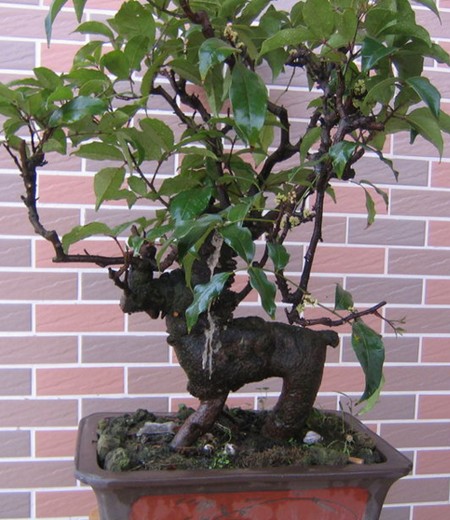
Artificial Cultivation
1. Site selection and land preparation: It is best to choose loam that is sunny, well-drained, with deep and loose, fertile soil; clear the entire area, plow deeply to 30 cm, break up the soil and rake it level, make beds, and open drainage ditches.
2. Sowing and seedling raising: Both autumn sowing and spring sowing are possible. For autumn sowing, sow in September when the seeds are ripe, sowing immediately after harvesting, which gives a high germination rate. For spring sowing, sow in late March. Broadcast the seeds in the seedbed, cover with 2 cm of fine soil, cover with straw, and water. The sowing rate is 1250—1500 grams per mu. After sowing, when the temperature is above 25°C, seedlings will emerge in 20 days; remove the straw cover after the seedlings emerge.
3. Planting out: Transplant when the seedlings are about 20 cm tall. Hole planting: dig holes at a plant spacing of 70 cm and a row spacing of 90 cm; the length X width X depth (cm) of each tree hole is 60X 60X 50, and apply sufficient base fertilizer in each hole. Plant 1 plant per hole.
Care and Management
1. Cultivation and weeding: Within 1~2 years after planting out, cultivate and weed 4~5 times each year; during this period, crops such as peanuts and soybeans can be intercropped. After two years, cultivate and weed 3—4 times each year.
2. Topdressing: During the seedling stage, apply human manure or urea once a month. After planting out, apply turf mud, compost and barnyard manure once each in summer and winter every year. After each topdressing, earth up the soil.
3. Pruning: After the main trunk of plants more than two years old has basically formed, prune overly dense weak branches, diseased and insect-damaged branches, dead branches, and sprouting branches growing from the rhizome.
Pest and Disease Control
A common pest is the longhorn beetle, which bores into and feeds on the stems and roots. You can manually catch the adults or remove the eggs, and insert a wire into the bore hole to pierce the larvae to death; you can also soak cotton wool in 80% dichlorvos concentrate, insert it into the bore hole, and seal the opening with mud to poison the larvae. Shuangmianzhen is used medicinally as its root. It is generally harvested after 5~6 years of cultivation. Dig it up in winter, wash off the sand and mud, slice it, and dry it in the sun.
[Functions and Indications]
Invigorates blood and resolves stasis, promotes the flow of qi and relieves pain, dispels wind and unblocks collaterals, resolves toxins and reduces swelling. Used for traumatic injuries from falls, stomach pain, toothache, rheumatic arthralgia, and venomous snake bites; for external treatment of burns and scalds.