Huanghuali tree sapling prices and planting methods, and why they are so expensive, plus their effects and functions
Huanghuali trees generally refer to Dalbergia odorifera, native to Hainan, China (central and southern parts). They grow in sparse forests on hillsides at mid-altitude, at forest edges, or on open ground beside markers. They have relatively high economic value and medicinal value. So, how much does one Huanghuali sapling cost? How are they planted? Why are they so expensive? It is understood that Hainan Huanghuali saplings are scarce in number, so their price is also very high. In recent years, after market speculation, they have even sold for a higher price than rosewood. However, Huanghuali sapling prices are not too expensive either. A one-year-old small sapling costs roughly between 30 yuan and 40 yuan. If purchased wholesale, there may still be a discount.
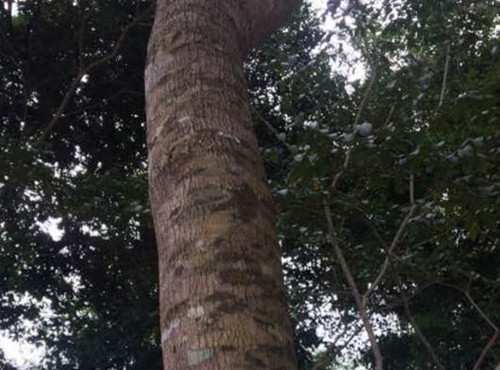
How are Huanghuali trees planted?
1. Planting season: Spring afforestation is generally chosen. However, temperature differences vary from place to place: in spring-rainy areas such as Fujian, Guangdong, and Guangxi, it is suitable to plant from March to June. If there is a water source and irrigation conditions, bagged seedlings can also be planted from July to August; Hainan's planting season is relatively later, and August to September is the best afforestation season. If bare-root planting is used, the root system must be protected during transport, which makes survival more reliable.
2. Site conditions: Dalbergia odorifera does not have strict requirements for site conditions. It can adapt and grow on steep slopes, mountain ridges, areas with exposed rock, and arid, thin, infertile areas. This tree species is a sun-loving species. In low-altitude plains or hilly areas, on sunny slopes or semi-sunny slopes of barren hills, wasteland, and cutover land below 600 m altitude, where the annual temperature is relatively high and the dry and wet seasons are distinct, and where the soil types are brown lateritic soil and red lateritic soil, it can all be planted.
3. Site selection and planting: Choose flat land, sunny or semi-sunny slopes, cutover land below the mountainside for afforestation, and planting in front of and behind houses. Before planting, clear weeds according to usual practice, burn the site, and for slopes exceeding 20 degrees, open horizontal belts, dig pits 40-50 cm wide and 40-50 cm deep, backfill topsoil and fertile soil, then plant. After planting, tread firm and water thoroughly to settle the roots. The spacing between plants and rows is 3×3 or 3×2 m.
4. Tending of young trees: In the same year after planting, loosen the soil and hoe weeds once at the end of the rainy season (September). Starting from the second year and for 3 years thereafter, tending and management should be strengthened. Method: centered on the seedling, clear shrubs and weeds within a 1 m diameter around the tree disk, and combine this with earthing up and fertilizing. Do this once before and once after each year's rainy season; if conditions permit, adding one more tending in between is even better. Fertilization: combine with loosening soil, weeding, and expanding the planting hole, applying 150-200 g of compound fertilizer per plant each time to promote tree growth, help it close its canopy and become a forest sooner, and reduce weed overgrowth. Pruning: Huanghuali branches low, and its lateral branches are thick. During tending, pay attention to pruning branches and cultivating a good trunk shape. However, note that in the first 1-2 years of the young forest, do not prune all lateral branches too early or too severely. Leave appropriately more branches and leaves to help increase photosynthesis. As the tree age increases and the young forest gradually grows taller, then gradually prune upward. This helps increase leaf photosynthesis in the young forest stage and contributes to the growth of the young forest and the development of the root system.
5. Control of main pests and diseases: At the seedling stage and young tree stage of Dalbergia odorifera, leaf and branch spots are common. They spread relatively quickly in the rainy season, and in severe cases the entire leaf appears black, causing a large number of leaves to fall and seriously affecting the growth of young trees. In addition, anthracnose also occurs on young leaves and young shoots. On the leaves, small round brown spots appear, with small black dots on them; on young branches, the affected areas are black and gradually dry up. For the above two diseases, spraying with 70% mancozeb wettable powder, or 500 times dilution of 5% thiophanate-methyl, once every 7 days for a total of 2-3 sprays, both have relatively good control effects. In artificial young forests, the main problem is longhorn beetle damage. Damaged young trees often suffer windthrow or die. During the larval stage, 90% trichlorfon or 50% phoxim at 300-400 times dilution can be injected into the insect holes with a veterinary syringe, then the hole openings sealed with cotton balls. This method is the most effective way to control longhorn beetles.
Why are Huanghuali trees so expensive?
1. Scarce raw material
That Hainan Huanghuali raw material is endangered is something everyone knows, and old material is even harder to obtain. As its value has risen, material that originally cost 20,000 yuan per jin cannot now be obtained at all without 60,000 yuan. The Li people who go deep into the Li mountains to search for material, enduring wind and sleeping in the open, searching relentlessly day and night, may very likely come back empty-handed. Things are precious when they are rare, and the scarce material has become one key reason why Hainan Huanghuali commands an extremely high price.
2. Betting on trees
Many Hainan Huanghuali enthusiasts have cooperated with civil organizations and started tree-betting activities. Betting on Hainan Huanghuali trees is extremely risky: one cut can make you poor, one cut can make you rich, or you can lose everything. Many Hainan Huanghuali trees planted artificially by farmers and not yet grown to maturity are cut down, greatly reducing the rate at which Hainan Huanghuali reaches usable timber size and increasing the speed at which Hainan Huanghuali declines.
3. Buyer-side market demand
Now there are more and more collectors in the Hainan Huanghuali market, and relatively speaking, the seller's market is very tight. Supply continues to decrease, while demand grows larger and larger, which further makes demand for Hainan Huanghuali extremely hot.
In recent years, as the government's awareness of protection has increased, Huanghuali, as a national second-class protected Dalbergia species, has been guarded by the military and unauthorized harvesting is strictly prohibited. Various Southeast Asian countries of origin have also successively launched natural forest protection measures to restrict log exports.
Effects and functions of Huanghuali trees
1. The wood of Huanghuali trees is of high quality. The sapwood is pale yellow and slightly loose in texture, while the heartwood is reddish brown, hard and heavy, with dense grain, making it an excellent material for superior furniture; it has a fragrance and can be used as a spice; the heartwood of the root, called Jiangxiang, is used medicinally. It is a good analgesic and also treats bleeding from knife wounds.
2. Jiangxiang can be used as a green ornamental plant, placed in homes, schools, enterprises, shops, hotels, and restaurants (indoor display is not limited by region). Dalbergia odorifera can also be used as a urban landscaping tree species.