-

What to Do About Root Rot and Bud Drop in Peonies? A Detailed Guide to Prevention and Treatment
Peony gray mold is one of the most important diseases of peonies worldwide, and it also occurs from time to time in China, being relatively severe in places such as Shanghai and Zhengzhou. The disease can occur throughout the peony growing season and is seriously harmful to young, tender plants, causing seedlings to lodge and wilt. This is a fungal disease that visibly affects peony leaves, stems, flowers and more...
-
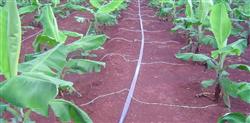
Detailed Guide to Irrigation and Fertilization Methods for Banana at Different Growth Stages
How to irrigate and fertilize bananas at each stage? Please give an introduction. For irrigation and fertilization of bananas at each stage, you can refer to the following methods: 1. Seedling stage. During the banana seedling stage, especially for tissue-cultured plantlets, the seedlings both need fertilizer and are sensitive to heavy fertilizer. Within 3 months after planting, follow the principle of "frequent application and light application." Begin fertilizing 10 days after planting when new leaves unfold, using...
-
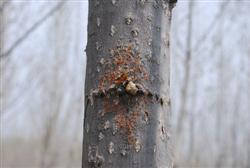
What to Do When Poplar Trees Get Canker Disease? A Detailed Guide to Prevention and Control Methods
Poplar is the general term for deciduous trees of the genus Populus in the willow family (Salicaceae). The genus contains more than 100 species, mainly distributed in the temperate and cold zones of Europe, Asia, and North America, as well as the Mediterranean coastal countries and the Middle East. China has more than 50 species. The wood is used for civil construction materials, furniture production, matchsticks, sawn timber, papermaking, and is also used for...
-
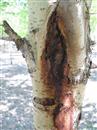
A Detailed Guide to Identifying and Managing Poplar Canker Disease
The typical symptoms of poplar canker disease fall into two types: the canker type and the dieback type. In the early stage of the canker type, brown circular or oval, water-soaked or blister-like lesions appear on the bark of the affected trunk; pressing them by hand causes liquid to ooze out, and after the blisters rupture, a liquid with a distiller's grains odor flows out. The diseased area then shrinks and collapses into a canker lesion, and the cortex at the lesion turns brown...
-
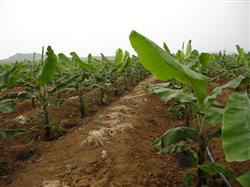
How much fertilizer does a banana plant need? A detailed guide to fertilizing knowledge
The amount of fertilizer applied to bananas is closely related to soil fertility, climate characteristics, fertilizer properties, fertilizing methods, variety, growth stage, and planting density. Fertile soil and less fertilizer can also produce a good harvest. For example, in some mountain banana orchards on Hainan Island, even without fertilizing, a single plant can yield 30 kg. With high rainfall, tall stems, and high-yielding...
-
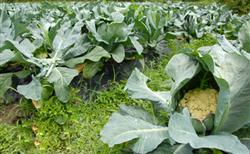
How to Fertilize Cauliflower Properly? A Detailed Guide to Scientific Fertilization Methods
How to fertilize cauliflower properly? Please give guidance. Cauliflower, also known as cauliflower (Brassica oleracea var. botrytis), has an edible portion that is a malformed flower head, and fertilization techniques differ depending on the variety. 1. Given that early-maturing varieties have a short growing season, the base fertilizer should be a quick-acting nitrogen fertilizer, applying about 8 kg of urea and about 8 kg of superphosphate per mu; for mid- and late-maturing varieties with a long growing season, the base fertilizer should be 1500 kg of barnyard manure, applied into the soil when tilling and preparing the land, followed by transplanting the seedlings. 2. Topdressing. In the early growth stage of cauliflower, frequently apply light applications of quick-acting chemical fertilizer as a 2% to 4% ammonium sulfate aqueous solution, about 700 kg per mu each time, or 10% to 30% human feces and urine, about 700 kg each time, applied around the roots. When the flower head begins to form, heavy topdressing should be applied to promote leaf and flower head growth. Apply about 800 kg of 40% human feces and urine per mu, or 10 kg of urea, about 20 kg of superphosphate, and about 8 kg of potassium sulfate, watered on.
-
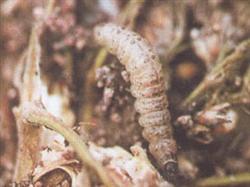
How to Control Sorghum Pests? A Detailed Guide to Practical Methods
How to control sorghum pests? Here is a guide: The main sorghum pests are aphids, tobacco cutworms (Spodoptera litura), stem borers, and scarab beetles. Aphids and scarab beetles occur at the seedling stage; tobacco cutworms and stem borers cause damage at the heading stage and dough stage, and can be controlled with pesticides such as chlorpyrifos, BT, and Lvjing. Sorghum is extremely sensitive to organophosphorus pesticides such as trichlorfon, dichlorvos, fenitrothion...
-
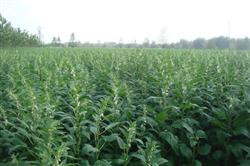
How to Grow White Sesame for High Yield? A Detailed Guide to Cultivation Techniques
How can white sesame be grown for high yield? Please provide guidance. To grow white sesame for high yield, you can refer to the following cultivation methods: 1. Select good varieties. For white sesame production, choose varieties such as Yuzhi No. 4, Yuzhi No. 8, and Yuzhi No. 10, which are high-yielding, high-quality, strongly stress-resistant, and have pure white seeds. To overcome the low yield and...
-
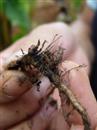
Detailed Guide to Identifying Symptoms of Banana Root Nematode Disease and Control Methods
What is banana root nematode disease and how is it controlled? Please provide an introduction. The introduction to banana root nematode disease and control methods is as follows: (1) Symptoms. Root nematodes infect the roots of banana. Affected large roots appear short and swollen, with cracking, and galls sometimes form on small roots. Sometimes they are destroyed before developing into large roots; when swollen, cutting the tissue open reveals brown dotted substances. Because of nematode damage, the roots become infected by pathogenic bacteria, causing root rot and leaving few effective roots. Above ground, the main symptoms are stunted plants, yellow leaves or clustered leaves, loose bunches, loss of green at leaf margins, many dead leaves, and wavy, crinkled leaves. In plants that have emerged from the bud, old leaves look scorched, withering from the leaf margin to the midrib. In severe cases, the fruit bunch cannot bend down normally, and the fruit is thin, small, shriveled and hard; sometimes the symptoms resemble bunchy top disease, except that the petiole has no "green veins".
-
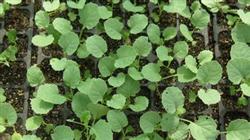
Detailed Guide to Broccoli (Calabrese) Seedling Cultivation
How to grow broccoli (calabrese) seedlings? Please explain. Broccoli is a major vegetable export crop of Zhejiang Province, with a stable annual planting area of around 10,000 hectares across the province. However, because the broccoli sowing season falls during the high-temperature and typhoon-active period from July to September, how to make full use of the limited growing season to cultivate strong seedlings has become the key to broc...
条件筛选