-
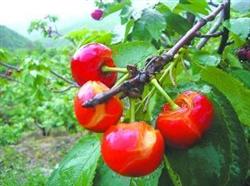
How to Prevent Fruit Cracking in Sweet Cherries: A Detailed Guide to Practical Control Methods
Cherries are prone to cracking in rainy weather. What methods can prevent fruit cracking in sweet cherries? When cherries are exposed to rain close to maturity or before harvest, fruit cracking occurs. This problem is widespread in cherry-producing regions of China and brings huge losses to fruit growers every year. Methods such as spraying mineral substances, hormones and other protective agents to prevent fruit cracking have an effect of only about 1%-3%; breeding excellent crack-resistant rootstocks and varieties is an effective measure, but so far there are still no highly resistant rootstocks and varieties available for selection; flood irrigation of the cherry orchard 24 hours before rain can reduce the fruit cracking rate of sweet cherries by 30%, but because weather changes cannot be accurately predicted, fruit growers cannot accurately apply this technique; the trunk girdling technique at full bloom stage has a very significant effect on preventing fruit cracking, but it often easily causes heavy gumming and tree death due to heavy fruit load or weak tree vigor. Aiming at the main problems in sweet cherry production, this study controlled the fruit cracking rate of sweet cherries within 0.3% at low cost by building simple "rain shelters" for sweet cherries.
-

How to Water Succulents? A Guide for Beginners
Text and images: Internet. Watering succulents has always been a long-standing worldwide problem, and misleading labels such as "drought-tolerant plants", "desert plants" and "overwatering will surely kill them" make many people think that succulents hardly need any watering...
-

Camellia Summer Care Brief: A Guide to Winter Blooms with Summer Care
Camellia, also called camellia. In southern regions, it is mainly grown in the ground, while in northern regions it is mostly grown in pots for ornamental viewing. The flowering period of camellia is in late winter and early spring, so this forum calls it a winter flower. Summer is the peak growing season for camellia, and with proper management measures...
-
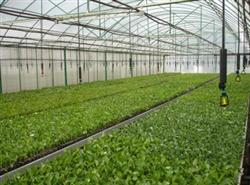
How Do Blueberries Reproduce? A Detailed Guide to Common Propagation Methods
How do blueberries reproduce? Please explain - there are many propagation methods for blueberries, such as cuttings, seed propagation, division, and other methods. At present, blueberries cultivated in China are usually propagated mainly by cuttings in production, and other methods such as seed seedling raising, rhizome cuttings, and division are also used. In recent years, through the continuous efforts of growers, in-depth research has been conducted on methods such as tissue culture, and a relatively simple blueberry propagation method has been explored for various regions. The factory-based tissue culture seedling method has been applied in production. The development and application of this technology has provided a large number of virus-free seedlings for blueberry production, and has gradually become the direction of future high-quality blueberry seedling production.
-

How are blueberry fruits harvested? A detailed guide to the methods
How are blueberry fruits harvested? Please advise. 1. Harvesting lowbush blueberries. Lowbush blueberry fruits ripen fairly uniformly, and the early-ripening fruits generally do not drop, so you can wait until all the fruits are ripe before harvesting. In the Changbai Mountain area of China, the fruits ripen in mid-to-late July. Lowbush blueberry fruits are relatively small, making manual hand-picking rather difficult...
-

Dudleya Growing Guide: Even the Giant of the Succulent World Can Be Grown with Ease
Dudleya is one of the easier succulents to grow. Dudleya likes to grow in a warm, dry environment with plenty of light, and it enters dormancy in summer. Let's talk about how to grow Dudleya below~ Dudleya Dudleya growing guide potting soil...
-
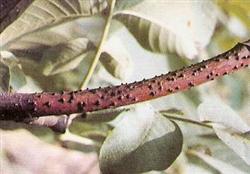
What is walnut branch blight? A complete guide to understanding it
What is walnut branch blight? How should it be prevented and controlled? Please advise. Walnut branch blight is caused by fungal infection and mainly damages branches and trunks. It occurs in all regions, with a general disease incidence rate of 20-30%, and in severe cases the incidence rate reaches more than 80%, causing a large number of branches to die, directly affecting tree growth and walnut yield...
-
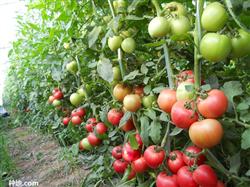
How to grow tomatoes outdoors in the south? A detailed guide to the method
How to grow tomatoes outdoors in the south? Please give an introduction and guidance. For growing tomatoes outdoors in the south, you can refer to the following methods: 1. Quantitative indicators for high-yield tomato cultivation. Tomatoes' temperature requirements: tomatoes like warmth; the suitable daytime temperature is 25°C-28°C, and the nighttime temperature is 16°C-18°C. Below 15°C, tomato seed germination...
-
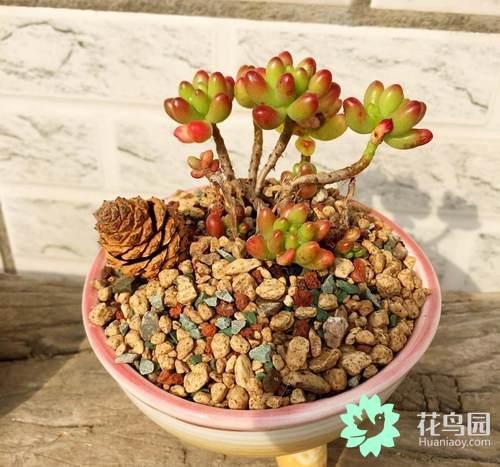
How to Grow Succulents into Small Old Stumps? A Complete Guide to Care Techniques
The vegetative organs of succulent plants are thick and enlarged, usually swelling at the roots, stems, and leaves. They are also called succulents and belong to different families and genera, among which the common ones are Crassulaceae and Cactaceae succulents. There are many varieties of succulent plants, and worldwide there are roughly...
-
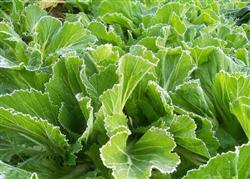
How to Grow Mustard Greens? A Detailed Guide to Planting Methods and Management Key Points
How do you grow mustard greens? Here is a detailed introduction to growing mustard greens, you can refer to the following methods: 1. Soil selection and land preparation. The previous crop for land used to cultivate root mustard should generally be cucurbit, legume, or solanaceous crops. It is best not to follow a cruciferous crop or land where mustard was grown in the same year. It can also be rotated with grain land and rice...
条件筛选