-
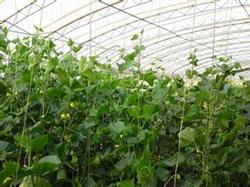
Detailed Guide to Raising Dry Cucumbers in Spring Greenhouses
Generally sow in late February to early March, choosing early-maturing varieties that are high-yielding, disease-resistant, tolerant of low temperature and weak light, and have good market quality. Before sowing, prepare the nutrient soil, add an appropriate amount of superphosphate and diammonium phosphate to the nutrient soil, and be sure to disinfect the nutrient soil after it is prepared; before sowing, disinfect the cleaned seeds, soak them in 55°C...
-
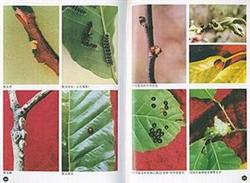
How to prevent and control chestnut pests? A detailed guide to practical control methods
1. Chestnut gall wasp The chestnut gall wasp, also called the chestnut tumor wasp, has a dark brown head and abdomen in the adult stage, filiform brown antennae, and a swollen, jet-black thorax. It lays eggs inside buds from June to July, and the larvae grow and overwinter inside the buds. In spring, when the buds sprout and produce short shoots, the affected branches or leaf stalks swell into galls (tumors), causing the branches and leaves to wither and die and weakening the tree...
-

How to germinate peanut seeds? A detailed guide to pre-sowing treatment methods
Peanut germination methods
-
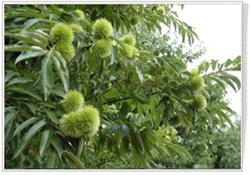
How to Grow Chestnuts for High Yield? A Comprehensive Guide to Cultivation Techniques
I. Close Planting. Reasonable close planting not only increases early yields and delivers economic returns as quickly as possible, but also facilitates intensive management of the orchard. Planting density: the spacing between plants and rows is generally 2m x 4m, 3m x 4m or 3m x 5m; the specific density should be determined by the characteristics of the rootstock, the characteristics of the scion, or the site conditions. The investment in establishing the orchard can be recovered within 6 years after planting...
-

A Complete Guide to Fertilization Techniques and Key Points for Chestnut Orchards
Chestnut blight, also known as chestnut canker, trunk blight, or chestnut bark disease, is a major disease of chestnut trees. It mainly affects the trunk and main branches, often causing the trunk and main branches to rot until the entire tree dies. The chestnut blight pathogen mainly overwinters in diseased branches as mycelium, pycnidia, and perithecia, while conidia and ascosp...
-

How to Grow Hardy Kiwi? A Detailed Guide to Planting Considerations
Planting Considerations for Hardy Kiwi
-

How to Plant Sugarcane to Increase Yield? A Detailed Guide to Practical Planting Methods
How to Increase Sugarcane Yield
-
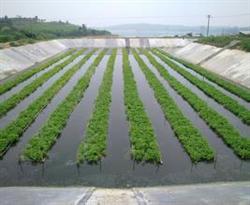
How do you grow water spinach on the water surface? A detailed guide to water-surface growing techniques
Patch after patch of lush green vegetables growing not in a vegetable plot but on the surface of a fish pond, with pretty young men and women from the city poling bamboo rafts and weaving through the floating vegetable garden to pick them... This poetic scene is not a legend, but something that happened at the Baqu River water-surface vegetable base in Wushan Town, Wangcheng District, Changsha, Hunan. "This year in May...
-
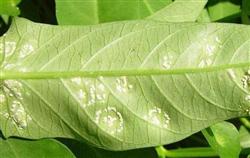
What to Do When Water Spinach Gets White Rust? A Detailed Guide to Prevention and Control Methods
First, implement a 2-to-3-year crop rotation with other vegetable varieties. Second, before sowing, dress the seeds for sterilization at a ratio of 300 g of 35% metalaxyl per 100 kg of seeds; third, in the early stage of the disease, spray with 50% copper metalaxyl wettable powder at 6000 to 7000 times dilution, or with 72.2% propamocarb aqueous solution at 8000 times dilution, applying once every 7 to 10 days...
-
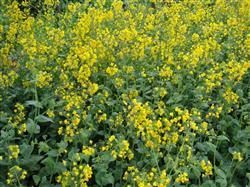
What to Do About Rape Seedling Stunting? A Detailed Guide to Targeted Prevention and Control
After transplanting and seedling recovery, rape (Brassica napus) sometimes shows stunting in the early field growth stage, with symptoms such as reddened or yellowed leaves, curled leaf centers, slow or halted growth, and poor development. To prevent and control rape stunting, targeted measures must be taken based on investigating its causes. Stunting caused by drought or waterlogging - drought not only...
条件筛选