-

How good is 4312 piglet premix?
4312 piglet premix is a %4 pig premix product. 1. Product features: nutrient-rich and easy to absorb and utilize, effectively prevents and treats the common indigestion-related diarrhea in piglets; after eating, piglets have full muscles, a ruddy complexion, a glossy coat, fast growth, and high feed conversion efficiency. 2. Mixing ratio (1) Stage: 15 30 kg corn: 56 soybean meal: 25 wheat bran: 12 fish meal: 3 concentrated powder: 4 protein: 19 digestible energy: 3000 (2) Stage: 15 30 kg corn: 53.9 soybean meal: 27
-
Reasonable spraying of brassin with Shuofeng 481 on cotton gives good results
Shuofeng 481 is a brassinolide product extracted from plant pollen and its derivatives. It comes from plants and acts on plants, with functions such as promoting cell division and elongation, promoting photosynthesis, delaying senescence and improving stress resistance, and combines multiple effects of auxin, gibberellin and cytokinin. Cotton is a crop with a relatively long growth period, and its growing season goes through a process from low temperature to high temperature and then to low temperature, and from high humidity to drought. Reasonably spraying brassin Shuofeng 481 throughout the whole growth period of cotton promotes cotton growth and improves its
-
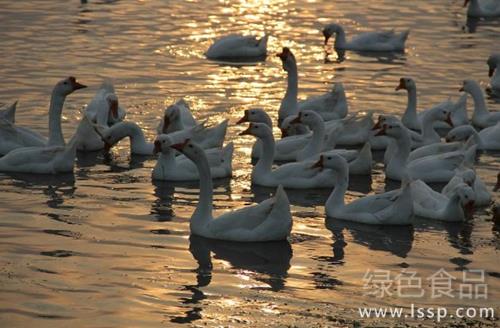
Master the key technical points of winter goose fattening, get good returns by marketing before the Spring Festival
Good returns from marketing winter geese before the Spring Festival; key technical points of winter goose fattening
-
Autumn Fattening of Geese Is in Season, Goose Farmers Should Not Miss the Good Timing
Autumn weather is cool, green grass is abundant, and there is plenty of by-product after the autumn harvest, making it the best season for fattening meat geese. During this period, after 20 to 25 days of fattening, geese can generally gain 1.5 kg to 2.2 kg. For breed selection, choose meat-type hybrid breeds such as Lion Head geese and Xupu geese that are over 70 days old, lively, with glossy feathers, good at foraging, healthy and disease-free. Fattening methods: 1) Grazing fattening. During the day, drive the flock of geese to harvested fields to let them eat leftover grain heads, grass seeds, etc., and after returning to the shed at night, feed them 1 to 2 more times with concentrated feed and provide clean drinking water. 2) Shed fattening. Build a rack with bamboo or wooden sticks, with the rack 0.6 m to 0.7 m above the ground to make manure cleaning easier. Put 5 geese per square meter, make a small pen around them, place the feed trough and water trough outside the pen, and let the geese stretch their heads through the gaps to eat and drink. 3) Pen fattening. Use bamboo or reed stalks to enclose small pens, with 3 to 5 geese per pen. The height of the enclosure should be such that the geese can stand but not raise their heads. Place the feed trough outside the pen and let the geese eat and drink through the gaps. During pen raising, the shed should be quiet, grazing should not be done, activity should be restricted, and energy consumption should be reduced. For shed fattening and pen fattening, the feed should be diversified and combine concentrated and green feed. It can mainly consist of rice bran, broken rice, corn, blighted grain, vegetable leaves, etc., plus about 6% cake-type feed, 0.3% table salt, and concentrated feed ground fine, mixed into a wet feed for feeding, 5 to 7 times a day, with 1 to 2 additional feedings at night. In addition, adding 19 g manganese sulfate, 17 g zinc sulfate, 12 g ferrous sulfate, 2 g copper sulfate, 0.7 g potassium iodide, and 0.1 g cobalt chloride to every 100 kg of concentrated feed can increase weight gain by about 20%. However, when mixing the feed, it must be mixed evenly to prevent individual geese from being poisoned by eating too much. 4) Forced fattening. Mix powdered feeds such as corn, sweet potato, rice bran, and soybean cake with an appropriate amount of table salt and trace elements, add water and mix well, make strips 1 cm to 1.5 cm thick and 6 cm long, and after drying in the shade, manually stuff them into the goose's esophagus. When force-feeding, clamp the goose's body between your knees, grasp the goose's head with your left hand, open the goose's beak, dip a feed strip in water with your right hand, and use your index finger to stuff the feed into the esophagus. After each strip is inserted, gently push along the goose's neck with your hand to help it swallow. Feed 4 to 6 times a day, with 1 feeding at night. The amount of forced feeding depends on the goose's weight and digestive capacity. One hour before feeding, if a groove appears at the swollen part of the esophagus, digestion is normal; if it appears earlier than 1 hour before feeding, more feed is needed; if it appears later than 1 hour before feeding, reduce the feed or delay the feeding time. When force-feeding, also be careful to prevent the feed strip from being inserted into the trachea. In addition, attention should be paid to supplying sufficient clean drinking water.
-
Do a good job of cotton management in July and August for a more secure bumper harvest
I. The importance of battling through July and August. The flowering and boll-setting stage is the longest stage in cotton's growth period and the time when natural resources such as light, heat and water are most abundant, which is very favorable for cotton growth and development. However, this period also has its unfavorable side: not only are natural disasters such as wind, hail, drought and waterlogging frequent, but pests and diseases also occur and cause serious damage. As the farming proverb says, "Cotton is a weed in the dog days; good can turn bad, and bad can turn good." Therefore, this period is the key period for securing a bumper cotton harvest, especially this year, when the cotton growth process is delayed by 7-10 days compared with previous years, and the seedling condition
-
Scraping bark from pear trees in winter is the key to growing good pears
The farming proverb says: "If you want to eat good pears, scrape the bark in winter." In the cold winter season, scraping off the old bark from pear trees that have already borne fruit can effectively eliminate the fungal spores of pear scab, ring rot, anthracnose, pear rust and other diseases that remain inside and outside the old cracked bark of pear trees, as well as the eggs of many pear tree pests such as pear psylla, aphids, fruit borers and scale insects, ensuring healthy growth of the pear trees, high quality, high yield and high returns. Scraping the bark must be thorough. When scraping bark from pear trees, you must remove the old cracked bark, rotten disease, pear scab, ring rot, anthracnose, scale insects, pear psylla,
-
How good is the Super Large Grain King rice variety?
Zhezao 15 is a super-high-yield early indica rice new line developed by mutagenesis treatment using the super-high-yield genetic advantage of "Zhe 18500". After multi-point trial planting as early rice by the Zhejiang Academy of Agricultural Sciences, the yield generally reaches more than 600 kg per 667 sq m (1 mu). The characteristics and advantages of Zhezao 15 are introduced as follows: 1. Extremely strong tillering ability, low seed requirement. The effective tillers per plant can reach 12-15, and 1 kg of seed per 667 sq m of field is sufficient. 2. Cold tolerance at the seedling stage, disease resistance at the later stage. Strong cold tolerance at the seedling stage, so sowing can be appropriately advanced
-
Schisandra intercropping pattern offers good returns
Northern Schisandra is derived from the mature dried fruit of Schisandra chinensis of the genus Schisandra in the family Magnoliaceae. The plant is a perennial deciduous woody climbing vine, with woody stems reaching 8-10 m long. It grows wild in forests and forest margins, climbing trees. It flowers from May to July each year, and the fruit ripens from August to early October. The ripe red spike-like berries are picked for medicinal use. Schisandra cultivation techniques (1) Suitable growing environment for Schisandra. Schisandra prefers a cool, moist living environment and is shade-tolerant, with a suitable shading level of about 20%. The first
-
How to achieve good control of powdery mildew on cut roses
Powdery mildew is the most common disease of rose leaves. Prevention should be the main approach, combined with control, to achieve substantial results. Prevention methods include: 1. Before the plants break dormancy in early spring, spray once with carbendazim wettable powder at 600 times dilution to kill overwintering pathogens. 2. After the rose plants leaf out the following spring, spray carbendazim wettable powder at 1000 times dilution once every half month, for 3 to 4 consecutive times, to consolidate the preventive effect; or use equal-amount Bordeaux mixture sprayed once every half month after leafing out, for 3 to 4 consecutive times, which can
-
Drying Wangtian peppers takes some know-how: master the right method to sun-dry good dried chilies
I. Harvest at the right time. Criteria for harvesting the fruit. The fruit must all turn deep red. In North China, harvesting is generally done from Cold Dew to Frost's Descent. If grown in small arch sheds or with plastic film mulching, harvesting can be done somewhat earlier; if planted late, the harvest period can be slightly postponed, but it must be completed before Frost's Descent arrives. Otherwise, after frost damage, the dried chili products will color unevenly and their quality will be reduced. Wangtian peppers are generally harvested by pulling up the whole plant or cutting the plant. After harvest, lay the pepper plants flat in the field to sun-dry for 3-4 days. During drying, if rain occurs,
条件筛选