Master the key technical points of winter goose fattening, get good returns by marketing before the Spring Festival
Winter geese refer to goslings hatched during the period from the Start of Winter to the Winter Solstice. When goslings reach 40 days of age, they enter the middle-goose stage; at this point, short-term fattening for 15 to 30 days can add 1.5 to 3.5 kg of weight, and they can be marketed at the Spring Festival with good economic returns. Goslings entering the middle-goose stage grow muscle and bone, commonly known as "half-wing geese," and can then be fattened. Fattening methods:
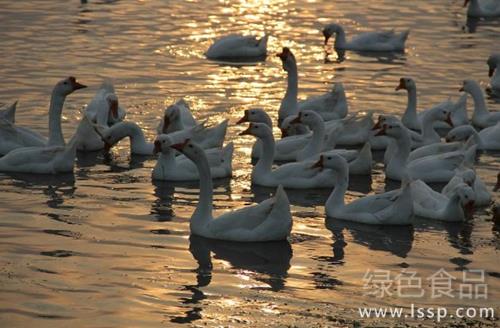
Winter goose
1. Pen fattening method. Use bamboo or reed stalks to weave enclosures into small pens, each pen holding 3 to 5 geese. The pen size should not exceed twice the body size of the geese, and the height should allow the geese to stand but not raise their heads. Alternatively, use wood, bamboo and reed mats to build a frame 50 to 60 cm high, to facilitate removal of droppings. Feed troughs and waterers are hung outside the pen, with gaps left in the enclosure to let the geese eat and drink. Separate the geese by size and strength. In pen rearing, the goose house should be quiet, sheltered from wind and kept warm; do not herd them out to pasture and restrict their activity to reduce consumption. In feeding, the feed should be varied, with a mix of concentrate and green feed. You can feed rice bran, broken rice, corn, blighted grain, vegetable leaves and other grain by-products, adding about 6% cake meal and 0.3% table salt. Grind the concentrate fine, mix it into a wet mash and feed it, 5 to 7 times a day, plus 1 to 2 feedings at night. Provide plenty of feed and water and let them eat and drink freely. In addition, add to every 100 kg of concentrate 19 g of manganese sulfate, 17 g of zinc sulfate, 12 g of ferrous sulfate, 2 g of copper sulfate, 0.1 g of potassium iodide and 0.1 g of cobalt chloride to promote weight gain. The above trace element compounds must be mixed evenly to prevent individual geese from eating too much and dying of poisoning.
2. Artificial forced fattening method. Mix powdered feed such as corn, broken rice and rice bran with trace elements, blend with water, and make into strips the size of a walnut, then manually stuff them into the goose's esophagus. When force-feeding, hold the goose's head with your left hand, open its bill, clamp the goose's body between your knees, dip a feed strip in water with your right hand, and push the feed into the goose's esophagus with your index finger. With each strip stuffed in, gently push down along the goose's neck with your hand to help it swallow. Feed 4 to 6 times a day, with one feeding at night. The amount to stuff depends on the goose's weight and digestive capacity. One hour before feeding, if a groove appears at the swollen part of the goose's esophagus, digestion is normal; if it appears earlier than one hour before feeding, more feed is needed; if it appears one hour later, reduce the feed or delay the feeding time. Be careful not to stuff feed into the trachea, and ensure a supply of clean drinking water.
In fattened geese, small wings and thickened subcutaneous fat on both sides of the body with skin that slides easily indicate inferior fatness; chestnut-sized loose clumps indicate medium fatness; a firm yet elastic feel under light hand pressure indicates superior fatness. When superior fatness is reached, with thick subcutaneous fat all over the body, a full tail vertebra and breast, and transparent-looking wing feather roots (commonly known as "open tubes"), the geese should be slaughtered and sold immediately.