-

New red-leaf peach series cultivars, good for both ornamental viewing and eating
Ma Yuxi, a senior engineer at the Zhonghua Winter-Ripening Fruit Tree Research Center in Xun County, Henan Province (telephone: 0392-5811384), after 10 years of arduous exploration, finally bred 12 new red-leaf peach series cultivars with different colors and flower types, which both delight the eye and let people enjoy delicious fruit. After spring returns to the earth, this peach can first be enjoyed for its peach blossoms, then for its red peach leaves, third for the red fruit hanging all over the branches, and finally people can also eat sweet, large fresh peaches. For the red-leaf peach series cultivars, the flower buds begin to swell and the leaf buds begin to sprout in early March, and flowering begins in early April
-
Why peach blossoms are called a good spring medicine
In the third month of spring, peach blossoms are in full bloom. Besides being ornamental, peach blossoms also have fairly high medicinal value. They contain kaempferic acid, coumarin, trifolioside, naringenin, and vitamins A, B, and C, among other components. They are bitter in taste and neutral in nature, non-toxic, and suitable for treating illness both internally and externally. Traditional Chinese medicine holds that the peach is sweet and warming in nature, with a pungent and sour taste, and has the effects of improving complexion and relieving consumptive fever. Fresh peaches tonify the middle and boost qi, and promote fluid production to quench thirst. For patients with high blood pressure, eating one peeled fresh peach morning and evening each day is beneficial for keeping blood pressure stable; for patients with iron-deficiency anemia and iron deficiency, regularly eating fresh peaches has a certain
-
Why is feeding pigs dry feed good? An analysis of the reasons
Many pig-farming practices have shown that feeding pigs thin, watery feed seriously affects digestion and absorption, leading to dry dung, red eyes, reduced frequency of defecation, weakened intestinal peristalsis, and slow pig growth. It follows that pigs are best fed raw dry powder feed, allowing them to eat freely, with a separate water trough for drinking, or fed a thick mash with a feed-to-water ratio of 1:1. This prevents the feed from freezing in winter and spoiling in summer, and lets the pigs eat their fill and grow fast.
-
Why is high-mountain cloud-and-mist tea of such good quality?
That high mountains and cloud and mist can produce good tea is something people have come to recognize gradually through long years of production practice. Green tea from cloudy and misty mountains has a high aroma, a rich and full flavor, is fresh and brisk, and is of good quality. The reasons for this are mainly related to the ecological factors of high mountains. First, in tea gardens at a certain altitude, with high mountains and dense forests, abundant rainfall, moist air and plenty of scattered light, a unique set of ecological conditions is formed, resulting in deep and fertile soil, short sunshine hours and high relative humidity there; the tea plants are nourished by mist and dew all year round, which exactly suits their growth characteristics of liking warmth and moisture and tolerating shade.
-
Tea Identification Methods: Teaching You to Tell Good Tea from Bad
As a worldwide beverage product, tea has no fewer than three thousand varieties, and famous teas are too numerous to count. Such as West Lake Longjing, Dongting Biluochun, Lushan Yunwu tea, Nanjing Yuhua tea; and also Pu'er, Tieguanyin, Shuixian tea, Dancong Fenghuang tea, Kuding tea and the panda among plants - Jinhua tea, and among black teas Yinghong, Dianhong, Qihong; all are outstanding famous teas, and the quality and price of tea also differ greatly. There is coarse tea at a few yuan per jin, and also supreme tea at over a hundred thousand yuan per jin. Therefore, the purchasing and sales departments in the business world. Have set very detailed grade standards, striving
-
Scraping pear tree bark in winter, a key step to growing good pears
As the farming proverb says: "If you want to eat good pears, scrape the bark in winter." In the cold winter season, scraping the old bark off pear trees that have already borne fruit can effectively eliminate the spores of pear scab, ring rot, anthracnose, pear rust and other fungal diseases that remain inside and outside the old cracked bark of pear trees, as well as the eggs of pear psylla, aphids, fruit borers, scale insects and many other pear tree pests, ensuring healthy growth of the pear trees, high quality, high yield and high returns. Scraping must be thorough: when scraping pear trees, you must remove the old cracked bark, pear canker, pear scab, ring rot,
-
Golden Blessing Mushroom has good market prospects and great development potential
On the morning of July 31, the Hangzhou Academy of Agricultural Sciences, the Municipal Agriculture Bureau and the Hangtou Town Government held an on-site exchange meeting on new varieties and new technologies of rare edible fungi at the Huangmugang vegetable base in Hangtou Town. Leaders and experts from the Hangzhou Academy of Agricultural Sciences, the Agriculture Bureau, the Science and Technology Bureau and the Association for Science and Technology, as well as agricultural science and technology personnel from the counties, cities and districts of the Hangzhou area, inspected the experimental greenhouse for the rare edible fungus Golden Blessing Mushroom at the vegetable base. According to Zhou Zufa, head of the Hangzhou Edible Fungus Spawn Station, the Golden Blessing Mushroom is a high-temperature mushroom that can fruit at temperatures of 28°C to 35°C
-
Garlic-Ginger Intercropping Brings Good Returns: A Full Analysis of the Planting Advantages
In the history of Zhucheng City, Shandong Province, ginger was mostly grown as a sole crop. Trials and demonstrations of garlic-ginger intercropping began in the 1980s and achieved relatively good economic returns. However, because the intercropping techniques were not fully matched, for example no intercropping rows were left, the intercropped ginger bulbs became smaller, and some even failed to meet export standards, which dampened ginger growers' enthusiasm for intercropping. In order to explore the cultivation techniques for garlic-ginger intercropping, the author carried out multiple trials and survey analyses from 1992 to 1995 in Chengguan Town, Lubiao Township and other places, and summarized a matched set of techniques suitable for local garlic-ginger intercropping. After extension, a double
-
How good is the Chuanshu 101 sweet potato variety?
Approved in Sichuan Province in 1997. Cumulative promotion of 567.6 mu. (1) Variety source: Bred by the Crop Research Institute of the Sichuan Academy of Agricultural Sciences in 1988 by crossing Mianfen No. 1 as the female parent and Chaoshou No. 1 as the male parent; the original line number was 8810-1. (2) Characteristics: This variety is medium-maturing with short vines and a prostrate plant type. The top leaves are purple, and mature leaves are heart-shaped, green with purple; the storage roots are spindle-shaped or blocky, with light red or yellow skin and yellow-red flesh with a purple tinge. The average drying rate is 26.9%, the starch extraction rate is 14.9%, and the rate of large and medium storage roots is over 80%.
-
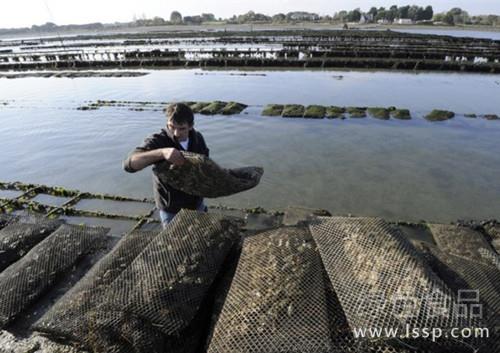
Oyster mudflat farming has good returns, key points for high-yield vertical farming
Oyster mudflat farming has good returns; key points for high-yield vertical oyster farming
条件筛选