-
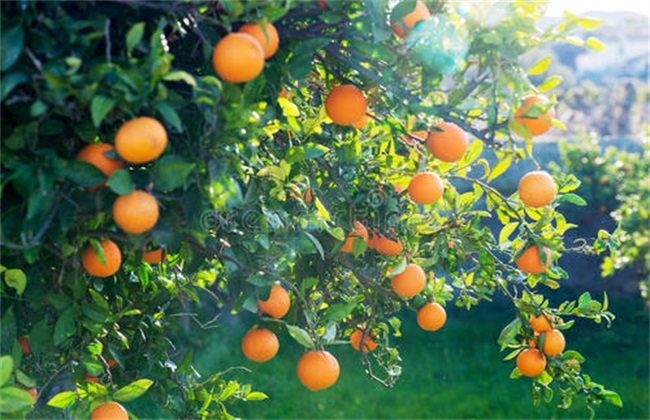
How to do a good job in fertilizer and water management for orange trees? Detailed explanation of the technical points
Fertilizer and water management for orange trees
-

Detailed Explanation of the Processing Technology for Dry-Packed Salted Almond Canned Goods
(1) Process flow: Raw material acceptance → sorting → cleaning → peeling → rinsing → color protection → pre-boiling → soaking → re-boiling → grading → seasoning mixing → canning → exhausting → sealing → inspection → sterilization → cooling (2) Description of operating points (1) Raw material acceptance: Use fresh, plump, dry almonds with white kernel flesh, free from insect damage, mold, and foreign matter. (2) Sorting: Remove insect-damaged, moldy, shriveled, broken and other substandard kernels and foreign matter. (3) Cleaning: Put the
-
Which hard-flesh peach varieties are good? Five recommendations suitable for the Yangtze River Basin
1. Qinwang. Average single fruit weight 210 grams, maximum fruit weight 350 grams, fruit size relatively uniform. The base color of the peel is yellow-red; at maturity, 80%-100% of the fruit surface turns bright red, the appearance is colorful, and the fruit surface has little fuzz. The fruit is round, the suture line is medium, the fruit shape is relatively symmetrical, the fruit apex is concave, and the stem cavity is medium-deep. The flesh is red-white, with 75% red blush. The flesh is especially hard and does not crack, the texture is fine, and the resistance to browning is strong. Soluble solids 13.7%, tastes sweet with slight acidity, slight aroma, excellent quality. Semi-clingstone, small stone, no stone cracking, edible rate 9
-
Scraping pear tree bark in winter is the key to growing good pears
The farming proverb says: "If you want to eat good pears, scrape the bark in winter." In the cold winter season, scraping off the old bark of pear trees that have already borne fruit can effectively eliminate fungal spores such as pear scab, ring rot, anthracnose, and pear rust that remain inside and outside the old cracked bark of pear trees, as well as the eggs of various pear tree pests such as the pear psyllid, aphids, fruit borers, and scale insects, ensuring robust production of pear trees with high quality, high yield, and high returns. Scraping must be thorough When scraping pear tree bark, you must remove the old cracked bark, rot disease, pear scab, ring rot, anthracnose, scale insects, pear psyllids, aphids,
-
Winter control of psyllids in pear orchards leads to good pears in autumn
The pear psyllid is the most important pest on pear trees. It can damage pear leaves, causing blighted spots, weakening tree vigor, and reducing fruit quality and yield. It produces 4-5 generations per year. Adults are divided into winter and summer forms. Winter-form adults overwinter in the cracks of pear tree branches and trunks, with a few in weeds, fallen leaves, and soil. Integrated control should target their overwintering sites. 1. Orchard sanitation. Clear away fallen branches, fallen leaves, and weeds in and around the orchard, bury them deeply or burn them, to reduce the overwintering pear psyllid population. 2. Bark scraping. Spread plastic film on the tree tray
-
Bagged pears have good quality, and managing them well after bag removal is key
In recent years, pear bagging technology has developed rapidly and has played an important role in improving pear fruit quality and economic returns. However, in production, a small number of bagged pear orchards have not achieved the expected results, mainly because the timing of bag removal is not accurately determined and management after bag removal is neglected, rather than poor management before and during bagging. In view of this, bag removal and post-removal management should be strengthened. Timely bag removal: the time to remove fruit bags should be determined according to variety and climatic conditions. In order to prevent obvious fruit dots on the fruit surface, sunburn, fruit dehydration, fruit surface contamination
-
How to treat pear tree top rot? Silicon-calcium-magnesium fertilizer has good control effect
Pear top rot, also known as pear stem rot and pear iron-head disease, generally occurs on European pear varieties, so it is also called European pear top rot. The causative factor of pear top rot is currently unclear and is generally considered a physiological disease. In order to seek effective control methods, we conducted a control experiment using silicon-calcium-magnesium fertilizer and achieved good results. The experimental results are summarized as follows. (1) Experiment and methods: (1) Experimental materials. The experiment was set up in a pear orchard in Xishanbeitou Village, Dayao Town, Muping District, Yantai, Shandong, with the variety Bartlett pear
-
Scraping bark from pear trees in winter is the key to growing good pears
The farming proverb says: "If you want to eat good pears, scrape the bark in winter." In the cold winter season, scraping off the old bark from pear trees that have already borne fruit can effectively eliminate the fungal spores of pear scab, ring rot, anthracnose, pear rust and other diseases that remain inside and outside the old cracked bark of pear trees, as well as the eggs of many pear tree pests such as pear psylla, aphids, fruit borers and scale insects, ensuring healthy growth of the pear trees, high quality, high yield and high returns. Scraping the bark must be thorough. When scraping bark from pear trees, you must remove the old cracked bark, rotten disease, pear scab, ring rot, anthracnose, scale insects, pear psylla,
-
How good is Big Fruit Sweet Carambola No. 1? Introduction to its variety characteristics
Approval number: Gui Shen Guo 2007002. Variety name: Big Fruit Sweet Carambola No. 1. Breeding unit: Horticulture Research Institute, Guangxi Zhuang Autonomous Region Academy of Agricultural Sciences. Variety source: Big Fruit Sweet Carambola No. 1 is a superior single plant selected from the Malaysian sweet carambola B10 series. Characteristics: branches are spreading, branchlets numerous and dense, slightly upright. Leaves are odd-pinnately compound, 11-20 cm long, 8-14 cm wide, alternate; leaflets number 7-15, mostly 11, alternate or opposite; leaflets ovate, leaf blade asymmetrical, one side of the base broad and bluntly rounded, the other side of the base narrowly oblique, the leaflet at the tip of the compound leaf is the largest. Flowers are racemes, axillary, 2-3 cm long, each inflorescence has more than ten to several dozen flowers. Flowers are small, about 8 mm long, corolla diameter about 4 mm, bell-shaped, petals 5, purplish red and fragrant; stamens 10, the outer whorl of 5 short and underdeveloped, lacking anthers, only the inner whorl of 5 has pollen; pistil 1, ovary superior, with 5 locules, each locule has 1-3 seeds. The fruit is a fleshy berry, long fusiform, the central tip of the fruit slightly protruding and blunt, generally 5-ribbed, star-shaped in cross section, peel thin and smooth, with waxy luster, unripe fruit green, golden yellow when ripe. Average single fruit weight is 221 g, flesh texture fine, few fibers, taste fresh and sweet, soluble solids in flesh 8%-12.5%, total organic acid content 0.2%-0.35%.
-
New red-leaf peach series cultivars, good for both ornamental viewing and eating
Ma Yuxi, a senior engineer at the Zhonghua Winter-Ripening Fruit Tree Research Center in Xun County, Henan Province (telephone: 0392-5811384), after 10 years of arduous exploration, finally bred 12 new red-leaf peach series cultivars with different colors and flower types, which both delight the eye and let people enjoy delicious fruit. After spring returns to the earth, this peach can first be enjoyed for its peach blossoms, then for its red peach leaves, third for the red fruit hanging all over the branches, and finally people can also eat sweet, large fresh peaches. For the red-leaf peach series cultivars, the flower buds begin to swell and the leaf buds begin to sprout in early March, and flowering begins in early April
条件筛选