-

What are some good methods for controlling mushroom mites?
What are some good methods to control mushroom mites?
-

Which edible mushroom varieties are good to cultivate in summer?
Which edible mushrooms are good to cultivate in summer?
-

Soil cave cultivation gives good results for edible fungi
Soil cave cultivation gives good results for edible fungi
-
Biological fermentation is a good method in edible mushroom cultivation
Biological fermentation is a good method for cultivating edible mushrooms
-
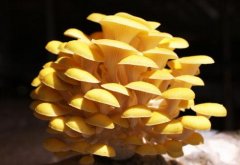
Cultivation method for golden oyster mushroom (Pleurotus citrinopileatus) spawn: which sawdust is best, and does spraying more water make it grow faster?
Mushrooms growing in indoor plants are caused by fungi. Mushrooms are the fruiting bodies of fungi. One of the most common mushrooms found in indoor plants is the golden oyster mushroom (Pleurotus citrinopileatus) spawn. This is a pale yellow mushroom with a pleated or flat cap, depending on how mature they are.
-
How can you tell good straw mushroom spawn from bad? You need to know these few methods
Before cultivating straw mushrooms, the quality of the spawn must be assessed, and high-quality spawn should be selected whenever possible. The appearance of high-quality spawn is: thick and sturdy hyphae, uniform development of the upper and lower hyphae, and aerial hyphae that are white or semi-transparent. The specific identification methods are: 1. For spawn used for cultivation, the spawn age is around 30 days, the hyphae are thick, sturdy and dense white, there are light brown chlamydospores on the hyphae, and after removing the cotton plug, the aroma of straw mushrooms can be smelled. This kind of spawn is high-quality spawn; after sowing, it colonises the substrate quickly and grows vigorously. If there are very few chlamydospores, it means the hyphae are still young and tender, and it can be left to continue growing
-
Early-spring mushroom fruiting tips: manage it this way for good fruiting
After the Start of Spring, temperatures gradually rise. If you carry out simple yet clever management of mushroom beds that already fruited continuously the previous autumn, you can easily prompt a season of spring mushrooms. The specific methods are as follows: 1. Loosen the compost and replenish the soil. When the temperature rises back to 10°C, loosen the compost and replenish the soil promptly. This not only helps expel waste gases from the compost, but is even more helpful for breaking apart old mycelium, promoting the growth of new mycelium, and forming strong mycelium, laying the foundation for increasing spring mushroom yields. Loosening the compost is divided into deep, medium and light loosening, and should be determined according to the actual condition of the mushroom bed compost.
-
Prevent mushroom fungus gnats early: early prevention and early treatment give good results
Fungus gnats, also known as "gall midges", reproduce very quickly and often carry bacteria that cause disease in mushrooms; their larvae (maggots) are divided into white and orange types. Fungus gnats often lay eggs on the compost used for growing mushrooms; the eggs begin to hatch before the mycelium has fully colonized the growing substrate, and before the first flush of mushrooms appears the larvae have already grown large and burrow into the mushroom stems and caps to cause damage. Therefore, fungus gnat control should be carried out early. First, for the growing substrate used for mushrooms, use twice-fermented substrate as much as possible; for each ton of substrate, use a 1000-2000 times dilution of 49% diazinon emulsion to spray the mushroom house and bed frames, and seal doors, windows and vents
-
Growing button mushrooms (Agaricus bisporus) in winter-fallow rice fields delivers good returns
In 2004, our county carried out cultivation demonstrations of growing button mushrooms (Agaricus bisporus) in winter-fallow rice fields across 16 townships. After the late rice harvest, rice straw and other materials were used as the main raw materials and composted and fermented into growing substrate, making use of the winter temperature and light resources and the idle winter season of the rice fields; open-field cultivation of button mushrooms achieved notable returns. Chen Yeru, a farmer at the Lixian Institute of Agricultural Sciences, is a button mushroom cultivation demonstration household, with a family of 4 people and 2 laborers, and had never previously cultivated edible fungi. After technical training at the Lixian Edible Fungi Research Institute, he set up on his own contracted field
-
Why oyster mushroom transplanting gives such good yield increases
Practice has shown that thinning and transplanting densely clustered mushroom buds gives good yield increases. The transplanting method is as follows. 1. Transplant at the right time: transplant when the mushroom buds have just appeared. 2. Planting material: there are no strict requirements; they can be planted on either spawn material that has not yet fruited or material that has already been harvested. Spawn material that has not yet fruited helps the mycelium wounds from transplanting heal and the fruiting bodies develop well. 3. Transplanting method and management: transplanting should be done by digging holes in the spawn brick or spawn bed. Place the small clump of mushroom buds that has been picked into the hole that has been dug, and press firmly around it so that the mushroom buds and the spawn material on the surface of the spawn brick or bed
条件筛选