-
Key Technical Points for Spring Garlic Production Management
First, ensure adequate water supply. As garlic enters the critical water-demand period of bulb expansion, combined with rising temperatures and more frequent windy weather, garlic's demand for water increases. Garlic growers should pay full attention to water management in garlic fields and strive to give one general irrigation (watering) for bulb expansion, so as to meet the water demand for bulb expansion....
-
How to prevent and control spring rot in spring garlic? These key points you need to master
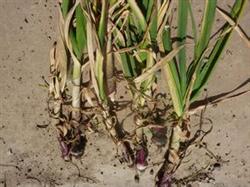
Spring rot of garlic can last until mid-June, and in years with low temperatures and high humidity, it even continues until the harvest period. It mainly affects the base of the leaf blade of the lower leaves. Water-soaked softened lesions appear, and after expanding upward and downward, they become light brown rot. In the middle and late growth stages, the central leaves are affected, and the soft rot spreads to below the flower stalk. Sometimes it can cause new...
-
Key Technical Points for Green Prevention and Control of Garlic Pests and Diseases
Green prevention and control of crops means using agricultural control, physical control, biological control, precision pesticide application and other techniques during agricultural production to control pests and diseases, with the aim of reducing pesticide use, lowering pesticide residues in agricultural products, and comprehensively improving the quality and safety level of agricultural products. This year, the garlic planting area in our town...
-
Understand the fertilizer requirements of garlic to grow high-yielding garlic
Garlic is a bulb crop with a high fertilizer demand that is also fairly tolerant of fertilizer. It is suitable for cultivation in sandy loam soil rich in organic matter, with a loose and fertile topsoil, comprehensive nutrition, and good water and fertilizer retention and aeration. According to research: for every 1000 kg of fresh garlic produced, 4.5-5 kg of nitrogen, 1.1-1.3 kg of phosphorus, and 4.1-4.7 kg of potassium are required, with a ratio of 3:1...
-
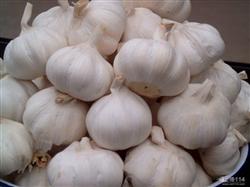
How to fertilize garlic for high yields? Understanding its nutrient requirements is key
Garlic is a bulb crop with a high nutrient demand and relatively good tolerance for fertilizer. It is suited to cultivation in sandy loam soil rich in organic matter, with a loose and fertile topsoil, comprehensive nutrition, and good water- and fertilizer-holding capacity and aeration. According to research: for every 1000 kg of fresh garlic produced, 4.5-5 kg of nitrogen, 1.1-1.3 kg of phosphorus, and 4.1-4.7 kg of potassium are required, in a ratio of 3...
-
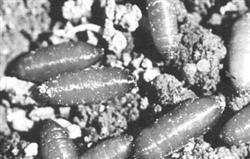
A Detailed Explanation of the Occurrence Patterns and Control Methods of Garlic Root Maggots
Root maggots is the collective term for the larval stage of Diptera pests that damage garlic and other crops. In recent years, the occurrence of garlic root maggots has shown a trend of increasing year by year. Root maggot damage can cause garlic yield reduction and has a major impact on garlic quality, with severe damage leading to serious economic losses. Garlic root maggots (larvae) generally gather on garlic roots and...
-
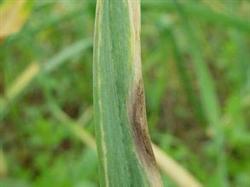
Characteristics and Control Methods of Garlic Gray Leaf Spot
(1) Symptom characteristics: It mainly affects the leaves. The lesions are long elliptical, initially light brown, later turning grayish white. On both sides of the leaves, the lesions produce fine grayish-black mold-like growth. In severe cases, the lesions merge, causing localized death of the leaves. The disease is severe in weather with warm days and cool nights, heavy fog, and heavy dew. (2) Control methods: ① Promptly remove damaged leaves...
-
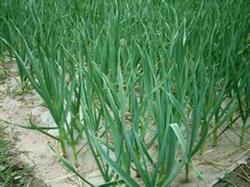
Symptom Identification and Control Measures for Nutrient Deficiency in Garlic
(1) Watering. Although garlic leaves are fairly drought-tolerant, the roots are shallow and have weak absorption capacity, so garlic requires relatively high soil moisture, and different growth stages have different requirements for soil moisture. After sowing, maintain relatively high soil moisture; if it is too dry, water in advance to achieve suitable moisture for sowing. Before winter...
-
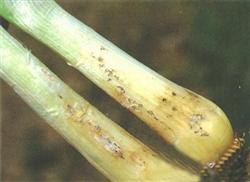
How to prevent and control garlic soft rot? The key is to act early
Garlic soft rot is a bacterial infection disease, and the pathogen is Erwinia carotovora, which mainly reinfects through the pathogen on diseased residues in the soil. Autumn-sown garlic begins to develop the disease from November. The disease is severe in fields with low-lying terrain, heavy rainfall and watering, poor drainage, and high field humidity, and in cultivation using the shaded ditch and sunny bed method...
-
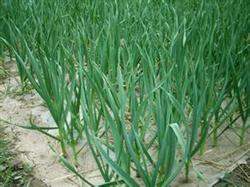
For high garlic yields, good spring management is key
Garlic farmer Qi Xinqiang has grown film-mulched garlic for many years, and through production has worked out a cultivation technique using double-layer plastic film mulching for garlic, achieving an earlier market launch for the garlic and a relatively high yield, with a yield increase of more than 10% per mu, which is worth learning from and drawing on for vegetable growers in the major garlic-producing areas. The cultivation technique is described below: 1. Select...
条件筛选