-

Introduction to the excellent garlic variety Purple-Skinned Hard-Leaf Ershuizao
Purple-Skinned Hard-Leaf Ershuizao is a local variety from Peng County on the outskirts of Chengdu, Sichuan. The plant height is 74 cm, and the plant spread is 15 cm. The pseudostem is about 33 cm long and 1.2 cm thick. The whole plant has 12~13 leaves, with the largest leaf 42 cm long and 2.5 cm wide. The garlic bulb is round, with a light purple outer skin, a transverse diameter of 3~4 cm, and a single bulb weight of 13~16 grams. Each bulb has 8~9 cloves, mostly arranged in two layers: 6 cloves in the outer layer and 2~3 in the inner layer, with an average single clove weight of 1.8 grams. The clove skin has 2 layers, is purplish red, and relatively thick. The bolting rate is about 95
-
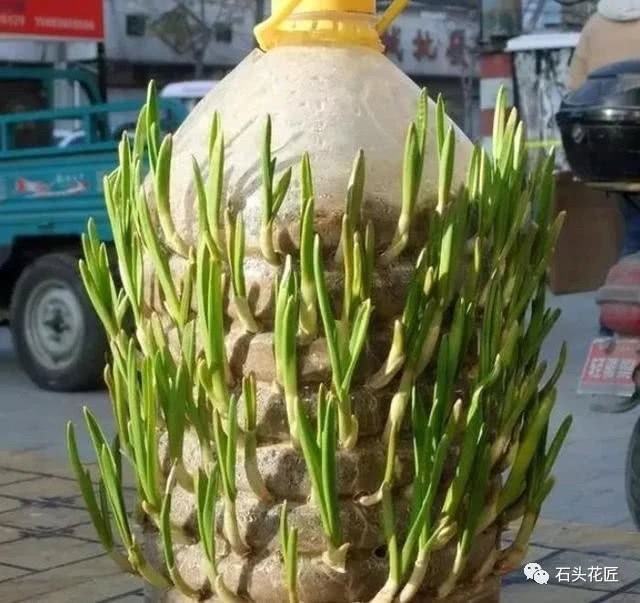
Grow garlic sprouts in an oil drum: 1 jin of garlic grows into a "column" in 10 days, water it a little and you won't finish eating it all winter
As people's living standards rise and improve, many people keep some green potted plants at home to beautify their rooms and purify the air. But now more and more flower lovers are no longer satisfied with just growing some flowers and plants at home, and instead grow...
-
High-yield and high-quality cultivation techniques for garlic in the Hangzhou area
Garlic is a plant of the genus Allium in the family Amaryllidaceae (Liliaceae) and is an important pungent vegetable. At present, the garlic planting area in China is gradually expanding. In addition to the main producing areas of Shandong Province, Jiangsu Province and Henan Province, it is also widely cultivated in other regions, among which the Yangtze River basin is also an important garlic producing area. Due to differences in climatic conditions, garlic cultivation techniques in each region have their own characteristics, and the cultivation and management methods also differ from those in other regions. The high-quality and high-yield cultivation techniques for garlic in the Hangzhou area are introduced as follows. 1 Site selection and land preparation Garlic likes fertilizer and water, and its root
-
What causes the yellowing and dying leaves of garlic chives? How to prevent and control it
Why do garlic chives have withered leaves? How to prevent and control it? Please explain the causes and control methods. During the growing period, garlic chives often develop dry, withered leaves, mainly caused by Phytophthora blight and gray mold, and in some cases by physiological disorders. The following methods can be used for prevention and control: Withered leaves caused by Phytophthora blight. Phytophthora blight is the main disease of garlic chives in protected cultivation...
-
Detailed Explanation of Key Techniques for High-Yield Cultivation of Garlic with Plastic Mulch
The yield-increasing effect of plastic mulch on garlic is very obvious. Compared with open-field cultivation, garlic under plastic mulch has significantly better roots, stems and leaves than open-field garlic; the yield of garlic scapes is 35% higher than open-field cultivation, and the yield of dry garlic bulbs is 30% higher than open-field cultivation. Its main cultivation techniques are: 1. Sowing at the right time. The optimal period for sowing garlic is to let the plants grow to 5-6 leaves before overwintering; at this time the plants have the strongest cold resistance, will not be killed by freezing in the severe winter, and lay a good foundation for the plants to successfully pass vernalization. The suitable sowing period for plastic-mulch garlic, from the Beijing area to the Handan area, is roughly between the two solar terms "Autumn Equinox" and "Cold Dew," that is, from the end of September to the beginning of October.
-

What are the preparation methods for garlic-specific fertilizer?
How is garlic-specific fertilizer prepared?
-
Cultivation Methods and Technical Key Points for Intercropping Garlic in Cotton Fields
When garlic is intercropped in cotton fields, each mu can produce 93 kg of lint cotton and 1,300 kg of garlic, with a benefit of about 3,300 yuan per mu. 1. Cotton: Use insect-resistant hybrid cotton varieties such as Kemian No. 3 and Kemian No. 6. Before sowing, deeply plow the land 25 cm, and together with plowing, apply 3,000 kg of decomposed livestock and poultry manure and 60 kg of potassium sulfate compound fertilizer per mu. Broadcast 2-3 kg of 5% phoxim granules per mu to control underground pests. The suitable sowing period for cotton in Pizhou City is around April 3. Seize sunny days to raise seedlings in double-film nutritional pots. Prepare about 3,000 pots per mu of field. After watering the seedbed thoroughly, sow dry seeds, 1 seed per pot. About 0.35 kg of coated cotton seed is needed per mu of field. After full emergence, ventilate promptly to reduce humidity and control pests and diseases, and cultivate strong seedlings. Transplant around May 12 when cotton seedlings are at the 4-leaf stage, using equal-row spacing with a row spacing of 1.2 m and a plant spacing of 33 cm, planting about 1,700 plants per mu. In mid-to-late May, together with hilling, apply 15-20 kg of urea, 50 kg of superphosphate, and 20 kg of potassium chloride per mu. Around July 20, apply flower and boll fertilizer according to cotton growth, with 30 kg of urea and 15 kg of potassium chloride per mu. In early August, apply topdressing for boll development, with 7.5-10 kg of urea per mu. Pay attention to spraying trace element solutions such as boron fertilizer and monopotassium phosphate. Use mepiquat chloride for chemical regulation 4 times: 1-1.5 g per mu at the full bud stage, 2-2.5 g per mu at the early flowering stage, 3-4 g per mu at the full flowering stage, and 3-5 g per mu after topping. Top around August 6. Pay attention to controlling the third generation of cotton bollworm, cotton aphid, mirids, red spider mites, tobacco whitefly, and other pests. Pull up cotton stalks in mid-November.
-
Common Problems in Garlic Cultivation and Their Solutions
Problems in Garlic Production and Countermeasures. Yongnian County is the only high-quality garlic production and export base in our province, with a planting area of 180,000 mu and an annual output of more than 100 million kg each of garlic scapes and garlic bulbs. In recent years, due to many years of continuous cropping, long-term asexual reproduction, and improper planting and management measures, the varieties have become severely degraded, pests and diseases have become serious, and yields have stagnated. To this end, we conducted a systematic investigation. At present, the main problems in garlic production in Yongnian County are as follows: severe variety degradation leading to variety degradation
-
How to store garlic scapes? Indicators and methods explained in detail
I. Storage indicators: 1. Temperature: -0.51°C; 2. Gases: O2 concentration 2-3%; CO2 concentration 6-8%; 3. Humidity: 9095%; 4. Freezing point: -0.7-0.8°C; 5. Gas injury thresholds: O2<1%, CO2<12%; 6. Storage period: 4-10 months. II. Storage method: controlled atmosphere storage. III. Technical process: timely harvest (without
-
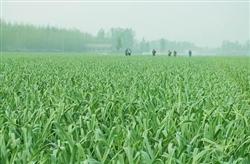
How to Grow Garlic Effectively? High-Yield Cultivation Techniques Shared
How can garlic be grown effectively? Please let me explain. Taking the most commonly used autumn-sowing cultivation method in southern China as an example, here is a brief description of each cultivation technique. 4.1 Soil preparation and basal fertilizer application. The soil preparation and fertilization work before sowing is basically similar to that for onions. Avoid continuous cropping; the soil should preferably be fertile, well-drained sandy loam...
条件筛选