How to fertilize garlic for high yields? Understanding its nutrient requirements is key
Garlic is a bulb crop with a high nutrient demand and relatively good tolerance for fertilizer. It is suited to cultivation in sandy loam soil rich in organic matter, with a loose and fertile topsoil, comprehensive nutrition, and good water- and fertilizer-holding capacity and aeration. According to research: for every 1000 kg of fresh garlic produced, 4.5-5 kg of nitrogen, 1.1-1.3 kg of phosphorus, and 4.1-4.7 kg of potassium are required, in a ratio of 3...
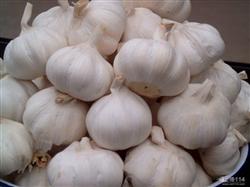
Garlic is a bulb crop with a high nutrient demand and relatively good tolerance for fertilizer. It is suited to cultivation in sandy loam soil rich in organic matter, with a loose and fertile topsoil, comprehensive nutrition, and good water- and fertilizer-holding capacity and aeration. According to research: for every 1000 kg of fresh garlic produced, 4.5-5 kg of nitrogen, 1.1-1.3 kg of phosphorus, and 4.1-4.7 kg of potassium are required, in a ratio of 3:1:3. Therefore, on the basis of fully understanding garlic's growth characteristics and nutrient requirements, implementing scientific fertilization is the key to achieving high-quality, high-yield garlic.
Based on garlic's growth characteristics and nutrient requirements, garlic fertilization should adhere to the principles of giving priority to organic fertilizers with chemical fertilizers as a supplement; giving priority to base fertilizer with topdressing as a supplement; applying coarse fertilizers carefully and chemical fertilizers skillfully, so as to meet garlic's needs for nutrient elements during growth and development to the greatest extent. (1) Apply sufficient base fertilizer: because garlic has a shallow root system and few root hairs, its ability to absorb nutrients is poor, so there are higher quality requirements for the base fertilizer (especially when the goal is harvesting garlic scapes and garlic bulbs). It should be based mainly on decomposed barnyard manure or cake fertilizer, combined with a certain amount of phosphorus-potassium compound fertilizer. Generally, apply 5000 kg of high-quality organic fertilizer, 100 kg of cake fertilizer, and 25-35 kg of nitrogen-phosphorus-potassium compound fertilizer per mu. (2) Apply seedling-promoting fertilizer early: applying seedling-promoting fertilizer early helps promote rapid root and seedling growth after emergence and improves the overwintering performance of autumn-sown garlic. The seedling-promoting fertilizer should be applied about 15 days after emergence. Except for fields with relatively high fertility and sufficient base fertilizer, where seedling-promoting fertilizer may be omitted, generally 15-20 kg of urea can be applied per mu. (3) Increase the application of green-up fertilizer: green-up fertilizer is generally applied in spring when temperatures rise and garlic's heart leaves and roots begin to grow, with 20-30 kg of urea per mu being appropriate. (4) Apply a heavy dose of scape-promoting fertilizer: this should generally be done when bulb bud and flower bud differentiation is complete and the garlic scape is forming. Because this is when garlic enters the period of vigorous growth, and both growth volume and nutrient demand reach their peaks successively, a heavy application is generally required, accounting for about 40%-50% of the total topdressing, with 25-30 kg of nitrogen-phosphorus-potassium compound fertilizer per mu. (5) Skillfully apply bulb-strengthening fertilizer: bulb-strengthening fertilizer should be applied 25-30 days after the scape-promoting fertilizer. It should be based mainly on nitrogen fertilizer, combined with a small amount of phosphorus and potassium fertilizer, to meet the nutrient needs of garlic scape and bulb expansion. Generally, about 15 kg of high-nitrogen compound fertilizer is applied per mu.