-

Is the free aquatic plant light giveaway real? Don't you lie to me, or I'll unfollow you.
I believe everyone who keeps a planted tank and is as broke as this editor complains about how expensive aquatic plant lights are......... Let's take a look at planted tank hobbyists' daily life, and that explains everything. What? Any random light costs 800? That's a whole month's food money for poor folks like this editor! So...
-

Live this way, and you will live freely and with peace of mind, which is the best way to live.
Conducting oneself Simply and honestly, Not playing mind games or schemes, not gossiping about others, Open your eyes, work hard, Close your eyes, sleep well. Conducting oneself When you laugh, laugh naturally, When you cry, cry your heart out. No pretense, no affectation...
-
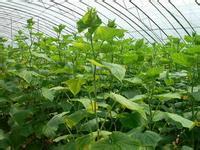
Detailed Explanation of Pollution-Free Cultivation Technical Regulations for Greenhouse Cucumbers
I. Soil Selection and Tillage 1. Soil selection: Choose a field with fertile soil, convenient transportation, and where the previous crop was not a cucurbit crop as the cultivation site. 2. Plowing, sun-bleaching and disinfection: The cultivation site should be flooded and plowed one month before planting, and after drying, land preparation should be carried out. 3. Bed preparation: 3-5 days before planting...
-
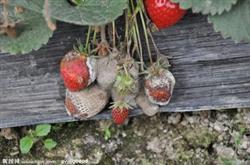
Key Technical Points for Pollution-Free Pest and Disease Control in Strawberries
Symptoms: Strawberry black mold mainly affects nearly ripe fruit. If harvested fruit is not promptly handled and packaged, it is even more susceptible to infection, causing large-scale fruit rot. When the disease first appears, the fruit surface shows light brown water-soaked lesions, which then rapidly soften and rot, producing a gray cotton-like growth, on which granular black mold develops, namely the mycelium and conidia...
-
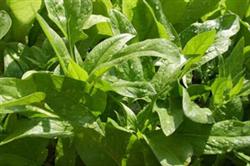
Detailed Explanation of the Key Points of Pollution-Free Cultivation Techniques for Spring Spinach
Spring spinach has a short growing period, and can generally be harvested and brought to market 30 to 50 days after sowing. Planting spring spinach plays an important role in quickly easing the spring shortage. 1. Select suitable varieties. After spring spinach is sown and emerges, the temperature is low and the daylight hours gradually lengthen, making it very easy to bolt after passing through phase development. Therefore, choose varieties that bolt late, have thick and large leaves...
-
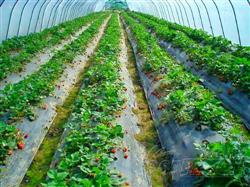
Detailed Explanation of Pollution-Free Cultivation Techniques for Strawberries in Plastic Greenhouses
(1) Variety selection: Choose varieties with early flower bud differentiation, shallow dormancy, and good cold resistance in low-temperature seasons, such as Chunxiang, Fengxiang, Lihong, Mingbao, Jingbao, Nyoho, and Hokowase. (2) Cultivating strong seedlings: 1. Carefully select mother plants. In March-April of the current year, select plants from the strawberry production greenhouse with vigorous growth, good inflorescence fruiting, few deformed fruits, well-developed root systems, and no pests or diseases as mother plants. Plant them in a dedicated seedling nursery to cultivate and propagate runner seedlings. Apply 2000-3000 kg of organic fertilizer and 10 kg of compound fertilizer per mu in the nursery. Make beds 2 m wide, with a planting row spacing of 1 m and a plant spacing of 0.3-0.4 m. After they establish, apply nitrogen fertilizer as early as possible, keep the soil moist, and remove all inflorescences that appear to promote runner growth.
-
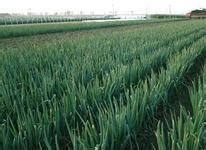
Key Points of Pollution-Free Pest Control Techniques in Welsh Onion Fields
I. Onion thrips, also known as small white insect or tobacco thrips. Adults and nymphs use their rasping-sucking mouthparts to suck sap from within the leaves, causing many fine, dense, long yellowish-white spots to form on the onion leaves. In severe cases, the leaves turn yellow and white, twist, die, and droop, seriously affecting the yield and quality of welsh onion. 1. Occurrence pattern. Onion thrips...
-
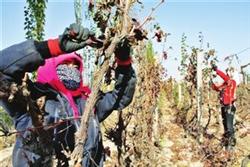
Grape Variety Introduction and Key Points of Pollution-Free Cultivation Techniques
The period for winter pruning of grapes is generally best carried out from early November to mid-February of the following year, that is, from 2 to 3 weeks after leaf fall to 3 to 4 weeks before spring bleeding occurs. Pruning too early will affect the return flow of nutrients, while pruning too late tends to cause bleeding. Bleeding often affects the sprouting of buds and impacts growth and fruiting. Now mainly...
-

DIY Multi-Tier Plant Stand Made from Scrap Wood Picked Up for Free - Not Selling It Even for 200 Yuan
The space at home is too small, yet the number of plants keeps growing, pot next to pot, and there is really no room to place them all. We might as well make a plant stand ourselves and stack the pots up - it saves space and money! DIY plant stands, money-saving secrets 1. Low-level plant stands...
-
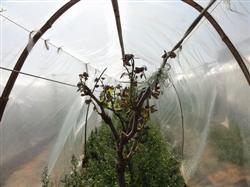
Three Simple Methods to Protect Greenhouse Grapes from Freezing
In recent years, the area under protected grape cultivation has increased. Due to large temperature fluctuations in early spring, temperature inversion easily occurs inside the greenhouse, causing early-sprouting varieties to suffer freeze damage. The following measures can be taken in production for prevention and remediation. 1. Water 1 day before the cold snap arrives to increase soil moisture and air humidity inside the greenhouse, using moisture to regulate temperature. 2. In the vineyard...
条件筛选