-
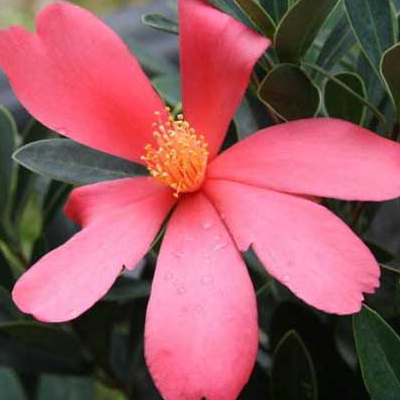
How much does a Four Seasons Camellia cost per plant? Detailed guide to cultivation methods
The Four Seasons Camellia is a plant of national treasure status, and also a very rare plant. So how much does a Four Seasons Camellia cost per plant? What are the cultivation methods for the Four Seasons Camellia? How much does a Four Seasons Camellia cost per plant: The Four Seasons Camellia is a national-treasure-grade camellia variety. Its flowers are very showy, with large blooms, and when in full bloom they are a brilliant red, much like azalea flowers.
-
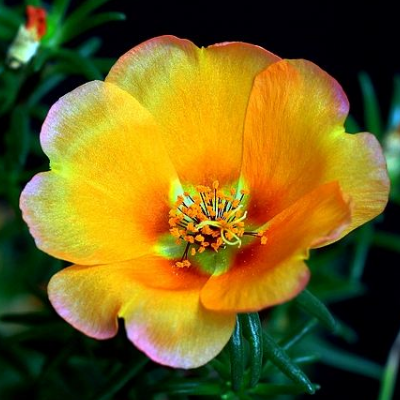
When does the Four O'Clock Flower bloom? A detailed guide to growing it
Most people have probably never heard of the Four O'Clock Flower (Mirabilis jalapa); this plant is just like its name. So when does the Four O'Clock Flower bloom? What are the methods for growing it? When does the Four O'Clock Flower bloom: The Four O'Clock Flower, also known as Scutellaria barbata, Moss Rose, and Night-falling Money, etc.
-

How do you plant clover seeds, and what is the difference between clover and four-leaf clover?
Clover is a kind of plant that many people know. It is quite pretty, and you can grow a whole patch of it. So how do you plant clover seeds? And what is the difference between clover and four-leaf clover: How to plant clover seeds: 1. Sowing and seed treatment. The best time to sow white clover is in spring and autumn.
-
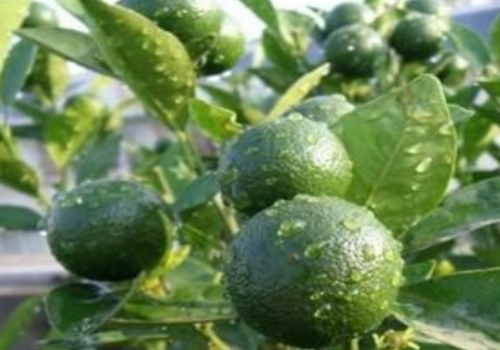
Four-Season Kumquat Planting Methods and Flowering and Fruiting Times
Four-Season Kumquat is a kind of fruit that many people know and are familiar with, so how do you grow this Four-Season Kumquat? How long until it flowers and fruits: How to grow Four-Season Kumquat: Planting methods. The planting of Four-Season Kumquat is very similar to the planting methods of other tree species.
-

Agricultural insurance paid out 80 million in claims over four years; dedicated legislation would offer more solid protection
Don't gamble with the heavens on winning or losing; buying agricultural insurance is truly practical! Claims paid out reached 80 million over four years, and dedicated legislation will be enacted for protection
-

A Complete Guide to the Four Key Points of Winter Pear Orchard Management
Four Key Points of Winter Pear Orchard Management
-

How to Propagate Four O'Clock Flowers and How They Differ from Night-Blooming Jasmine
Four o'clock flowers (Mirabilis jalapa) are often mistaken for night-blooming jasmine, and many people cannot tell them apart. How do you propagate four o'clock flowers? How do they differ from night-blooming jasmine? How to propagate four o'clock flowers: seed propagation of four o'clock flowers is very simple, and four o'clock flowers have a strong ability to self-sow, so
-

How to treat runt pigs? These four methods help you solve it easily
Method 1: Atractylodes lancea, pine needles and oriental arborvitae leaves, 15 g each, mix into the feed and feed to the pigs. Method 2: Carrots 100-200 g and Atractylodes lancea 30-60 g, feed orally. Method 3: Mirabilite 25-35 g, rhubarb 10 g and senna leaf 6 g, grind into powder and feed orally. Mainly treats runt pigs caused by chronic gastrointestinal disease. Method 4: Dry yeast 50-100 g and Cyrtomium fortunei 9-15 g, grind into powder and feed orally.
-
Cotton production outlook not optimistic, experts recommend focusing on four management measures
Reporters learned from the province-wide cotton production and high-yield creation work conference held on August 26 that this year's cotton production situation in our province is extremely unoptimistic. In response to the current realities of cotton production, attending experts recommended that cotton farmers focus on four measures. This year's cotton production in our province is characterized by reduced area, lower per-unit yield, and decreased total output. According to incomplete statistics, the province's actual harvested cotton area is around 11 million mu, a decrease of more than one million mu compared to last year. Cotton per-unit yield is expected to be 70-75 kg, with total output of 75-80 million tons, a decrease of 10
-
Four key points to grasp in winter management of Pinellia ternata
1. Check the seed tubers: Normally, the tubers of Pinellia ternata begin to take root and sprout about half a month after planting. Sometimes, due to low temperatures, tuber rot may occur, so the growth of the seed tubers should be checked in a timely manner. For spots where sprouts have still not emerged, the soil can be gently scraped open by hand or with a bamboo strip, wooden stick, etc. Any seed tubers that have not rooted or whose rootlets are yellow-black are inferior and should be dug out and replanted in a timely manner. 2. Prevent waterlogging and drought: If continuous overcast and rainy weather occurs in winter, the soil is prone to waterlogging and oxygen deficiency, which is not only unfavorable for the tubers of Pinellia ternata to take root underground, but also causes disease and rot. Therefore,
条件筛选