How much does a Four Seasons Camellia cost per plant? Detailed guide to cultivation methods
The Four Seasons Camellia is a plant of national treasure status, and also a very rare plant. So how much does a Four Seasons Camellia cost per plant? What are the cultivation methods for the Four Seasons Camellia?
How much does a Four Seasons Camellia cost per plant:
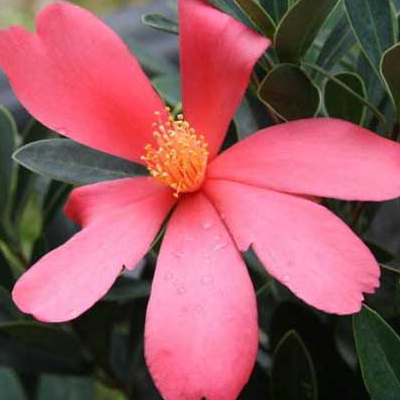
The Four Seasons Camellia is a national-treasure-grade camellia variety. Its flowers are very showy, with large blooms, and when in full bloom they are a brilliant red, much like azalea flowers. Its leaves are deep green and glossy, with the graceful bearing of azalea leaves. It grows vigorously, and its distribution area is extremely narrow; it was originally found only in scattered patches within Yangchun. It has high ornamental value.
The price of Four Seasons Camellia nursery stock is about 10 yuan per plant, but prices vary greatly with different specifications. The Four Seasons Camellia is a rare protected plant in our country, with extremely strong adaptability; in a low-temperature environment of minus 5 degrees and a high-temperature environment of 38 degrees it still bears red flowers all over the tree. Moreover, the Four Seasons Camellia is currently one of the most precious camellia varieties in the world that blooms in all four seasons. At present, only 840 plants survive in the wild worldwide.
What are the cultivation methods for the Four Seasons Camellia:
1. Soil: The Four Seasons Camellia has high soil requirements. Generally its soil should be relatively high in humus, with a pH value between 5 and 6.5, slightly acidic. Its best soil mix is 50% mountain soil, 40% wood chips or edible mushroom residue, and 10% cake fertilizer powder or livestock manure and phosphate fertilizer powder.
2. Light: The Four Seasons Camellia avoids strong light, so sunlight must be carefully considered when planting. In spring and autumn it requires ample light, but in summer it must be kept away from direct sunlight; if exposed to strong light for too long, it will easily die.
3. Temperature: The Four Seasons Camellia is neither cold-tolerant nor heat-tolerant. Its most suitable temperature is 18 to 25 degrees, so the ambient temperature must not be too high or too low, otherwise its growth will be affected. In winter the indoor temperature must be above 3 degrees; if it drops below 0 degrees, the plant will suffer frost damage.
4. Watering: The Four Seasons Camellia likes a moist environment. It cannot be too dry, cannot be too wet, and cannot alternate between dry and wet. In spring it can be watered more; in summer it should be watered twice a day, morning and evening; in autumn the same as in spring; in winter it is best to water before and after the plant.
5. Fertilizing: The Four Seasons Camellia is relatively fond of fertilizer, but there is a limit to fertilizing; never apply too much. Generally, fertilize about 3 times during the nearly half a year after flowering, and once in winter is enough. To make the flowers more beautiful, it is best to include more phosphate fertilizer in the fertilizer.
6. Pruning: Pruning the Four Seasons Camellia is very important. Generally, branches that affect the tree shape and diseased or weak branches are cut off, and flower buds are also managed; once the buds are too dense, they should also be thinned out. After the flowers fade, they should also be picked off in time, which can reduce nutrient consumption.
7. Repotting: The Four Seasons Camellia generally needs repotting once every two years; changing to a larger pot is beneficial to its growth. The best time for repotting is in April. Do not remove all the old soil, and also add a small amount of base fertilizer, then water.
8. Pests and diseases: The Four Seasons Camellia is very prone to illness. The common ones are mainly black mold disease and anthracnose. In this case, it is only necessary to spray 0.5-degree Bordeaux mixture. The main pest is the tea shoot borer; in this case, it is mainly enough to cut off the affected shoots.
Alright, friends, now you know how to cultivate it.
How much does a Four Seasons Camellia cost per plant? How to grow a Four Seasons Camellia
The Four Seasons Camellia has the graceful bearing of azalea leaves, grows vigorously, and its distribution area is extremely narrow; it was originally found only in scattered patches within Yangchun. It has high ornamental value. So how much does a Four Seasons Camellia cost per plant? How to grow a Four Seasons Camellia?
How much does a Four Seasons Camellia cost per plant:
The price of Four Seasons Camellia nursery stock is about 10 yuan per plant, but prices vary greatly with different specifications. The Four Seasons Camellia is a rare protected plant in our country, with extremely strong adaptability; in a low-temperature environment of minus 5 degrees and a high-temperature environment of 38 degrees it still bears red flowers all over the tree. Moreover, the Four Seasons Camellia is currently one of the most precious camellia varieties in the world that blooms in all four seasons. At present, only 840 plants survive in the wild worldwide.
Current species status of the Four Seasons Camellia:
The Four Seasons Camellia is a national first-class protected plant, known as the “plant giant panda”. It is distributed in Yunnan, Guangxi, Guangdong and Sichuan. Its wild numbers are scarce, and it is also rarely seen on the camellia market. It was once nearly driven to extinction by reckless poaching. In our country, a natural population was found in the Ehuangzhang Nature Reserve in Yangchun County, Guangdong Province. Because it was continuously dug up by people and resource protection was insufficient, the ecological environment it depended on was damaged. Only nearly a thousand wild plants now remain, and it has been listed as a critically endangered species in the “China Species Red List”. Therefore, preserving germplasm resources and expanding propagation of this species is of great significance.
Cultivation methods for the Four Seasons Camellia:
1. Soil: The Four Seasons Camellia has high soil requirements. Generally its soil should be relatively high in humus, with a pH value between 5 and 6.5, slightly acidic. Its best soil mix is 50% mountain soil, 40% wood chips or edible mushroom residue, and 10% cake fertilizer powder or livestock manure and phosphate fertilizer powder.
2. Light: The Four Seasons Camellia avoids strong light, so sunlight must be carefully considered when planting. In spring and autumn it requires ample light, but in summer it must be kept away from direct sunlight; if exposed to strong light for too long, it will easily die.
3. Temperature: The Four Seasons Camellia is neither cold-tolerant nor heat-tolerant. Its most suitable temperature is 18 to 25 degrees, so the ambient temperature must not be too high or too low, otherwise its growth will be affected. In winter the indoor temperature must be above 3 degrees; if it drops below 0 degrees, the plant will suffer frost damage.
4. Watering: The Four Seasons Camellia likes a moist environment. It cannot be too dry, cannot be too wet, and cannot alternate between dry and wet. In spring it can be watered more; in summer it should be watered twice a day, morning and evening; in autumn the same as in spring; in winter it is best to water before and after the plant.
5. Fertilizing: The Four Seasons Camellia is relatively fond of fertilizer, but there is a limit to fertilizing; never apply too much. Generally, fertilize about 3 times during the nearly half a year after flowering, and once in winter is enough. To make the flowers more beautiful, it is best to include more phosphate fertilizer in the fertilizer.
6. Pruning: Pruning the Four Seasons Camellia is very important. Generally, branches that affect the tree shape and diseased or weak branches are cut off, and flower buds are also managed; once the buds are too dense, they should also be thinned out. After the flowers fade, they should also be picked off in time, which can reduce nutrient consumption.
7. Repotting: The Four Seasons Camellia generally needs repotting once every two years; changing to a larger pot is beneficial to its growth. The best time for repotting is in April. Do not remove all the old soil, and also add a small amount of base fertilizer, then water.
8. Pests and diseases: The Four Seasons Camellia is very prone to illness. The common ones are mainly black mold disease and anthracnose. In this case, it is only necessary to spray 0.5-degree Bordeaux mixture. The main pest is the tea shoot borer; in this case, it is mainly enough to cut off the affected shoots.
Cultivation methods and precautions for the Four Seasons Camellia
The Four Seasons Camellia is a favorite ornamental plant of many people in daily life. As its name suggests, it blooms continuously through all four seasons, and its flowers are brightly colored and richly fragrant, giving it particularly high ornamental value. However, it is not easy to grow this beautiful camellia well; you must have a comprehensive understanding of its cultivation methods and also know what to pay attention to during cultivation.
Cultivation methods for the Four Seasons Camellia1. Soil
When cultivating the Four Seasons Camellia, its soil requirements are relatively high. This plant likes fertile soil with high humus content, and the soil pH value should be between 5 and 6.5, remaining slightly acidic. When growing it at home, you can use 50% mountain soil, add 40% edible mushroom residue and 10% cake fertilizer powder, and mix them evenly to make potting soil, which is most beneficial to the growth of the Four Seasons Camellia.
2. Light conditions
During cultivation, the Four Seasons Camellia likes ample sunlight, but it fears direct strong light. In spring and autumn, it can be placed directly in a sunny environment, but after entering the hot summer, it must be moved to a shady area where strong light cannot reach it, otherwise its leaves will turn yellow, and in severe cases it may even die.
3. Fertilizing and watering
The Four Seasons Camellia likes a moist environment and should usually be watered in time. In summer and autumn it can be watered at noon, once every 2 to 3 days. After entering summer, it should be watered every day, once in the morning and once in the evening. The Four Seasons Camellia also has a relatively large demand for fertilizer. Under normal circumstances, it can be fertilized once a month. After entering winter, nitrogen fertilizer can be stopped. Concentrated fertilizer must not be applied; it is best to choose a dilute liquid fertilizer.
Cultivation precautionsWhen cultivating the Four Seasons Camellia, be sure to pay attention to pruning. Diseased and weak branches that appear should be cut off in time, and after it enters the flowering period, overly dense flower buds should also be cleared away. Only in this way can a good-looking plant shape and vigorous growth be maintained. In addition, when cultivating the Four Seasons Camellia, attention should also be paid to disease prevention and control. After discovering black mold disease and anthracnose, spray medicine in time.