Four-Season Kumquat Planting Methods and Flowering and Fruiting Times
Four-Season Kumquat is a kind of fruit that many people know and are familiar with, so how do you grow this Four-Season Kumquat? How long until it flowers and fruits:
How to grow Four-Season Kumquat:
1. Planting methods
The planting of Four-Season Kumquat is very similar to the planting methods of other tree species. Usually, plant grafting or directly planting seedlings can be used. When planting, pay attention to the fertility of the soil and also its drainage. Planting can be done in spring and autumn each year, with a certain amount of fertilizer applied, and pesticides sprayed regularly to prevent and control pests and diseases encountered during the growth stage. Four-Season Kumquat is generally grown in pots, so during the growing period ensure the soil is fresh, and change the soil in the flowerpot about once a year, but do not replace all the soil at once; change it part by part to improve the survival rate after soil replacement.
2. Management methods
In addition to frequent watering and more fertilization, Four-Season Kumquat also needs to be kept attractive in appearance. To help it grow better, cut off excess branches, flowers, and fruits to prevent too many or too densely packed fruits from affecting the normal growth of Four-Season Kumquat, causing malnutrition, while also ensuring the fruits produced are more juicy and delicious.
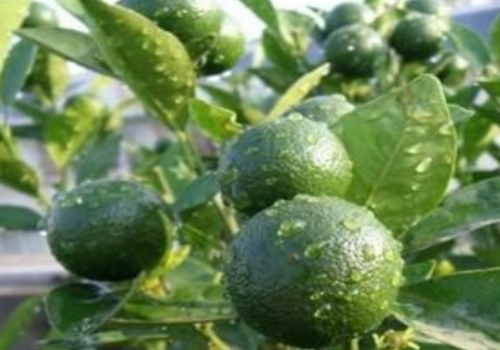
How long until Four-Season Kumquat flowers and fruits:
The flowers are pure white and fragrant, and it blooms multiple times a year.
Once a year. From flowering to fruit maturity, Four-Season Kumquat takes about six months.
That is all for the introduction to the planting methods of Four-Season Kumquat. Now you know the flowering and fruiting times, right!
Key points for Four-Season Kumquat flowering and fruiting
From flowering to fruit maturity, Four-Season Kumquat takes about six months.
Generally speaking, the flowering period should preferably be around "Start of Autumn," earlier around "Major Heat," and later around "End of Heat."
Like kumquat, Four-Season Kumquat does not bloom on new shoots that grow after overwintering, but produces the most flowers on summer shoots and autumn shoots. To achieve this goal, we should pay attention to the following points:
1. For potted Four-Season Kumquat, fruits should be picked and half the branches cut before the Lunar New Year's "Yuanxiao" (the fifteenth day of the first lunar month). The cut should be slightly above the "axillary bud" (the fork position between a lateral branch and the main branch). Only then will there be more flowers in summer and more fruits by the next Spring Festival.
2. Pinching should be done in spring and summer, that is, removing the top part of tender branches to encourage more branching, so there will be more flowers and fruits in the future. Pinching can shorten the growth cycle of each shoot and encourage the next shoot to sprout earlier; however, 5-6 leaves should be left on each branch.
3. After pruning in spring, place the plant in a shaded place to rest briefly, then it needs sufficient sunlight. Sunlight can increase temperature, and both can induce changes in the internal structure of the "buds" of Four-Season Kumquat. These are two important conditions for flower bud formation. Therefore, it should be placed in a spot with sunlight and air circulation.
4. After pruning and pinching, fertilizer must not be lacking. Balanced fertilizer should be the main type, and granular fertilizer can be applied, but do not use "magic fertilizer," as "magic fertilizer" will damage the roots of Four-Season Kumquat. From late spring to summer and autumn, switch to "flower fertilizer," mainly phosphorus and potassium elements, applied once every ten days, diluted one thousand times. At the same time, do not lack magnesium, otherwise the branches will be weak and produce few flowers. A small amount of "magnesium sulfate" can be applied (sold in chemical raw material stores).
5. Between spring and summer, after the last-stage shoots turn green but before they mature, control water for about twenty days. You can also first control water for five to seven days, then water for three days, then control water again for seven days. During water control, the leaves will inevitably dry and curl, so spray water on the leaf surface in the morning, noon, and evening; only then can flowering be promoted.
6. Using the "ring-cutting method" helps promote flowering. Between spring and summer, cut only the bark of thick branches, limited to not damaging the xylem, with the cut width about the length of one finger joint.
Four-Season Kumquat Citrus mitis Four-Season Kumquat illustrated guide: How to care for Four-Season Kumquat / How to propagate Four-Season Kumquat
Four-Season Kumquat profileFour-Season Kumquat Citrus mitis
Aliases: Four-Season Kumquat, Monthly Kumquat
Classification: Shrub flowers
Family and genus: Plantae, Angiosperms, Dicotyledoneae, Rutaceae, Citrus
Peak flowering period: All four seasons
Four-Season Kumquat is an evergreen shrub or small tree of the Rutaceae family and Citrus genus. The tree is upright, with dense branches and leaves, many branches, thorny or thornless, dark green leaves, wavy blunt teeth along the leaf margin, and narrow wing leaves. The flowers are pure white and fragrant, blooming multiple times a year. The fruit is orange-yellow, round or oblate, often lopsided and irregular, with a small ring mark often at the top, dense oil cells, either flat or protruding. The flesh has 8-11 segments, is sour, and very difficult to eat raw, but can be used as a substitute for lime. Seeds are polyembryonic, with green embryos. Four-Season Kumquat blooms multiple times a year, and its orange-yellow fruits have excellent ornamental effect. There are Four-Season Kumquat bonsai made from it. The fruit has a cough-relieving effect. Four-Season Kumquat is also called Monthly Kumquat. It is a hybrid of kumquat and mandarin...
Four-Season Kumquat cultivation methods and precautions, introduction to Four-Season Kumquat
Four-Season Kumquat is an evergreen shrub or small tree of the Rutaceae family and Citrus genus. The tree is upright, with dense branches and leaves, many branches, thorny or thornless, dark green leaves, wavy blunt teeth along the leaf margin, and narrow wing leaves. The flowers are pure white and fragrant, blooming multiple times a year. The fruit is orange-yellow, round or oblate, often lopsided and irregular, with a small ring mark often at the top, dense oil cells, either flat or protruding. The flesh has 8-11 segments, is sour, and very difficult to eat raw, but can be used as a substitute for lime. Seeds are polyembryonic, with green embryos.
Four-Season Kumquat blooms multiple times a year, and its orange-yellow fruits have excellent ornamental effect. There are Four-Season Kumquat bonsai made from it. The fruit has a cough-relieving effect. Four-Season Kumquat is also called Monthly Kumquat. It is a hybrid of kumquat and mandarin, with excellent ornamental effect.
Morphological characteristics of Four-Season Kumquat
Four-Season Kumquat is a variety commonly used for New Year kumquat potted plants. It is an evergreen shrub native to China. The crown is round-headed or ovate, the tree is upright, the branches and leaves are dense, and short thorns are present at the leaf axils on the branches. The leaves are elliptical or ovate, about 4.4-6.5 cm long and about 2.1-3.3 cm wide, with the length about 1.8-2.4 times the width. The leaf margin is entire or shallowly wavy, the leaf tip is blunt or slightly pointed and concave, the wing leaves are narrow, the petiole is short, and the veins are not obvious. New leaves are light green, and old leaves are dark green. It can bloom in all four seasons, hence the name Four-Season Kumquat, but it is most abundant from spring to summer. Small flowers are single or in 2-3 flowers, terminal or axillary, white, and fragrant. From the time flower buds become visible to the naked eye until flowering takes only about 13-15 days. Young fruit is green, turning orange or deep orange when mature, with a single fruit weight of 15-20 g. The fruit is oblate, sometimes lopsided and irregular, with a slightly sunken top. The oil cells on the fruit surface are dense, either flat or protruding, and there is often a small ring mark at the top. The fruiting branches are pendulous. The peel is thin and easy to peel. Inside the fruit there are 8-11 segments, and the fruit tastes strongly sour and is not suitable for eating raw. Seeds are numerous.
Four-Season Kumquat also has a variety called Variegated Four-Season Kumquat, with milky yellow patches or stripes distributed on the leaves, both sides of the leaves concave inward, and some fruits also show alternating yellow and green colors.
Four-Season Kumquat flowers are pure white and fragrant, blooming multiple times a year. The fruit is orange-yellow, round or oblate, often lopsided and irregular, with a small ring mark often at the top, dense oil cells, either flat or protruding. The flesh has 8-11 segments, is sour, and very difficult to eat raw, but can be used as a substitute for lime. Seeds are polyembryonic, with green embryos, and the ornamental effect is excellent.
Ecological habits of Four-Season Kumquat
Four-Season Kumquat prefers a warm, humid environment with ample sunlight and avoids drought. It requires fertile, well-drained, slightly acidic soil.
Cultivation techniques of Four-Season Kumquat: Key cultivation points
1. Watering
Four-Season Kumquat prefers warmth and humidity but avoids waterlogging. During the growing period, it is best to keep the soil moist. In summer, spray water twice a day and also spray the ground to lower temperature and increase air humidity. Dust must not accumulate on the leaf surface, so the leaves should be rinsed frequently. During flower bud differentiation, water control should be carried out on the tree to promote flower bud differentiation. Four-Season Kumquat grows vigorously and requires a long water-control period. To avoid leaf drop caused by excessive drought, water can be controlled for 3 days and then watered for 2 days, repeating this intermittent treatment. Alternatively, after a period of drought, water for 5-7 days. After the tree vigor has slightly recovered, carry out ring-cutting treatment to promote flowering.
2. Fertilization
Mainly apply farmyard manure. During the flowering period, spray 2% borax plus 5% urea. After fruiting, apply phosphorus and potassium fertilizer, and one month before fruit drop spray 50 ppm gibberellin to help improve fruit set rate and prolong the ornamental period.
3. Repotting
It is best to repot once a year. Each time you repot, treat the roots and remove about 1/3 of the old soil.
4. Flower and fruit thinning
According to the principle of removing the weak and keeping the strong and distributing evenly, thin out excessively dense flowers and fruits.
Bonsai production
Seedling sources
Grafting is mostly used to obtain seedlings. Trifoliate orange and citron are mostly used as rootstocks, and cuttings can also be used to obtain seedlings.
Shaping
1. Potting usually begins after Qingming. Plain fired pots or purple clay pots can be used, and the potting soil can be made by mixing humus soil, garden soil, and coal cinder evenly. Decomposed cake fertilizer and human excrement and urine can be used as base fertilizer.
2. When shaping, achieve the following two points:
First, understand the physiological characteristics of Four-Season Kumquat
Four-Season Kumquat can bloom and fruit multiple times within a year. Its flower bud differentiation can proceed after the shoots stop growing and on the basis of a certain level of nutrition. Shoots that sprout in the current year can bloom and fruit.
Second, shaping and pruning
Before the spring shoots sprout each year, carry out one heavy pruning of Four-Season Kumquat, cutting off dead branches, weak branches, pest- and disease-damaged branches, and overly dense branches, keeping healthy branches, with 2-3 buds left on each branch. Weak trees can be cut back to the first branching point to promote healthy spring shoots. When spring shoots grow to 15-20 cm long, pinching should be carried out, and phosphorus and potassium fertilizer should be applied at the same time to form a neat crown, making the crown full and the tree robust and attractive.
Cultivation methods of Four-Season Kumquat: Household potted Four-Season Kumquat
The best time to repot potted Four-Season Kumquat is in early March of the Gregorian calendar, that is, around the lunar "Awakening of Insects." Before repotting, pick the kumquat fruits, prune the kumquat tree into a spherical shape, keep each lateral branch 5 to 7 cm long, and cut off overly dense or weak branches. In addition, about one third of the small roots should be cut off, without damaging the main roots, remove the old mud, and keep a root ball of soil about the size of a bowl. Put base fertilizer into the kumquat pot, plant the pruned plant back into the pot, then cover with fertile new pond mud, and place it in a ventilated place. Before the plant sprouts, do not expose it to long periods of sunlight, do not water too much, just keep it moist, and do not fertilize too much. When the kumquat tree sprouts new buds and the leaves increase, you can water more, fertilize twice a month, and apply dilute nitrogen fertilizer, or fermented human urine and peanut meal. If pests are found, control them promptly.
In mid-July, the kumquat gradually blooms, and the flowers at this time should be properly retained. If it still has not bloomed by mid-August, remedial measures should be taken. Place the kumquat in a place with ample sunlight for more sun exposure (at night, light can be used as a supplement), and water less (wait until the leaves wrinkle before watering a little clear water), until some small white dots appear at the leaf axils. These are flower buds, and then normal management can be resumed.
After the plant sets fruit, all newly opened flowers in late October should be removed to reduce nutrient consumption and keep the branches strong and the fruits large. By the Spring Festival, you can enjoy auspicious Four-Season Kumquat.
Key points for Four-Season Kumquat flowering and fruiting
From flowering to fruit maturity, Four-Season Kumquat takes about six months. Generally speaking, the flowering period should preferably be around "Start of Autumn," earlier around "Major Heat," and later around "End of Heat."
Like kumquat, Four-Season Kumquat does not bloom on new shoots that grow after overwintering, but produces the most flowers on summer shoots and autumn shoots. To achieve this goal, we should pay attention to the following points:
1. For potted Four-Season Kumquat, fruits should be picked and half the branches cut before the Lunar New Year's "Yuanxiao" (the fifteenth day of the first lunar month). The cut should be slightly above the "axillary bud" (the fork position between a lateral branch and the main branch). Only then will there be more flowers in summer and more fruits by the next Spring Festival.
2. Pinching should be done in spring and summer, that is, removing the top part of tender branches to encourage more branching, so there will be more flowers and fruits in the future. Pinching can shorten the growth cycle of each shoot and encourage the next shoot to sprout earlier; however, 5-6 leaves should be left on each branch.
3. After pruning in spring, place the plant in a shaded place to rest briefly, then it needs sufficient sunlight. Sunlight can increase temperature, and both can induce changes in the internal structure of the "buds" of Four-Season Kumquat. These are two important conditions for flower bud formation. Therefore, it should be placed in a spot with sunlight and air circulation.
4. After pruning and pinching, fertilizer must not be lacking. Balanced fertilizer should be the main type, and granular fertilizer can be applied, but do not use "magic fertilizer," as "magic fertilizer" will damage the roots of Four-Season Kumquat. From late spring to summer and autumn, switch to "flower fertilizer," mainly phosphorus and potassium elements, applied once every ten days, diluted one thousand times. At the same time, do not lack magnesium, otherwise the branches will be weak and produce few flowers. A small amount of "magnesium sulfate" can be applied (sold in chemical raw material stores).
5. Between spring and summer, after the last-stage shoots turn green but before they mature, control water for about twenty days. You can also first control water for five to seven days, then water for three days, then control water again for seven days. During water control, the leaves will inevitably dry and curl, so spray water on the leaf surface in the morning, noon, and evening; only then can flowering be promoted.
6. Using the "ring-cutting method" helps promote flowering. Between spring and summer, cut only the bark of thick branches, limited to not damaging the xylem, with the cut width about the length of one finger joint.
Propagation methods of Four-Season Kumquat
Four-Season Kumquat is propagated by grafting, and West Indian lime is mostly used as the rootstock. Generally, grafting is best in autumn and winter or early spring.
Disease and pest control of Four-Season Kumquat
For disease and pest control of Four-Season Kumquat, attention should be paid to effectively controlling pests and diseases such as scale insects, red spider mites, aphids, and powdery mildew.
Anthracnose
Strengthen cultivation management and prevent excessive application of nitrogen fertilizer; during the spring and summer shoot sprouting periods and before fruit ripening, mancozeb, copper abietate, zineb, chlorothalonil, etc. can be selected and sprayed on the crown, about once every 15 days, for 3-4 consecutive times.
Foot rot
Drain water promptly, improve light transmission and ventilation conditions in the orchard, and strengthen control of longhorn beetles and other trunk pests; select disease-resistant rootstocks such as trifoliate orange, citrange, and sweet orange. For already infected plants, disease-resistant rootstocks can be used for rootstock replacement. Chemical control: scrape off the diseased spots and apply medicine. Commonly used agents include carbendazim, thiophanate-methyl, etc.
Mites
(Citrus red mite, four-spotted yellow spider mite, rust mite). Before and after flowering (March-May) and autumn (September-November) are the key periods for controlling red mites: control is needed when the population density before flowering reaches 1-2 mites/leaf, and after flowering and in autumn reaches 5-6 mites/leaf. The spring shoot sprouting period, young fruit period, and fruit enlargement period are the main periods for controlling rust mites: when rust color first appears on the underside of current-year spring shoot leaves; and when the population density on leaves or fruits reaches 2-3 mites per leaf, control should be carried out immediately. Commonly used agents include hexythiazox, pyridaben, propargite, bromopropylate, amitraz, etc. Take care to protect natural enemies such as long-setaed predatory mites, obtuse mites, ladybird beetles that eat mites, Japanese square-headed beetles, and green lacewings.
Scale insects
(Arrowhead scale, red wax scale, cottony cushion scale, etc.). Key periods for chemical control: for arrowhead scale, the first-generation nymph stage; for red wax scale, the period when a large number of larvae move onto shoots to cause damage (generally from early to mid-May to mid-June); for cottony cushion scale, the peak larval outbreak stage. Commonly used agents include buprofezin, methidathion, matrine + nicotine, chlorpyrifos, and mineral oil emulsion. Pay attention to improving ventilation and light transmission conditions in the orchard; protect and utilize natural enemies such as Japanese square-headed beetles, Chilocorus rubidus, green lacewings, golden aphid wasps, Australian ladybird beetles, and large red ladybird beetles.
Aphids
When the damage rate of new shoots reaches 25%, pesticide spraying should be carried out immediately. Commonly used agents include acetamiprid, dimethoate, and carbosulfan. Attention should be paid to protecting seven-spotted ladybird beetles, large green lacewings, hoverflies, aphid wasps, etc., and cutting off overwintering eggs to reduce the pest population base.
Leafminer
The key control period is the summer and autumn shoot sprouting periods (early to mid-July). Promptly remove scattered summer and autumn shoots, and combine with fertilizer and water management to encourage the plant's new shoots to grow robustly and neatly. Chemical control: spray when new shoots have sprouted to 1-2 cm, once every 7-10 days, for 2-3 consecutive times. Commonly used agents include abamectin, cartap, and cyhalothrin, etc.
Longhorn beetles
From May to August, manually catch and kill adult star longhorn beetles and green citrus longhorn beetles at noon on sunny days, and catch and kill adult brown longhorn beetles in the evening; promptly remove eggs, newly hatched larvae, and cut off damaged shoots; soak cotton or cotton yarn with technical-grade insecticides such as dimethoate, then plug the insect holes, and seal the holes with mud to poison and kill the larvae.
Flower bud midge
At the bud emergence stage, choose agents such as phoxim powder and diazinon granules, mix evenly with fine soil, and spread on the soil surface under the tree canopy, once every 7 days, for 2-3 consecutive times; when flower buds are 2-3 mm in diameter (when they turn white), choose agents such as parathion and trichlorfon to spray the crown; remove damaged flower buds as early as possible and bury them deeply or boil them; in winter, deeply turn the orchard soil to eliminate some overwintering pest pupae.
Medicinal or dietary therapeutic value of Four-Season Kumquat
The medical information and healthy dietary information on Huhuawang are for reference only and cannot be used as a basis for diagnosis or medical treatment. For any health problem, consult professional medical personnel, and for the treatment of any disease, follow a doctor's advice.
Ultimate flower-protecting mission: To love yourself, start from reality and follow a doctor's advice carefully. For illness, do not be careless, do not delay, do not give up hope, face it bravely, warm the silent world with love, and care for the flower field within your heart with your heart.
Medical value
Take a somewhat larger glass bottle, clean it thoroughly and wipe it dry until there is not a single drop of water left. Pick Four-Season Kumquat, wash it under running water, and dry it in a cool place. Never expose it to the sun. According to taste, it can be preserved fully salty or slightly sweet. Following the steps of one layer of salt and one layer of kumquat, or two layers of salt, two layers of kumquat, and two layers of sugar, put the Four-Season Kumquat into the glass bottle one by one. After putting in all according to your amount of Four-Season Kumquat, seal the mouth of the glass bottle. After leaving it for half a year, the Four-Season Kumquat will be preserved.
Precautions: When selecting Four-Season Kumquat, never choose damaged or spoiled ones. During preservation, remember that it must not contact water (not even a single drop).
Effect of preserved Four-Season Kumquat: Relieves cough.
Flower language of Four-Season Kumquat
The flower language of Four-Season Kumquat is: good fortune in all four seasons and peace.
Four-Season Kumquat pictures