-

What to do about blackened canes on roses? One trick to solve it easily
0002. What to do when a rose cane turns black? One trick to solve it! The day before yesterday, a gardening friend asked Lanyao, saying that their rose canes had turned black, and they didn't know the cause or how to deal with it. Have you ever come across blackened canes on roses...
-

How to Plant Sugarcane to Increase Yield? A Detailed Guide to Practical Planting Methods
How to Increase Sugarcane Yield
-
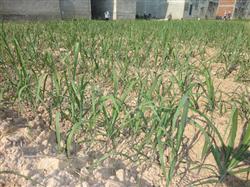
Detailed Explanation of the Cultivation Technique of Interplanting Spring Peanuts with Sugarcane
Sugarcane originated in tropical and subtropical regions and was formerly limited to cultivation south of the Yangtze River. In recent years, through the unremitting efforts of scientific and technological workers, the sugarcane planting area in the Huang-Huai River basin has expanded year by year. During the planting process, the sugarcane stem cannot be used for high-temperature bud cultivation; if stems are used for bud cultivation, sugarcane cultivation will not succeed. To...
-
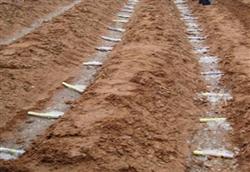
How to cultivate water-saving sugarcane in winter and spring
Paddy field sugarcane is one of the important types of sugarcane cultivation in Yunnan. In many sugarcane-growing areas of our province, soil erosion is severe, and the construction of farmland water conservancy facilities is relatively lagging. In addition, the winter and spring seasons are dry with little rain, and paddy fields lack water. Apart from some fields that can plant sugarcane according to the seasonal requirements, most water-deficient fields are planted relatively late, from the end of April to...
-
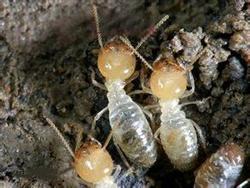
Detailed Explanation of the Harm Caused by Sugarcane Termites and Control Methods
The main sugarcane termites are Odontotermes formosanus and Macrotermes barneyi. Sugarcane is subject to termite damage throughout its entire growth period, with the most severe damage occurring during the germination stage after planting. When attacking seed cane, they mostly invade through the cut ends at both sides, boring into and feeding on the internal tissues of the stem, preventing the seed pieces from sprouting. In the mid-to-late stages, they bore in through the underground cane stem, causing the interior of the stem to become hollow, leaves to turn yellow or tips to dry out, and the entire plant to wither and die.
-
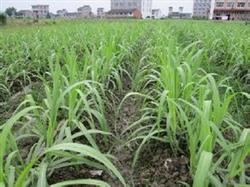
Key Sugarcane Spring Management Techniques and Precautions
Use phosphate fertilizer: Fully crush the phosphate fertilizer, thoroughly mix it with garbage fertilizer and farmyard manure, and compost the mixture before applying. In recent years, many sugarcane growers have directly scattered phosphate fertilizer into the furrows; with this practice, the utilization rate of phosphate fertilizer is less than 10%, and more than 90% is fixed by the soil into ineffective phosphate and wasted. Suggestion: per mu, use 30-50 kg of phosphate fertilizer, fully crushed...
-
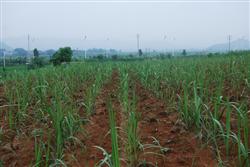
A Detailed Guide to the Nutrient Requirements and Fertilization Methods of Sugarcane
1. Using Phosphate Fertilizer. Phosphate fertilizer must be fully pulverized and thoroughly mixed and composted with garbage fertilizer or farmyard manure before application. In recent years, many sugarcane farmers have spread phosphate fertilizer directly into the furrows. This approach results in a phosphate fertilizer utilization rate of less than 10%, with more than 90% being fixed by the soil into unavailable phosphorus and wasted. The author suggests: apply 30-... of phosphate fertilizer per mu.
-
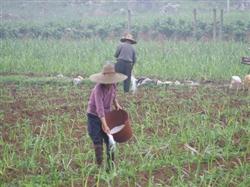
Sugarcane Paddy-Upland Rotation Planting Model and Key Technical Points
I. Fertilizer Requirements of Sugarcane. In terms of macronutrients, the fertilizer requirements of sugarcane are characterized by potassium uptake exceeding nitrogen, and nitrogen exceeding phosphorus. Nitrogen fertilizer should be applied lightly in the early stage, heavily during the growing period, and moderately as a top dressing in the late stage. Since sugarcane has a relatively concentrated demand for phosphorus fertilizer in the early growth stage, which greatly affects root development and seedling growth, it is advisable to apply it as a base fertilizer...
-
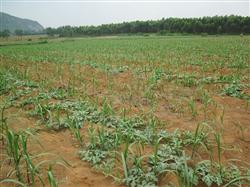
How to control sugarcane pests? New pest control methods are here
1. Reasonably select the plot and good varieties of sugarcane and melon. That is, choose deep soil with good drainage and fertile land for intercropping. For sugarcane, choose varieties that are medium-maturing, high-yielding, high-sugar, and have a high rate of stalk formation; for watermelon, choose varieties that are early-maturing, of good quality, and have a high fruit-setting rate on the first female flowers. 2. Raise seedlings and transplant at the right time. Sugarcane is suitable in early March...
-
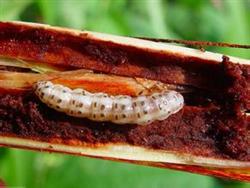
What are the control measures for sugarcane stem borers?
Sugarcane stem borers are mainly the sugarcane spotted borer and the giant borer. These two borers have 3-4 generations a year. The 1st generation generally occurs from early to mid-May to early to mid-June, and the 2nd-3rd generations occur from late June to September. Sugarcane is damaged by these two borers from the seedling stage until before harvest, among which the 1st-2nd generations cause relatively...
条件筛选