-

What are the common misunderstandings in the use of sugarcane herbicides
Common misunderstandings about sugarcane herbicides
-

Where is the best place to put a dumb cane? There is an art to the best placement position
Where is the best place to put a dumb cane
-

Detailed Explanation of Key Sugarcane Management Techniques in Autumn
Key Points for Sugarcane Management in Autumn
-

How to grow the Peace Lily (Mass Cane) indoors to dissolve bad luck
Bad luck means your own fortune is poor and you are suppressed by others; not only do you fail to get what you should get and achieve what you should achieve, but you also suffer sudden misfortune because of certain matters of your own. In fact, bad luck can also be dissolved; it itself belongs to the category of feng shui fortune.
-
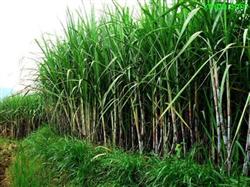
How to fertilize sugarcane for high yields
Sugarcane has a long growth period and high yields; generally, 5000-8000 kg of cane stalks can be produced per mu, and it absorbs a large amount of nutrients throughout the entire growth period, making it one of the crops with relatively high fertilizer requirements. According to research, for every 1000 kg of sugarcane grown, it needs to absorb 1.5-2 kg of nitrogen, 1-1.5 kg of phosphorus, 2-2.5 kg of potassium, and 0.5-0.75 kg of calcium from the soil.
-
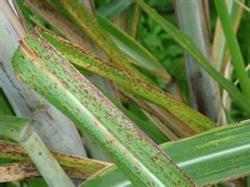
Detailed Explanation of Key Techniques for Drought-Resistant Sugarcane Cultivation
1. Select disease-resistant improved varieties and practice reasonable crop rotation. 2. Build up soil fertility, apply more organic fertilizer, and appropriately apply more phosphorus and potassium fertilizer, which can reduce the occurrence of brown stripe disease. 3. Remove severely diseased leaves in a timely manner to reduce sources of inoculum in the field and control spread. 4. Strip off old lower leaves and thin out ineffective, diseased, and weak plants to improve ventilation in the sugarcane field and reduce...
-
What to Do About Phosphorus Deficiency in Sugarcane? Symptom Identification and Control Methods
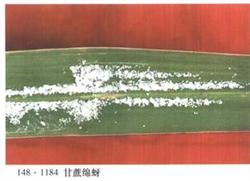
In the mid-to-late growth stages of sugarcane in Jinggu County, it is prone to damage by sugarcane woolly aphids. If control is not timely, it can cause severe yield reduction in sugarcane. Sugarcane woolly aphids gather on the back of leaves along both sides of the midrib, sucking sap, causing sugarcane leaves to wither and yellow, and excrete honeydew on the leaves, inducing sooty mold, affecting normal leaf photosynthesis...
-
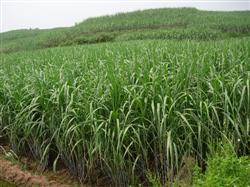
Six Key Points for Achieving High Yield in Winter Planting of Sugarcane
Winter planting of sugarcane can achieve high yield and early maturity, and also stagger the farming schedule, making it easier to arrange land rotation. Sugarcane seeds are also easier to obtain, and the yield per 667 sq m is 5-10% higher than spring-planted sugarcane. 1. Land preparation: Choose plots with deep soil layers, medium-to-high fertility, loose soil, and strong water retention capacity. After deep plowing and fine harrowing, open planting furrows at a row spacing of 90...
-
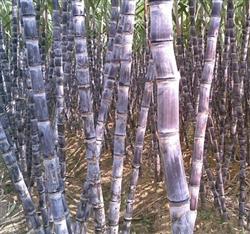
How to plant winter sugarcane for high yields? Six key measures
1. Timely fertilization: after emergence, fertilize together with the first weeding; during the second field growing period, apply diluted fertilizer together with each hilling; the third time, apply foliar fertilizer and balanced fertilizer at the appropriate time, and add New High-Fat Film spray each time to greatly increase the limited nutrient utilization rate of the fertilizer. 2. Hilling and fixing seedlings: generally, hilling should be done 3-4 times each year...
-

How to water a Massangeana cane (Dracaena fragrans) in summer so it grows more and more luxuriant
The Massangeana cane has the beautiful meaning of good fortune and peace, and is deeply loved by people. As a common potted green plant in the home, watering is very important if you want to grow a Massangeana cane well. With the high temperatures of summer, how should you water a Massangeana cane? Let's take a look below! Massangeana cane in summer...
条件筛选