-

Chinese cabbage in autumn is prone to cabbage worms, so how can you control them more effectively?
Summary: Autumn Chinese cabbage is prone to cabbage worms, and these methods leave lower pesticide residues. Chinese cabbage is one of the vegetables in greatest demand in winter, especially in the northern vegetable market. Basically, one family can eat two or three bags of Chinese cabbage over a winter. Pickled Chinese cabbage, stewed Chinese cabbage, vinegar-tossed Chinese cabbage, and so on - Chinese cabbage is truly an indispensable good vegetable on the winter dining table. But the frequent outbreak of cabbage worms also really gives vegetable growers a headache. On Chinese cabbage that had been growing well, once cabbage worms crawl over the leaves, the leaves are either covered with holes or covered with insect droppings. This not only affects appearance, but more importantly affects yield.
-
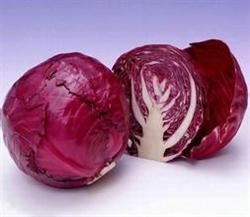
Key Points of Pest and Disease Control Techniques for Spring-Planted Purple Cabbage
Pest and disease control: As long as management is proper, purple cabbage generally has few diseases, so it is easy to produce pollution-free products that can be eaten raw. Purple cabbage may only suffer from seedling-stage diseases such as damping-off and downy mildew when humidity is high during the seedling stage, which can be controlled with pesticides such as Yunsheng, Dasheng, carbendazim, Xinluling, and Anke. Pests...
-
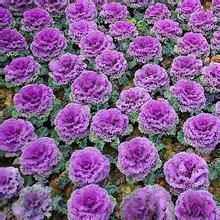
Detailed Explanation of Key Techniques for Spring Purple Cabbage Cultivation
Purple cabbage is a variety of cabbage, grown for its purplish-red heads. It originated along the Mediterranean to North Sea coasts of Europe, prefers cool conditions and is fairly cold-tolerant, and can be cultivated both in the open field and under protected conditions. It has the characteristics of firm heads, bright color, strong adaptability, high yield and good quality. In the Nanjing area, spring purple cabbage cultivation is sown from mid-December...
-
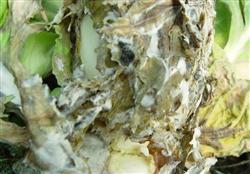
What are the control methods for downy blight (Phytophthora rot) in cabbage and cauliflower?
This spring has seen a lot of low-temperature and rainy weather, making cabbage prone to sclerotinia rot, so check and treat it early. When sclerotinia rot occurs at the cabbage seedling stage, water-soaked light brown lesions appear on the leaves with indistinct edges, and the diseased tissue soft-rots, causing damping-off. When plants are affected during the head-forming stage, water-soaked sunken lesions form on the leaves near the ground and on the root crown, initially appearing...
-
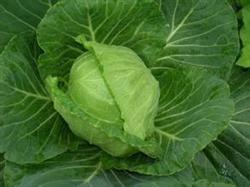
Detailed Explanation of Key Techniques for Spring Cabbage Cultivation
1. Timely sowing. Timely sowing is one of the important technical measures in spring cabbage cultivation. If sowing is too early, the seedlings grow larger, and continuous low temperatures in early spring cause the seedlings to pass through the vernalization stage too early, making premature bolting likely. Conversely, if sowing is too late, the maturity period is delayed, affecting economic returns. In the Hangzhou area, sowing is generally carried out in February...
-
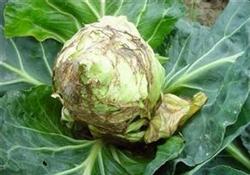
How should sclerotinia rot in cabbage be prevented and controlled?
Answer: Low temperatures in early spring and many days with little sunlight favor the occurrence of sclerotinia rot in cabbage. After the plant becomes infected, water-soaked lesions appear first, then turn into white lesions, and in severe cases cause the plant to rot. Prevention and control methods: 1. Agricultural control. Before sowing, rinse the seeds with 10% salt water or 10%-20% ammonium sulfate solution, then dry them and sow. ...
-
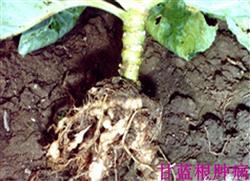
How to prevent and control pests, diseases and weeds during the seedling stage of cabbage-family vegetables
Cabbage clubroot mainly harms cruciferous vegetables. After the disease occurs, the roots swell and become tumor-like, hence the name clubroot disease. Generally, after the main root is infected, it becomes lump-shaped, and after the fine roots, branch roots, lateral roots and fibrous roots are infected, they are mostly locally swollen and deformed. Simple diagnosis: clubroot disease and root-knot nematode disease have similar field symptoms. When distinguishing them, you can dissect...
-
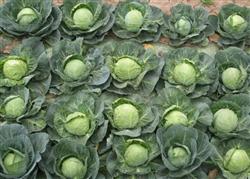
What causes premature bolting in spring cabbage
Cabbage is a vegetable that loves fertilizer and tolerates it well. Generally, about 35 days after transplanting, the plant's uptake of nitrogen, phosphorus, calcium and other elements reaches its peak, while potassium uptake peaks at 50 days. Before reaching the peak values, the plant's fertilizer uptake basically shows a straight upward trend as the growth period progresses. Cabbage at different growth stages has different...
-
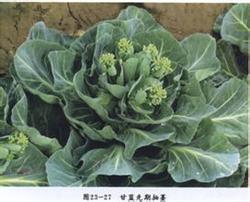
Detailed Explanation of Cabbage Seedling-Raising Techniques for Summer-Autumn and Overwintering
Late-sown overwintering cabbage cultivation is generally raised as seedlings in September and planted in November on late-crop plots such as cotton, rice, orchards or sweet potato land. It is harvested in mid-April. The income is generally 3000 yuan per mu. The returns are relatively good, and it is welcomed by many growers. From sowing to harvest, it passes through a long period of low temperature, and premature bolting is likely to occur...
-
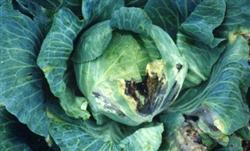
What are the control methods for black rot of cabbage?
Main symptoms: When the disease occurs at the mature plant stage, most lesions spread inward from the leaf margin, forming a "v" shape, and are yellowish-brown dead spots. The leaf tissue around the lesions is pale yellow, with no obvious boundary from the healthy part; sometimes the pathogen can spread inward along the leaf veins, forming a network of yellow veins. Causes of the disease: The primary infection source of this disease is seeds or in the soil...
条件筛选