How should sclerotinia rot in cabbage be prevented and controlled?
Answer: Low temperatures in early spring and many days with little sunlight favor the occurrence of sclerotinia rot in cabbage. After the plant becomes infected, water-soaked lesions appear first, then turn into white lesions, and in severe cases cause the plant to rot. Prevention and control methods: 1. Agricultural control. Before sowing, rinse the seeds with 10% salt water or 10%-20% ammonium sulfate solution, then dry them and sow. ...
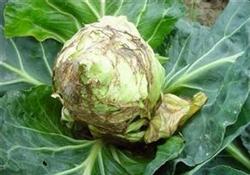
Answer: Low temperatures in early spring and many days with little sunlight favor the occurrence of sclerotinia rot in cabbage. After the plant becomes infected, water-soaked lesions appear first, then turn into white lesions, and in severe cases cause the plant to rot.
Prevention and control methods: 1. Agricultural control. Before sowing, rinse the seeds with 10% salt water or 10%-20% ammonium sulfate solution, then dry them and sow. Before sowing, adjust the seedbed temperature to 55°C and treat for 2 hours, which can kill the sclerotia in the soil. Carry out a 2-3 year rotation with cruciferous crops. Deep plow the land and bury the sclerotia remaining on the soil surface below 10 cm into the soil layer. Apply sufficient base fertilizer, increase the application of phosphorus and potassium fertilizers, and do not apply excessive nitrogen fertilizer. Strengthen drainage so that the soil is moderately dry. When diseased plants are found, pull them out promptly, take them out of the field, and burn or bury them deeply.
2. Chemical control. In the early stage of the disease, spray promptly for protection, focusing on spraying the base of the plant stems, old leaves, and the ground. Per mu, 2-2.5 kg of 5% chlornitrofen powder can be mixed evenly with 15 kg of fine soil and then scattered between the rows. For spraying, choose 50% procymidone wettable powder 2000-fold solution or 40% dimethachlon wettable powder 800-fold solution, etc., spray once every 7-10 days, for 2-3 consecutive sprays.