-
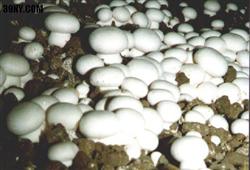
How should mushrooms be fertilized correctly after planting?
How should mushrooms be fertilized after planting? Please explain that mushrooms need relatively more nutrients to grow. If nutrients cannot be supplied in time, the fruiting bodies will grow poorly, and especially in the later stage, premature senescence may also occur. Especially when the compost quality is poor, with little manure and much straw, and the casing layer is thin, this will significantly affect yield and...
-
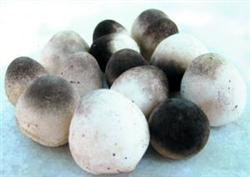
Straw Mushroom Summer Planting Methods and Technical Key Points
The weather is hot in summer, so how should straw mushrooms be planted in summer? The following methods can be used for planting straw mushrooms in summer: Preparation of mushroom beds. The mushroom beds are set up inside a plastic greenhouse, and the greenhouse is covered with film and straw mats to preserve warmth and moisture. The mushroom beds are 1 m wide, with no limit on length, and the spacing between mushroom beds is 30 cm, which can serve both as walkways and as water storage ditches...
-

Methods for Raising Seedlings and Transplanting Ceylon Spinach (Malabar Spinach) and Key Technical Points
Prepare the seedbed well, sow dry seeds, and seedlings emerge in 3 to 5 days at a suitable temperature of around 28°C; if the soil temperature is on the low side, the seeds should be pre-germinated before sowing. During the seedling stage, keep the temperature appropriately low, and transplant when the plants have 4 to 5 true leaves. For harvesting tender shoots, use a row spacing of 20 to 25 cm and a plant spacing of 15 to 20 cm; for growing on trellises to harvest tender leaves, use a row spacing of 60 cm and a plant spacing of 25 to 35 cm, keeping...
-
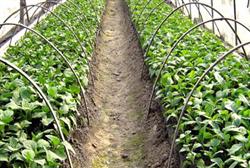
Three-dimensional Cultivation Technique of Interplanting Black Wood Ear Mushroom with Shaggy Mane
Interplanting shaggy mane (Coprinus comatus) in pepper fields is a good method of imitating wild cultivation of shaggy mane. It can save the expense of building mushroom houses, does not occupy extra space, and can greatly increase the economic benefit per unit of land area. Generally, after peppers are planted, furrows are opened in the middle of the pepper rows, material is spread, and spawn is scattered. For management and harvesting of the mushrooms...
-

How to Intercrop Bamboo Fungus with Soybeans? Detailed Planting Method
How to intercrop bamboo fungus with soybeans? Here is an introduction. Intercropping bamboo fungus with soybeans solves the problem of building trellises for shade, saves costs, and adds a season of income from soybeans. The following planting method is for reference: 1. Cultivation season: According to local climatic conditions and the growth characteristics of bamboo fungus, the suitable cultivation season is when the temperature is stable at 7-30°C. For spring cultivation, sow between February and May...
-
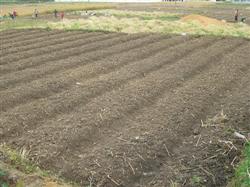
What are the key technical points for planting bamboo fungus (Dictyophora indusiata) in open fields?
How do you plant bamboo fungus in open fields? Here is a detailed introduction. For open-field planting of bamboo fungus, you can refer to the following methods: 1. Cultivation season. "D89 Dictyophora indusiata" is a mesophilic fungus, and the cultivation period is when the local temperature is stable at 8-28 degrees C. In our city, February to April is generally the sowing period, and May to October (temperature not lower than 16 degrees C) is the mushroom growth...
-
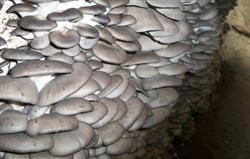
How to Cultivate Oyster Mushrooms for High Yields? Detailed Explanation of Key Planting Techniques
How to cultivate oyster mushrooms for high yields? A detailed introduction to the methods. Oyster mushroom cultivation has the advantages of low investment, quick results and small risk. Planting in autumn makes full use of the scraps and by-products of agricultural production and the idle labor of autumn and winter, and it takes only 1 month from input to output, making it a short, quick and efficient money-making project. Culture...
-
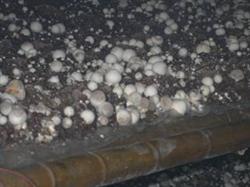
Summer cultivation of straw mushrooms is timely; the planting window must not be missed
1. Cultivation season: Straw mushrooms are a high-temperature mushroom species. The suitable temperature range for straw mushroom mycelium growth is 15-40°C, with the optimum temperature being 30-35°C. The fruiting body growth temperature is 26-34°C, with the optimum temperature being 28-30°C. Cultivation is generally carried out from June to August each year. 2. Cultivation materials: cottonseed hulls, rice straw, corncobs...
-
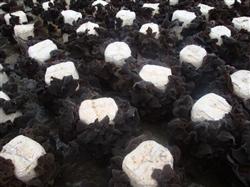
A Detailed Guide to Black Fungus Planting Methods and Cultivation Techniques
I. Overview Black fungus is also called wood ear, smooth wood ear, or cloud ear. Taxonomically it belongs to the class Basidiomycetes, order Tremellales, family Auriculariaceae, genus Auricularia. There are about a dozen or more species in this genus, such as black fungus, hairy wood ear, wrinkled wood ear, felt-cap wood ear, horny wood ear, shield-shaped wood ear, and so on. Among these wood ears, only the smooth wood ear has a plump, tender texture and a delicious flavor...
-

Key Technical Points for Interplanting Black Wood Ear Mushrooms in Orchards
Interplanting black wood ear mushrooms in trenches between orchard rows yields fairly considerable returns. The main cultivation methods are as follows: 1. Stock culture substrate formula: sawdust 78%, rice bran (or wheat bran) 5%, corncob 15%, gypsum powder 1%, sucrose 1%. Weigh each ingredient according to the above proportions. First dissolve the sucrose in water, then stir the sawdust, rice bran and gypsum powder...
条件筛选