-

The broken-planting technique for oyster mushroom logs helps increase yield
For oyster mushrooms cultivated in mushroom bags, the yield drops greatly after 2-3 flushes of mushrooms. If the temperature rises, the quality will also be reduced. How can later flushes be cultivated to equal or even exceed the yield of the previous flushes? Below is a simple and practical method - the broken-planting method. Remove the plastic bags from mushroom bags that have produced 2-3 flushes, then scrape the old surface layer once, and soak in 5% lime water. If the mushroom logs are relatively dry, also soak in 1% salt water for half a minute. Before soaking, poke a hole through the mushroom log from top to bottom so
-
Key Cultivation Techniques for Interplanting Oyster Mushrooms in Pear Orchards
After the pears are harvested, the pear orchard has a relatively long fallow period. Using the empty rows between pear trees to grow one season of oyster mushrooms can yield good returns. 1. Choosing the bed site: It is best to choose a pear orchard relatively close to the village, with good soil quality, convenient irrigation and drainage, and smooth transportation. 2. Carefully preparing the beds: The mushroom beds are 8-10 m long and 1.2 m wide. The bed soil should be plowed 15-20 cm deep and carefully prepared so that the soil is loose and free of weeds, loose on top and firm below, forming a ball when squeezed by hand and breaking apart when dropped on the ground. Build a ridge 4-5 cm high around the bed surface to conserve moisture. After the mushroom beds are prepared, dig drainage
-
Grain-mushroom intercropping planting model boosts yield and income
Corn-oyster mushroom intercropping uses a 2:1 intercropping cultivation form, improving field ventilation and light penetration; the oyster mushroom production requires more watering, which is very beneficial to corn growth. The spent mushroom substrate still contains relatively rich organic nutrients and can be turned into the soil as high-quality farmyard manure to build soil fertility. Intercropped corn can be sown in late April; on the basis of early-spring plowing and harrowing, spread farmyard manure, form ridges 60 cm wide, with plant spacing smaller than that of pure corn stands, and add the corn plants from the mushroom rows to the rows on both sides respectively, ensuring
-
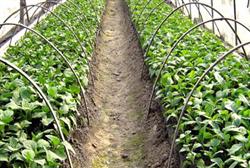
Three-dimensional Cultivation Technique of Interplanting Black Wood Ear Mushroom with Shaggy Mane
Interplanting shaggy mane (Coprinus comatus) in pepper fields is a good method of imitating wild cultivation of shaggy mane. It can save the expense of building mushroom houses, does not occupy extra space, and can greatly increase the economic benefit per unit of land area. Generally, after peppers are planted, furrows are opened in the middle of the pepper rows, material is spread, and spawn is scattered. For management and harvesting of the mushrooms...
-
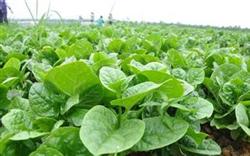
Methods for Raising Seedlings and Transplanting Ceylon Spinach (Malabar Spinach) and Key Technical Points
Prepare the seedbed well, sow dry seeds, and seedlings emerge in 3 to 5 days at a suitable temperature of around 28°C; if the soil temperature is on the low side, the seeds should be pre-germinated before sowing. During the seedling stage, keep the temperature appropriately low, and transplant when the plants have 4 to 5 true leaves. For harvesting tender shoots, use a row spacing of 20 to 25 cm and a plant spacing of 15 to 20 cm; for growing on trellises to harvest tender leaves, use a row spacing of 60 cm and a plant spacing of 25 to 35 cm, keeping...
-
Autumn cultivation of edible fungi requires passing five critical stages successfully, with a detailed explanation of planting methods
Autumn production of edible fungi requires passing "five stages"
-
Wild mushrooms may be developed into anti-cancer drugs
Seemingly ordinary macrofungi, that is, wild mushrooms commonly parasitic on tree trunks, may actually be developed into antibacterial and even anti-cancer drugs. A research team composed of four lecturers and their students from the School of Chemical and Life Sciences at Nanyang Polytechnic in Singapore has, over the past two years, classified and studied more than 400 species of local wild mushrooms, and found that two of them contain anti-cancer compounds and 30 contain antibacterial compounds. At present, they have successfully identified the chemical structure of one wild mushroom with anti-cancer properties, and confirmed
-
Adding rice husk to mushroom casing soil brings better planting benefits
In conventional mushroom cultivation management, casing soil is a technically demanding task. There are special requirements for the casing soil's texture, soil aggregate structure, aeration, and water retention and holding capacity. In particular, when making large, medium, and small casing soil particles, it is both labor- and time-consuming, and the labor intensity is high. To effectively solve these problems, the author has repeatedly reformed mushroom casing soil technology since 1990, and finally determined to use surface humus soil from within forest stands or paddy field plough layer soil (sandy loam or clay loam are both acceptable) mixed with 5% fresh rice husk
-
Why oyster mushroom transplanting gives such good yield increases
Practice has shown that thinning and transplanting densely clustered mushroom buds gives good yield increases. The transplanting method is as follows. 1. Transplant at the right time: transplant when the mushroom buds have just appeared. 2. Planting material: there are no strict requirements; they can be planted on either spawn material that has not yet fruited or material that has already been harvested. Spawn material that has not yet fruited helps the mycelium wounds from transplanting heal and the fruiting bodies develop well. 3. Transplanting method and management: transplanting should be done by digging holes in the spawn brick or spawn bed. Place the small clump of mushroom buds that has been picked into the hole that has been dug, and press firmly around it so that the mushroom buds and the spawn material on the surface of the spawn brick or bed
-
Detailed Explanation of High-Yield Cultivation Techniques for Transplanting Oyster Mushroom Buds
In bed-style cultivation of oyster mushrooms, it is common for mushroom buds to grow unevenly, and this is even more serious in outdoor sunken-bed cultivation. Of these densely packed small mushroom buds, no more than 3 to 4 grow into edible mushrooms, and the vast majority gradually wither after three to five days. On one hand, this consumes a large amount of nutrients; on the other hand, if the withered mushroom buds are not dealt with in time, they will rot and deteriorate, causing pests and diseases and reducing the yield of the next crop. If these mushroom buds are selectively transplanted and cultivated, it can not only reduce pest and disease damage, but also increase yield by 20%. The method for transplanting oyster mushroom buds is introduced as follows: 1. Preparatory work. For transplanted
条件筛选