-
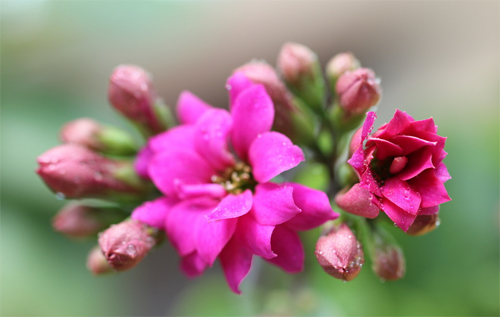
Kalanchoe Propagation Methods and Solutions for Root Rot and Blackening
How does kalanchoe reproduce? If it could not reproduce, would it not become extinct? What should be done when root rot and blackening of the roots occur during kalanchoe cultivation? Let's take a look together with Women's Web: What are the propagation methods for kalanchoe? Stem cuttings. So-called stem cuttings? This means first cutting a healthy top bud from the kalanchoe plant.
-
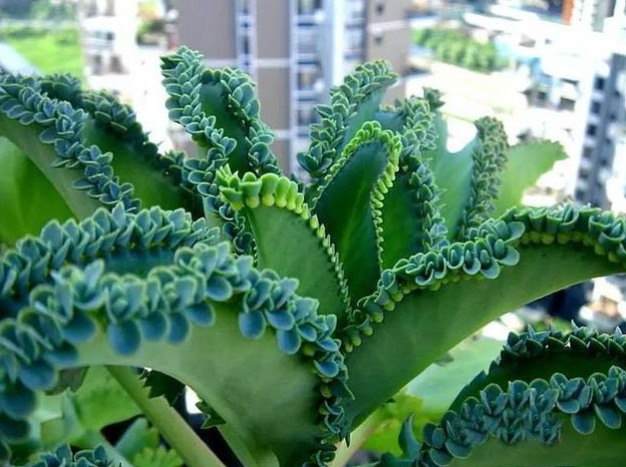
Methods for Propagating Plants by Cuttings: Kalanchoe daigremontiana and Aptenia cordifolia
Some plants are just perfect for low-maintenance growing and are extremely easy to propagate - a single branch can grow into a big clump. Let's take a look at how to propagate plants by cuttings: Kalanchoe daigremontiana runs rampant in some places in the south, even spreading onto rooftops. Although there isn't as much of it in recent years, it's still quite commonly seen.
-

Kalanchoe: Detailed Guide to Techniques for Growing a Full Pot and Water Propagation Methods
Kalanchoe (Kalanchoe blossfeldiana) is a plant that many people really love. If a large pot held only a single kalanchoe plant, how lonely that would be. Let's take a look at how to grow kalanchoe into a full pot. Just propagate more and it will soon be full: stem cutting propagation. Kalanchoe can be propagated in all four seasons, as long as the temperature is above 15°C.
-
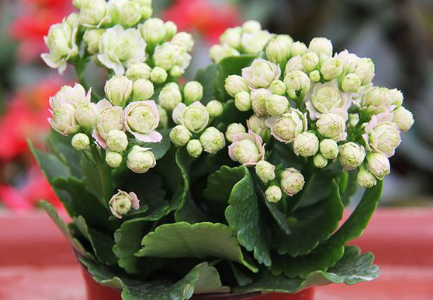
What to do when Kalanchoe leaves won't grow big and it won't bloom
Speaking of this Kalanchoe, its flowering period is relatively long, and it generally blooms red flowers. Let's see what to do when Kalanchoe leaves won't grow big and what to do when it won't bloom: What to do when Kalanchoe leaves won't grow big: heavy, sticky soil. Kalanchoe needs loose, fertile soil with good drainage.
-
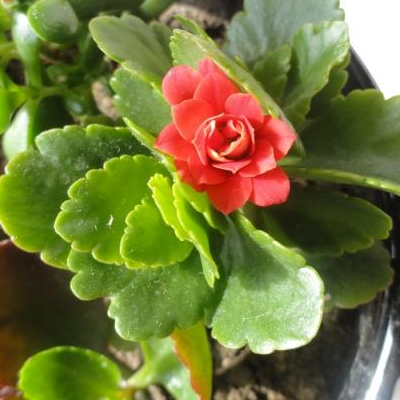
Kalanchoe (Florist Kalanchoe) Cutting Propagation: Rooting Tips and Rooting Time
Kalanchoe is something many people absolutely love to grow; it is relatively easy to care for and has a long blooming period. What is the cutting propagation method for kalanchoe? How do you speed up rooting in kalanchoe: 1. Cutting soil: mix leaf mold, garden soil and river sand in a 1:1:2 ratio.
-

Pruning Methods for Apple Trees with Unbalanced Growth
How to Prune Apple Trees with Unbalanced Growth
-
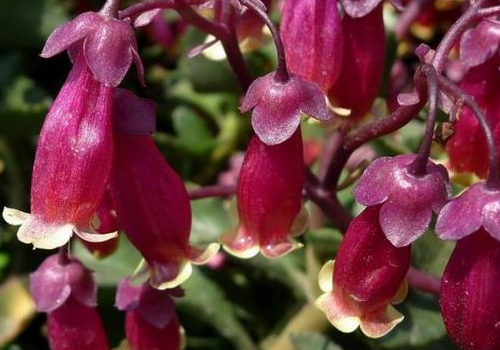
How many colors does the Chandelier Kalanchoe come in, and how should it be propagated by cuttings?
Chandelier Kalanchoe, this is also a type of succulent plant, and it grows super beautifully. When it blooms, how many colors does the Chandelier Kalanchoe come in? How to propagate by cuttings: How many colors does the Chandelier Kalanchoe come in: There are currently about 70 or more varieties of Chandelier Kalanchoe, so the colors are also very numerous.
-

What are the cultivation techniques for New Zealand spinach? A detailed guide
New Zealand spinach (Tetragonia expansa Murr.), also known as New Zealand spinach or sea spinach, is an annual or perennial trailing herbaceous plant of the genus Tetragonia in the family Aizoaceae. It originated in Australia, New Zealand, Chile, Southeast Asia and other places, and is mainly distributed in the tropics. Europe, America, Indonesia, India and other countries have long cultivated it as a vegetable. It has been introduced into China for 200 years, but it is not widely grown and little known. New Zealand spinach has strong stress resistance, grows vigorously, and its tender stems and leaves are tender and delicately fragrant. It is easy to cultivate and extremely
-
Detailed Explanation of the Fishing Techniques and Methods for Protosalanx hyalocranius
1. Introduction In 1995, after the Ministry of Agriculture and the Ministry of Water Resources jointly issued the "Notice on Accelerating the Promotion of Icefish Transplantation and Proliferation Technology," a nationwide upsurge in large icefish transplantation was set off. Over the past decade, the transplantation and proliferation of large icefish has been widely developed in northern regions, especially in Inner Mongolia, and good transplantation results have been achieved in both lakes and reservoirs. When the large icefish in the transplanted waters have reached fishery effectiveness, that is, when the large icefish have formed a high-quantity and relatively stable population, become naturalized
-
What role do snakes play in ecological balance?
Most snakes are natural enemies of rodents, such as the black-browed rat snake, the oriental rat snake, the gray rat snake, the pit viper, the king rat snake, the brown-black rat snake, the yellow-striped racer, the brown-gray racer, and the cobra, all of which are snakes that feed mainly on rodents. In addition, some snakes feed exclusively on termites, and they undoubtedly play a huge role in preventing termites and eliminating the damage termites cause to humans. Snakes of the genus Oligodon feed exclusively on the agricultural pest slug. The young of the common European adder and the pit viper mainly prey on insects, and the steppe viper can prey on a large number of insects in a single summer, more than 90% of which are
条件筛选