-

Pruning Methods for Apple Trees with Unbalanced Growth
How to Prune Apple Trees with Unbalanced Growth
-

What are the cultivation techniques for New Zealand spinach? A detailed guide
New Zealand spinach (Tetragonia expansa Murr.), also known as New Zealand spinach or sea spinach, is an annual or perennial trailing herbaceous plant of the genus Tetragonia in the family Aizoaceae. It originated in Australia, New Zealand, Chile, Southeast Asia and other places, and is mainly distributed in the tropics. Europe, America, Indonesia, India and other countries have long cultivated it as a vegetable. It has been introduced into China for 200 years, but it is not widely grown and little known. New Zealand spinach has strong stress resistance, grows vigorously, and its tender stems and leaves are tender and delicately fragrant. It is easy to cultivate and extremely
-
Detailed Explanation of Cultivation Points and Planting Techniques for New Zealand Spinach
Land preparation, base fertilizer application and bed making are the same as for ordinary spinach. In spring, sow early at the right time; early sowing means early harvest, and sowing between February and March is preferable. New Zealand spinach can be sown directly or raised as seedlings for transplanting. Because its root regeneration capacity is weak and seedlings recover slowly after transplanting, direct sowing is mostly used. Sowing methods include broadcast sowing, row sowing and hill sowing, with hill sowing being more common. First open holes 2-3 cm deep, with row spacing and plant spacing of 50 x 30 cm, and sow 4-5 seeds per hole. The seed coat is hard and poorly permeable to water, so it is advisable to soak the seeds for 24 hours before sowing. It generally takes more than 20 days to emerge. When the seedlings have 4-5 true leaves, they can be thinned and harvested
-
Detailed Explanation of New Zealand Spinach Cultivation Techniques and Management Points
(1) Seed preparation: If New Zealand spinach seeds are plentiful, dense sowing or dense planting may be considered, followed by thinning and harvesting, which can increase early-stage yield. New Zealand spinach can be direct-sown or raised as seedlings and transplanted. If New Zealand spinach seeds are insufficient, it is best to raise seedlings and transplant. Direct sowing requires 4-5 jin of seeds. For raising seedlings, plug trays or nutrition pots should be used to reduce root damage, requiring 1.5 kg of seeds. Raising seedlings can save seeds and also allow earlier sowing. Although New Zealand spinach is slow to recover after transplanting, its survival rate is very high. (2) Land preparation, fertilization, and bed making: Because New Zealand spinach has a long growing period, sufficient base fertilizer should be applied
-
Detailed Explanation of the Characteristics and Growth Traits of New Zealand Spinach
New Zealand spinach, also known as New Zealand spinach, foreign spinach, summer spinach, etc. It is an annual semi-trailing herbaceous plant of the genus Tetragonia in the family Aizoaceae. It originated in Oceania. Wild species are currently found in New Zealand, Southeast Asia, and Chile. It is distributed across Asia, the Americas, and Europe, but is not widely cultivated. New Zealand spinach has the characteristics of vigorous growth, strong heat resistance, relatively good drought tolerance, few pests and diseases, and easy cultivation. Its tender stems and leaves are used for food, suitable for cold dishes, stir-frying, and making soup, and it is rich in nutrients. Every 100 grams of the edible portion contains 1.5 grams of protein, 0.2 grams of fat, and 4,400 international units of vitamin A. Vitamin
-
A Detailed Guide to the Key Cultivation Techniques and Management Methods for New Zealand Spinach
1) Cultivation characteristics and features. The New Zealand spinach plant grows in clumps, has strong branching ability and fast growth, and can produce side branches at every leaf axil. After topping, under suitable temperatures, side branches reach harvest standard in about 15 days. The stems grow prostrate and can reach 120 cm in length, and the leaves are triangular and alternate. The leaf flesh is thick, and small yellow flowers are borne at each leaf axil; the flowers are very few and have no petals. The ovary is inferior, and the fruit is a nut, rhombus-shaped, resembling spinach, containing several seeds, with a 1000-seed weight of 83-100 grams. New Zealand spinach prefers warmth and is heat-tolerant, low-temperature-tolerant, drought-resistant, salt-alkali-tolerant, moisture-loving but afraid of waterlogging. Its root regeneration ability is weak. In summer, with high temperature and heavy rain, if plants are too dense, stems rot easily and the plants die. It is not frost-tolerant, but has good low-temperature adaptability. In summer drought and strong light, the leaves become hard, curled and poor for eating. During the seedling stage, drought and strong light can induce viral disease. Under weak light and high humidity, the stems and leaves are tender. New Zealand spinach grows vigorously, and there are very few pests and diseases throughout the entire growing period, making it a natural pollution-free vegetable. One planting of New Zealand spinach can be harvested continuously; sown in spring, it can be harvested after 50 days, until frost, and cultivation is very easy. New Zealand spinach seeds shed easily and are not easy to harvest, so they need to be harvested in batches; seeds that fall to the ground can germinate in autumn or after overwintering in the following spring.
-
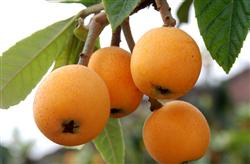
Detailed Explanation of Key Points of Balanced Fertilization Technology for Loquat
According to the fertilizer requirements of loquat, the growth of branches and root systems, and fruit development, determine the appropriate fertilization timing, fertilizer types, amounts, and application methods (pouring, hole application, trench application, or broadcasting followed by turning the soil to cover, etc.), and pay attention to the rational combination of nitrogen, phosphorus, potassium, and organic fertilizer with inorganic fertilizer. (1) Fertilization for young trees...
条件筛选