Methods for Propagating Plants by Cuttings: Kalanchoe daigremontiana and Aptenia cordifolia
Some plants are just perfect for low-maintenance growing and are extremely easy to propagate - a single branch can grow into a big clump. Let's take a look at how to propagate plants by cuttings:
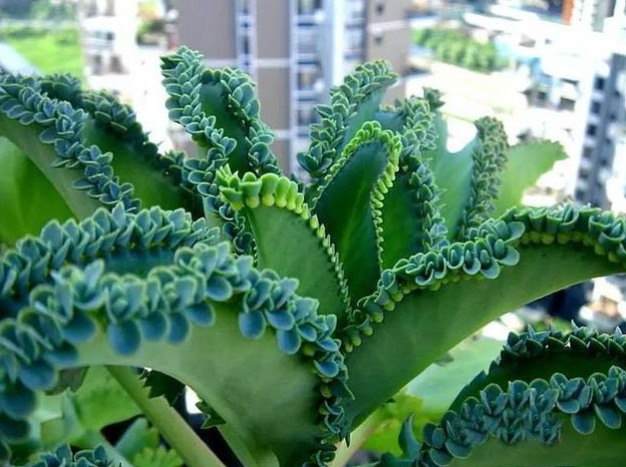
1. Kalanchoe daigremontiana
It runs rampant in some places in the south, even spreading onto rooftops. Although there isn't as much of it in recent years, it's still quite commonly seen.
It has many varieties, such as the broad-leaf Kalanchoe daigremontiana shown below. Its leaves have many tiny plantlets, and each plantlet can be broken off and propagated into a new plant. Of course, if you break off an entire leaf, you'll end up with 70 or 80 plants.
Cutting method:
Cutting temperature: above 10°C
Break the tiny plantlets off the leaves and place them directly on slightly moist soil. For the first week, keep them out of light and place them in a bright, well-ventilated spot. Once they sprout, start watering and giving them light.
Actually, if you grow one Kalanchoe daigremontiana, its offspring will drift all over your balcony, and by then what you'll need to do is figure out how to get rid of some of them.
2. Aptenia cordifolia (heartleaf ice plant)
It is also a delicious dish on the dining table, and some vegetable vendors call it "chuangxinlian" or "tianqi". Being able to grow it as a vegetable to eat means it's naturally very easy to propagate. As long as you see a pot of Aptenia cordifolia, just pinch off a stem and you can propagate it. (Its flowers and leaves are both very ornamental. If you want more flowers, give it more light, water only when the potting soil is completely dry, and prune appropriately.)
Cutting method:
Cutting temperature: around 20°C
Just pinch off a stem segment of 5 cm or more and insert it into slightly moist, loose, well-draining soil. For the first week after planting, keep it in a bright, shaded spot. After a week, gradually expose it to light. Water when the soil is dry, and avoid waterlogging. #p#Subtitle#e#
3. Cuban oregano (Plectranthus amboinicus)
If you want to experience the sense of accomplishment that comes from growing a small seedling into a large potted plant, then Cuban oregano is the perfect choice. A kindergarten kid next door was given some Cuban oregano seeds by his teacher, and he grew a big pot of plants. Although his mom helped, it was still quite impressive.
Cutting method:
Cutting temperature: 15-30°C
Propagation is very simple - just pinch off a stem segment of 7 cm or more, remove the lower leaves, let the wound dry, then insert it into soil. Generally, just leave it in a shaded, ventilated spot for about 3 hours. (It is a herbaceous plant.)
Insert it into slightly moist soil, water only when the soil is completely dry, and keep it out of direct sun for the first 1-2 weeks.
4. Portulaca grandiflora (moss rose)
Some people call it "die-hard" because even if some friends stop caring for it or forget about it, it can still grow very well on its own - a flower that can be planted in just about any soil.
Many flower enthusiasts casually toss it by a sunny roadside, and it turns into a big patch of moss roses. If tossed in a shady spot, it can survive but won't bloom.
Cutting method:
Cutting temperature: above 10°C
Pinch off a branch segment of about 10 cm and insert it into slightly moist sandy soil. Place it in a bright, shaded, ventilated spot, and it will root quickly. If you want your moss rose to bloom more, then once it has rooted, give it plenty of sunlight - as much as possible. However, it is sensitive to cold, and the overwintering temperature should be above 5°C.
That's all for the methods of propagating plants by cuttings. Hurry up and get a few for your home - one round of cuttings will grow into many.
9 Potted Plants That Root Easily from Cuttings! Just Pinch Off a Branch and They'll Grow
Cuttings are one of the common propagation methods in the process of growing and caring for potted plants, and they are applicable to almost all potted plants. However, many friends think that taking cuttings is a very difficult thing, and they accidentally kill the cutting. In fact, taking cuttings isn't that hard, especially for plants with strong adaptability - just pinch off a branch and they'll grow, and they'll fill out the pot without any fuss. So, below we'll introduce 9 potted plants that you can grow just by pinching off a branch. Let's take a look together.
Image: Kalanchoe daigremontiana
1. Kalanchoe daigremontiana (Lace Princess)
Lace Princess is what we call Kalanchoe daigremontiana. Around its leaves grows a ring of cute orange-red lace edges, and as the leaves grow, these lace edges gradually develop into small Kalanchoe daigremontiana plantlets. If the small plantlets around the leaf edges have grown white roots, carefully pick them off one by one, place them on soil, and keep it slightly moist. Before they establish roots, don't expose them to strong sun - indirect light is fine. Once they've established roots, place them in a spot with plenty of sunlight. Done! Isn't it simple?
Image: Aptenia cordifolia
2. Aptenia cordifolia (heartleaf ice plant)
With its emerald green leaves and bright red flowers, Aptenia cordifolia is perfect for decorating a room, and its cutting method is simple - just 3 steps. Step one: cut off a branch segment of about 10 cm from the Aptenia cordifolia - longer or shorter doesn't matter, it will root either way. Step two: insert the cutting into soil and water it. There are no soil requirements - nutrient soil or garden soil both work. Step three: after planting, place it in a cool spot, keep the soil moist, and once the branch has rooted, it can be exposed to sunlight.
Image: Cuban oregano
3. Cuban oregano (Plectranthus amboinicus)
Cuban oregano has glossy, plump leaves that release an apple-like fragrance when touched by fingers, making it truly enchanting. Moreover, in any season, just pick a branch and it will root. Cut off a branch of Cuban oregano, remove the lower leaves, and leave it by a window to dry for 2-3 days (dried branches have a higher rooting rate). If you're impatient, you can skip the drying and insert it directly. Spray the cutting soil with water in advance, then insert the branch into the soil - done! (For Cuban oregano cuttings, moistening the soil before inserting the branch helps with rooting.) After planting, don't water for two weeks. After about two weeks, the roots should have grown, then you can water and expose it to sunlight.
Image: Portulaca grandiflora
4. Portulaca grandiflora (moss rose)
Portulaca grandiflora is also called "die-hard" - just from the name you can tell how easy it is to grow. Moss rose can be propagated by branch cuttings or by seed. Right now is the season when seeds mature, so friends, remember to collect the seeds. When taking cuttings of moss rose, pinch off a branch, insert it into soil, and water it a little - done. No soil requirements - even my hard yellow earth grows them well. Moss rose is an herbaceous flower that can survive by self-seeding. It can be sown in spring, summer, and autumn, so you can just scatter the seeds in a pot and water a little - done. It's just that easygoing!
Image: Senecio rowleyanus
5. String of Pearls (Senecio rowleyanus) and String of Tears (Senecio herreianus)
String of Pearls and String of Tears are also succulents that everyone loves very much. The round little beads are especially cute and adorable, and they're not difficult to propagate by cuttings either. When taking cuttings, cut a branch segment and lay it flat on the soil. There are no special soil requirements - loose, breathable, and nutritious soil will do. Sprinkle a thin layer of soil over the stem nodes between the beads. If you want to fill out the pot quickly, you can lay several branches. After laying them out, water thoroughly and keep them in a cool spot for care. After about 10 days to half a month, roots will grow from the stem nodes. After rooting, gradually expose them to sunlight. Normally, just keep them in a spot with indirect light, and water once every 4-5 days.
Image: Hydrocotyle vulgaris
6. Hydrocotyle vulgaris (pennywort)
Hydrocotyle vulgaris is a wealth-attracting plant, and many people grow it at home. Growing Hydrocotyle vulgaris is super simple - just remember 2 things: first, it can't lack water; second, it can't lack light. Today, Huahua is teaching everyone the half-soil half-water growing method to grow palm-sized Hydrocotyle vulgaris in no time. Fill a hydroponic bottle with soil, about 1/3 to 2/3 is fine, then plant the rooted Hydrocotyle vulgaris in the soil, arrange the position, and slowly pour water in. Once the water is full, place it in a bright spot and you're done! Isn't it simple? During normal care, you must never let Hydrocotyle vulgaris lack water. Once the water and soil are completely dry, Hydrocotyle vulgaris will wilt. Also, be sure to give Hydrocotyle vulgaris plenty of light and apply organic fertilizer or slow-release fertilizer. Only then will it grow large leaves and propagate quickly!
Image: Hedera helix (English ivy)
7. English Ivy (Hedera helix)
English ivy is truly a super easy-to-grow green plant. Cuttings are very simple, and if grown indoors, they can be done in all four seasons. English ivy can be grown in soil or water. For soil cultivation, from the extending branches, casually cut or pinch off a segment, and remove the 2-3 lower leaves from the branch. Poke a few holes in the flower pot, insert the branch into the holes, cover with soil, and water - done. Before roots appear, spray a little water when the soil is dry. Roots will form in about 1-2 weeks. If you insert several branches in one pot, they'll fill out the pot next year. Water cultivation is even simpler - cut a branch segment and place it in a hydroponic bottle - done. Generally, roots form in 1-2 weeks, and you don't need to change the water too frequently - every 3-5 days is fine. Changing too often can easily damage the tender roots. If you want faster rooting, you can use a light-blocking treatment with an opaque hydroponic bottle - personally tested and effective.
Image: Chlorophytum comosum (spider plant)
8. Spider Plant (Chlorophytum comosum)
Spider plant cuttings are very easy and can be done in all four seasons, but mainly in spring, summer, and autumn. When taking cuttings, just cut off the clustered stems and leaves from the spider plant's stolons - essentially a new spider plant baby with leaves on top and usually aerial roots below. Plant it directly into a flower pot, water thoroughly, and place it in a cool spot to grow. Note: when planting, be careful not to bury it too deep, otherwise the crown will easily rot.
Image: Graptoveria 'Titubans' (white peony)
9. Graptoveria 'Titubans' (white peony)
Graptoveria 'Titubans' is famous for being easy to grow, and when propagated by leaf cuttings, it grows incredibly fast! I took cuttings of a pot in October last year, and by February this year it had filled out the pot! Just break off the leaves of Graptoveria 'Titubans' and place them on soil - done. At the fastest, roots and buds appear in 1-2 weeks. During the seedling stage, water once every 5-7 days and give plenty of sunlight. If you want to fill out the pot, you can lay leaves all over a pot when taking cuttings. The stems of Graptoveria 'Titubans' are prone to black rot. When growing old plants, you can increase the proportion of grit to 50%, water less in summer, protect from frost in winter, and move indoors when temperatures drop below 10°C.
[Editor's Conclusion]Portulaca grandiflora, English ivy, Hydrocotyle vulgaris, and others are all common potted plants in daily life. They're beautiful and easy to grow - just pinch off a branch and they'll root. The above has introduced 9 potted plants that root easily from cuttings - just pinch off a branch and they'll grow.
9 Flowers That Are Easiest to Root from Cuttings: Cutting Methods for 9 Major Flowers
9 Flowers That Are Easiest to Root from Cuttings: Cutting Methods for 9 Major Flowers
Many netizens think that taking cuttings is a very high-end thing that only experienced flower growers can handle, while beginners can only stare blankly! Actually, that's not true at all. Even if it's your first day growing flowers, you can take cuttings! Don't believe it? Try growing the 9 flowers below!
1Kalanchoe daigremontiana (Lace Princess)
Lace Princess is what we call Kalanchoe daigremontiana. Around its leaves grows a ring of cute orange-red lace edges, and as the leaves grow, these lace edges gradually develop into small Kalanchoe daigremontiana plantlets.
Cutting method
1. If the small plantlets around the leaf edges of Kalanchoe daigremontiana have grown white roots, carefully pick them off one by one, place them on soil, and keep it slightly moist.
2. Before they establish roots, don't expose them to strong sun - indirect light is fine. Once they've established roots, place them in a spot with plenty of sunlight. Done! Isn't it simple?
2 Aptenia cordifolia
With its emerald green leaves and bright red flowers, Aptenia cordifolia is perfect for decorating a room, and its cutting method is simple - just 3 steps.
Cutting method
1. Cut off a branch segment of about 10 cm from the Aptenia cordifolia - longer or shorter doesn't matter, it will root either way.
2. Insert the cutting into soil and water it. There are no soil requirements - nutrient soil or garden soil both work.
3. After planting, place it in a cool spot, keep the soil moist, and once the branch has rooted, it can be exposed to sunlight.
3 Cuban oregano
Cuban oregano has glossy, plump leaves that release an apple-like fragrance when touched by fingers, making it truly enchanting. Moreover, in any season, just pick a branch and it will root.
Cutting method
1. Cut off a branch of Cuban oregano, remove the lower leaves, and leave it by a window to dry for 2-3 days (dried branches have a higher rooting rate). If you're impatient, you can skip the drying and insert it directly.
2. Spray the cutting soil with water in advance, then insert the branch into the soil - done! (For Cuban oregano cuttings, moistening the soil before inserting the branch helps with rooting.)
3. After planting, don't water for two weeks. After about two weeks, the roots should have grown, then you can water and expose it to sunlight.
4 Portulaca grandiflora
Portulaca grandiflora is also called "die-hard" - just from the name you can tell how easy it is to grow. Moss rose can be propagated by branch cuttings or by seed. Right now is the season when seeds mature, so friends, remember to collect the seeds!
Cutting method
1. When taking cuttings of moss rose, pinch off a branch, insert it into soil, and water it a little - done. No soil requirements - even my hard yellow earth grows them well!
2. Moss rose is an herbaceous flower that can survive by self-seeding. It can be sown in spring, summer, and autumn, so you can just scatter the seeds in a pot and water a little - done. It's just that easygoing!
5String of Pearls, String of Tears
String of Pearls and String of Tears are also succulents that everyone loves very much. The round little beads are especially cute and adorable, and they're not difficult to propagate by cuttings either.
Cutting method
1. Cut a branch segment and lay it flat on the soil. There are no special soil requirements - loose, breathable, and nutritious soil will do.
2. Sprinkle a thin layer of soil over the stem nodes between the beads. If you want to fill out the pot quickly, you can lay several branches.
3. After laying them out, water thoroughly and keep them in a cool spot for care. After about 10 days to half a month, roots will grow from the stem nodes.
4. After rooting, gradually expose them to sunlight. Normally, just keep them in a spot with indirect light, and water once every 4-5 days.
6 Hydrocotyle vulgaris
Hydrocotyle vulgaris is a wealth-attracting plant, and many people grow it at home. Growing Hydrocotyle vulgaris is super simple - just remember 2 things:
First, it can't lack water; second, it can't lack light. Today, Huahua is teaching everyone the half-soil half-water growing method to grow palm-sized Hydrocotyle vulgaris in no time.
Cutting method
1. Fill a hydroponic bottle with soil, about 1/3 to 2/3 is fine, then plant the rooted Hydrocotyle vulgaris in the soil, arrange the position, and slowly pour water in.
2. Once the water is full, place it in a bright spot and you're done! Isn't it simple?
3. During normal care, you must never let Hydrocotyle vulgaris lack water. Once the water and soil are completely dry, Hydrocotyle vulgaris will wilt.
Also, be sure to give Hydrocotyle vulgaris plenty of light and apply organic fertilizer or slow-release fertilizer. Only then will it grow large leaves and propagate quickly!
7 English ivy
English ivy is truly a super easy-to-grow green plant. Cuttings are very simple, and if grown indoors, they can be done in all four seasons.
Cutting method
Soil cultivation:
1. From the extending branches, casually cut or pinch off a segment, and remove the 2-3 lower leaves from the branch.
2. Poke a few holes in the flower pot, insert the branch into the holes, cover with soil, and water - done.
3. Before roots appear, spray a little water when the soil is dry. Roots will form in about 1-2 weeks.
4. If you insert several branches in one pot, they'll fill out the pot next year.
Water cultivation:
1. Water cultivation is even simpler - cut a branch segment and place it in a hydroponic bottle - done.
2. Generally, roots form in 1-2 weeks, and you don't need to change the water too frequently - every 3-5 days is fine. Changing too often can easily damage the tender roots.
3. If you want faster rooting, you can use a light-blocking treatment with an opaque hydroponic bottle - personally tested and effective!
8 Spider plant
Spider plant cuttings are very easy and can be done in all four seasons, but mainly in spring, summer, and autumn.
Cutting method
1. When taking cuttings, just cut off the clustered stems and leaves from the spider plant's stolons - essentially a new spider plant baby with leaves on top and usually aerial roots below.
2. Plant it directly into a flower pot, water thoroughly, and place it in a cool spot to grow. Note: when planting, be careful not to bury it too deep, otherwise the crown will easily rot.
9 Graptoveria 'Titubans'
Graptoveria 'Titubans' is famous for being easy to grow, and when propagated by leaf cuttings, it grows incredibly fast! I took cuttings of a pot in October last year, and by February this year it had filled out the pot!
Cutting method
1. Just break off the leaves of Graptoveria 'Titubans' and place them on soil - done. At the fastest, roots and buds appear in 1-2 weeks.
2. During the seedling stage, you can water once every 5-7 days and give it plenty of sunlight.
3. If you want a full, overflowing pot, you can fill a pot with leaves when taking cuttings.
4. The stems of the white peony (Graptoveria 'Titubans') are prone to black rot. When growing it into an old stem, you can make the proportion of grit reach 50%, water less in summer, and protect it from freezing in winter. Move it indoors for care when the temperature drops below 10 degrees.
Now that the introduction is done,
Do you guys have any other flowers that are easy to propagate from cuttings?