-

Taiwan acacia wood-brewed beer has a rich aroma and contains tannins, taking on the challenge of mass-producing wine barrels
Putting Taiwan on the world stage, Taiwan acacia wood shines brilliantly! Brewed beer with an intense aroma full of tannins, taking on the challenge of mass-producing wine barrels
-
Acacia industry becomes the top choice without cutting old-growth forests; searching the whole island for superior mother trees to grow strong seedlings
Without cutting old-growth forests, developing the acacia industry is the best first choice! Searching the island's mountains and forests for superior mother trees to cultivate elite acacia forces
-
Acacia seeds grow into big trees: researchers cultivate superior trees, showcasing the hope of Taiwan's forestry in adversity
Big trees start from a single seed: researchers cultivate superior acacia offspring, carrying out the hope of Taiwan's forestry in adversity
-
Domestic timber to break through 5% self-sufficiency by 2027! Acacia, zelkova, China fir, Taiwania, and Taiwan incense cedar: five native tree species lead the way
Domestic timber to break through 5% self-sufficiency by 2027! Acacia, zelkova, China fir, Taiwania, and Taiwan incense cedar: five native tree species lead the way
-
When Does Black Locust (Robinia pseudoacacia) Bloom and Bear Fruit, How Many Years Until It Flowers After Planting, and How Does It Differ from Chinese Scholar Tree?
Black locust, also known as false acacia. Black locust flowers are edible. The honey produced from black locust flowers is very sweet, and honey yields are also high. Cultivated varieties include Hongsen locust, red-flowered black locust, golden-leaf black locust, and others. So when does black locust bloom and bear fruit? How many years after planting will it flower? And how does it differ from Chinese scholar tree
-
How to Grow Senegalia pennata? Detailed Guide to Planting Methods and Key Technical Points
The scientific name of Senegalia pennata is Acacia pennata, and it is the most distinctive wild vegetable in Xishuangbanna and other places. So how do you grow Senegalia pennata? 1. Growth habits of Senegalia pennata. Senegalia pennata is a perennial plant of the Fabaceae family, mainly produced in Xishuangbanna. Its scientific name is Acacia pennata. It is covered in thorns and is neither a tree nor a vine nor a grass. The tender leaves of the plant are edible. It is very nutritious, with a protein content (as high as 8.59%) even higher than that of soybeans, and it is deeply loved by many ethnic groups in neighboring Laos, Myanmar and Thailand.
-
Is Acacia the national flower of Australia? A detailed guide to growing it in pots
Acacia, also known as the soap-pod tree, thorn-ball flower, message tree and so on, is an ornamental flower with a rather unusual flower shape; its flowers are yellow and have a certain fragrance. Acacia has many branches and many thorns, so it can be planted as a hedge, and its wood is very hard and can be made into rather precious
-
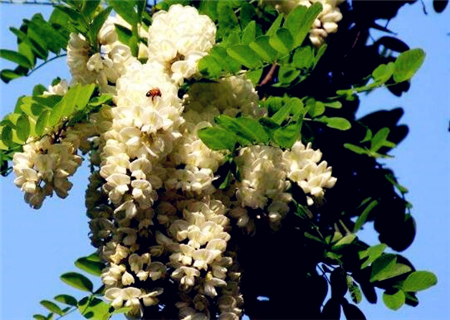
When does the black locust (Robinia pseudoacacia) bloom and bear fruit, how many years of planting before it flowers, and how does it differ from the Chinese scholar tree?
Black locust, also known as Robinia pseudoacacia. Black locust flowers are edible. The honey produced from black locust flowers is very sweet, and honey yields are also high. Cultivated varieties include Hongsen locust, red-flowered black locust, golden-leaf black locust, and others. So when does the black locust bloom and bear fruit? How many years of planting before it flowers? And how does it differ from the Chinese scholar tree?
-
A Detailed Guide to Acacia Cultivation Techniques and an Introduction to Common Varieties
Acacia Cultivation Techniques and an Introduction to Common Varieties
-
条件筛选