A Detailed Guide to Acacia Cultivation Techniques and an Introduction to Common Varieties
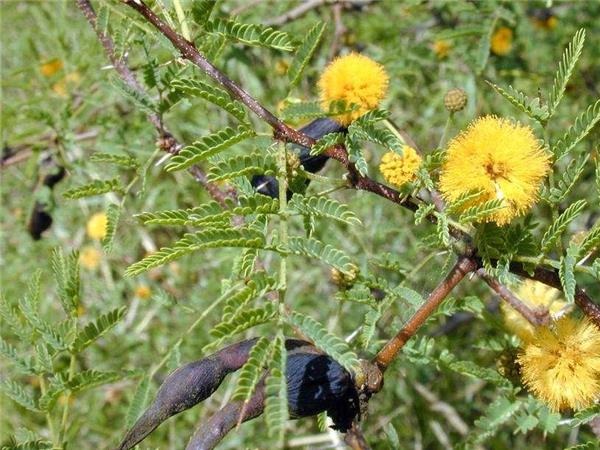
Acacia is a tree species with relatively high ornamental value, often seen along roadsides and in landscape designs, so it is also very suitable for courtyard planting.
Acacia Cultivation Techniques
Seed quality: Select superior trees 5 to 10 years old as mother trees, and collect in late May when the pods turn from light purple to brown but have not yet split open. Spread them out in the sun until the pods split open, then obtain the seeds. The seed extraction rate from pods is about 20% to 25%, with 70,000 to 80,000 seeds per kg, and the germination rate is generally 60% to 70%.
Nursery site preparation: The nursery site should preferably be a wind-sheltered, sunny paddy field with sandy loam or light loam that does not accumulate water. Deep plow 15 to 20 cm; if fertility is insufficient, apply an appropriate amount of base fertilizer. To prevent underground pests, apply 3% carbofuran granules at 2 to 4 kg per mu, then rotary till and break up the soil finely. It is advisable to divide into beds at 1.4 to 1.6 m intervals, with bed height 25 to 35 cm and bed surface width 1 to 1.2 m. Rake level and break up the soil finely, shaping it slightly like a turtle shell, and spray the bed surface with 800 to 1000 times diluted dexon solution for sterilization and disinfection.
Pre-sowing seed treatment: There are two treatment methods, hot water soaking and boiling water scalding. Before treatment, the seeds need to be sun-dried and disinfected. For hot water soaking, soak the seeds in 70°C hot water and let them cool naturally until the next day. Take out the seeds that have de-waxed and swollen, dry them in the shade or mix them with wet sand and place them in a greenhouse at 25 to 30°C for germination. After the sprouts show white, they can be sown. The remaining seeds continue to be soaked in 80°C hot water. For boiling water scalding, wrap the seeds loosely in gauze, put them into boiling water for 15 to 60 seconds, immediately place them in warm water and rub them by hand for 15 to 20 minutes, soak until the next day, then sow after drying in the shade and germinating.
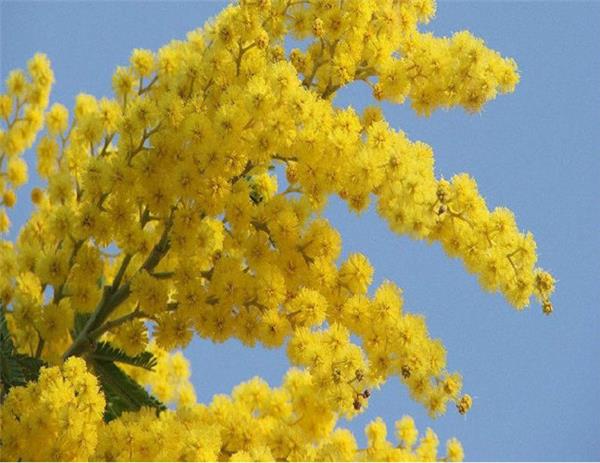
Sowing: Spring sowing is in March to April, and autumn sowing is from late September to mid-October. Acacia seeds are hard and the seed coat has a relatively thick waxy layer, so before sowing, treat them by soaking in 60-80°C hot water, let them cool naturally, change the water once a day, take them out on the third day, mix with wet sand, pile them in a warm place, cover with rice straw, keep moist for 7 days, then sow; seedlings can emerge after 3-5 days.
Management: After the acacia seedlings emerge, when the seedlings are 3-5 cm tall, apply diluted decomposed human manure or chemical fertilizer once to promote seedling growth. If seedlings taller than 15 cm need to be transplanted, choose a cloudy day or light rainy day for transplanting, appropriately prune some branches and leaves, and plant them at a spacing of 10×30 cm into the prepared beds. If sunny weather occurs after transplanting, water and shade them to help the seedlings take root and survive. After field planting, water promptly, and water thoroughly each time; by late autumn, apply sufficient base fertilizer. For weaker one-year-old seedlings or acacias with leaning trunks, when they sprout in early spring of the following year, keep 1 strong bud and cut the trunk back to ground level.
Pests and diseases: To prevent soil-borne pathogens from harming seeds and seedlings and to ensure healthy seedling growth, when preparing nutrient soil and leveling nursery beds, an appropriate amount of insecticide, fungicide, micro-fertilizer and ferrous sulfate may be added for soil disinfection and acid adjustment.
Common Varieties of the Acacia Genus
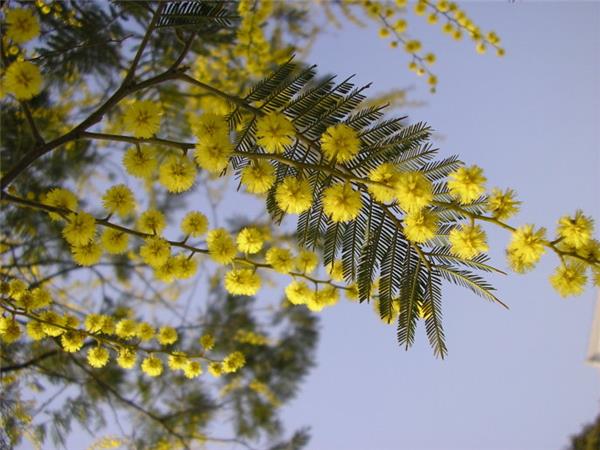
Earleaf acacia: Evergreen tree, generally about 10 m tall, up to 30 m tall in its place of origin; branchlets angular, green. Seedlings have bipinnate compound leaves, which later degenerate into phyllodes, sickle-shaped lanceolate or sickle-shaped oblong, 10 to 20 cm long. Flowers orange-yellow, fragrant; spike inflorescences axillary, 3.5 to 10 cm long. Pods curl into a ring shape when mature. Flowering period July to August, with a second flowering from October to December; fruiting period December to May of the following year.
Acacia mangium: Evergreen tree, up to 23 m tall; branchlets angular. Phyllodes very large, long obovate, narrowed at both ends, 20 to 24 cm long and 7 to 12 cm wide, with 4 parallel veins, leathery. Flowers pale yellow; spike inflorescences paired and axillary, 3.5 to 8 cm long, drooping. Pods linear and curled. Flowering period June to July; fruiting period August to December.
Green wattle: Evergreen tree, 5 to 20 m tall; bark dark gray, branchlets winged or with obvious angles. Bipinnate compound leaves, with 8-15 pairs of pinnae, each pinna with 30 to 40 pairs of leaflets; leaflets linear, 4 to 12 mm long, dark green, hairless or nearly hairless; there is 1 gland between the pinnae on the rachis. Flowers bright yellow, fragrant; composed of head inflorescences forming a compound corymb. Flowering period January to April; fruiting period May.
Black wattle: Its appearance is very similar to silver wattle, with the main differences being that its leaflets are dark green and glossy, and there are 1 to 2 glands between each pair of pinnae on the rachis; flowers pale yellow, and pods densely covered with fine hairs. Flowering period December to May of the following year.
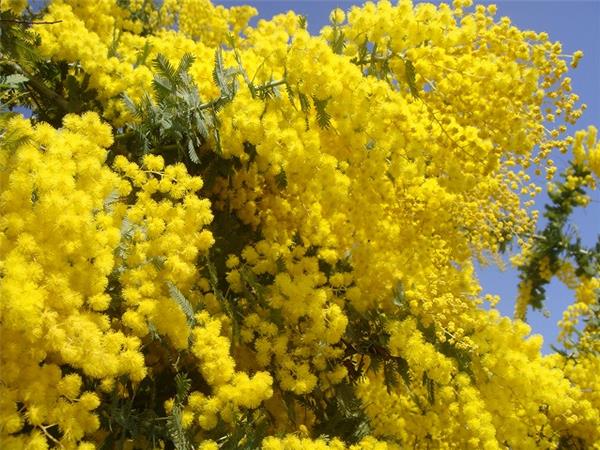
That is all for this introduction to acacia cultivation techniques. If you are not entirely satisfied with this tree species, you can also choose your favorite from the tree species introduced above, such as earleaf acacia and green wattle. They all have a good effect in decorating courtyards and can also be grown as large potted plants.