Acacia Flower Meaning and Care Methods Explained in Detail
Acacia is a common ornamental potted plant. What should you pay attention to when growing acacia? Let's take a look together below.
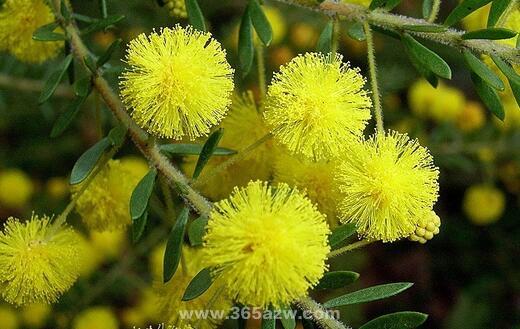
Acacia belongs to the legume family (Mimosoideae) and the genus Acacia. In recent years, Acacia dealbata and Acacia decurrens have been more widely introduced. Use wide-row drilling or broadcasting. After sowing, cover with a layer of fine mud ash about 0.5 cm thick, then cover with rice straw, water it to moisten, and keep the soil moist. When the seedlings are over 15 cm tall and need transplanting, choose a cloudy day or light rainy day for transplanting, appropriately prune some branches and leaves, and plant them at a spacing of 10 x 30 cm into prepared beds.
Key points for acacia cultivation:
(1) Sowing
Spring sowing is from March to April, and autumn sowing is from late September to mid-October. Acacia seeds are hard and the seed coat has a relatively thick waxy layer, so before sowing, treat the seeds with hot water at 60-80 degrees C, let them cool naturally, change the water once a day, take them out on the third day, mix with wet sand, pile them in a warm place, cover with rice straw, keep moist for 7 days, then sow. After 3-5 days, they will sprout.
(2) Raising seedlings
Seedling-raising methods include nutrient-pot seedling raising and nursery-bed seedling raising.
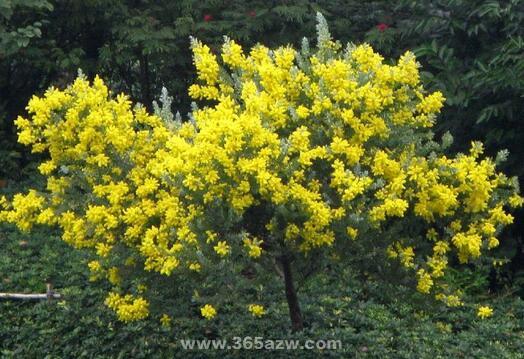
Nutrient-pot seedling raising: There are two commonly used nutrient soils. One is 60-70% burnt mud ash, 20-30% garden soil, 9.5% garbage or barn manure, and 0.5% calcium magnesium phosphate fertilizer, mixed evenly. The other is 90% fertile topsoil, 7% plant ash, 1% bone meal, and 2% decomposed livestock manure, crushed and mixed evenly. Sow 2-3 pre-germinated seeds per cup. After sowing, cover with some mud ash or fine soil 1 cm deep, and if conditions permit, sprinkle some pine needles on top. Arrange the sown nutrient cups into beds 1 m wide and of indefinite length, and bank soil around the beds to the same height as the cups to retain moisture. About 12,000 cups are arranged per mu. They sprout and emerge one week after sowing. Nursery-bed seedling raising: Choose a place sheltered from the wind and facing the sun, with deep sandy loam or loam soil, and convenient irrigation and drainage. Loosen the soil, break up clods, and make a flat seedbed 1 m wide running east-west. Before sowing, first apply decomposed human manure and calcium magnesium phosphate fertilizer on the bed, then cover with a layer of fine garden soil.
Use wide-row drilling or broadcasting. After sowing, cover with a layer of fine mud ash about 0.5 cm thick, then cover with rice straw, water it to moisten, and keep the soil moist. For seed quantity, sow 3-4 kg per mu for seedlings that need transplanting. For those not needing transplanting, sow 2-2.5 kg per mu. Within 7 days after sowing, spray water 1 to 2 times on sunny days to keep the seedbed moist. After the seedlings emerge, gradually remove the covering. After the first true leaf has generally emerged, remove all the covering and pull out weeds.
(3) Management
After acacia seedlings emerge, when they are 3-5 cm tall, apply diluted decomposed human manure or chemical fertilizer once to promote seedling growth. When the seedlings are over 15 cm tall and need transplanting, choose a cloudy day or light rainy day for transplanting, appropriately prune some branches and leaves, and plant them at a spacing of 10 x 30 cm into prepared beds. If sunny days occur after transplanting, water and shade them to help the seedlings take root and survive. Acacia seedling transplanting is best in spring, and requires digging, planting, and watering as you go. Because acacia seedlings have slender trunks, be careful and meticulous when transplanting, and take care to protect the root system. After planting, water promptly, and water thoroughly each time. By late autumn, apply sufficient base fertilizer to promote root growth and lush flowers and leaves the following year.
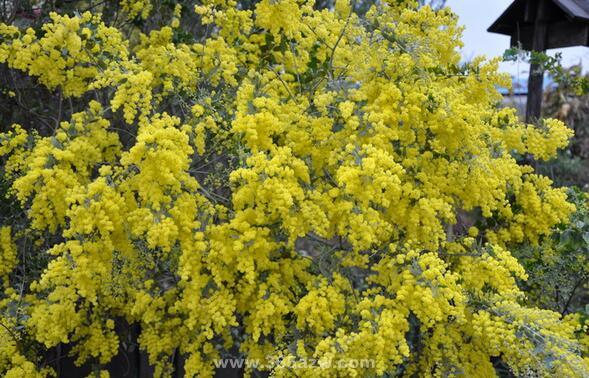
Acacia seedling trunks often lean and are not straight because the branches are too low. To improve ornamental value and make the trunk straight with an appropriate branching point, raise seedlings at a reasonable dense spacing and pay attention to pruning side branches. For weaker one-year-old seedlings or acacia with leaning trunks, in the following early spring when they sprout, keep 1 strong bud, cut the trunk level with the ground, and let it sprout into a thick, straight main trunk.
Acacia flower meaning: fleeting happiness
Acacia, also known as night-blooming flower and message flower, is a deciduous upright shrub with a dignified and beautiful tree form, tender green spring leaves, rich charm, and a rounded crown, showing a heroic posture swaying in the wind. Acacia is not only an excellent tree species for landscaping and beautification, but also an ornamental plant for parks and courtyards. It is suitable for household potting. Its tree form, leaves, and flower posture are extremely beautiful, its blooming method is special, and its flowers are extremely fragrant. It is suitable for cultivation on balconies and terraces. After flowering, place it indoors or on a table for viewing, and its delicate fragrance fills the air, making people feel delighted and relaxed. Pale yellow acacia flowers are the gift most loved by Russian women on March 8 Women's Day. The golden brilliant flowers can be seen everywhere at the carnival in Nice. Therefore, the Nice Carnival is also called Mimosa Carnival, that is, the acacia flower carnival. During the 3 days of the festival, heaven and earth seem to be covered with the golden color of acacia flowers, and after 3 days, everything suddenly disappears.
The above is the relevant introduction to acacia. I hope it is helpful to you.