-
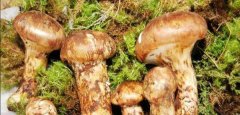
Can matsutake be cultivated artificially? Differences from wild ones and how much per jin
Can matsutake be cultivated artificially? Yes, it can, but artificially cultivated matsutake is very different from wild matsutake, so let's take a look at their differences below. Also, the prices of fresh and dried matsutake. Differences between artificial matsutake and wild matsutake: the color is different; wild matsutake
-
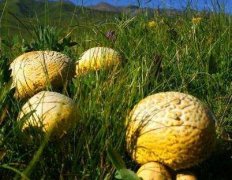
Qinghai Qilian Wild Yellow Mushroom: Benefits, Uses, and Stew Recipe with Pictures
In Xining, Qinghai, apart from the local mutton, there are three things that are local specialties you have to take home: black goji berries, highland barley wine, and yellow mushrooms. Black goji berries are rich in anthocyanins, highland barley wine is a grain liquor brewed from locally produced highland barley, and yellow mushrooms grow on the grasslands
-
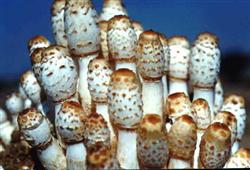
Detailed Explanation of the Key Points of Wild-Simulated Cultivation Techniques for the Shaggy Mane Mushroom
The growing temperature for wild-simulated shaggy mane mushrooms is between 10°C and 24°C, with fruiting in spring from March to June and in autumn from September to November. If wild-simulated cultivation is carried out in plastic greenhouses, sowing can be done from October of the current year to March of the following year, and fruiting can occur from November of the current year to June of the following year, allowing 2 production cycles per year. Each cultivation cycle can produce 5 to 6 flushes of mushrooms, ...
-

What is a wild porcini mushroom? This article introduces you to this wild mushroom
Porcini mushrooms are nutritious and delicious, and are a well-known and highly popular edible mushroom. They have the effects of clearing heat and relieving restlessness, nourishing the blood and harmonizing the middle, aiding digestion, expelling wind and dispelling cold, and tonifying deficiency and boosting energy. In folk medicine they are often used to treat colds and coughs, food stagnation and abdominal distension, and spleen deficiency with fatigue and listlessness. Other notes: The wild edible mushroom series are all collected from the well-preserved ecological environment of the completely pollution-free Jingning She Township and the wild environment of Yunnan, and are processed, packaged and stored according to organic requirements. Baixing's wild and natural edible mushroom series products are not only highly nutritious and delicious, but also particularly precious.
-
How do you identify poisonous wild mushrooms? Master these identification methods
So far, more than 10,000 species of wild mushrooms (fungi) have been discovered and recorded nationwide, among which there are as many as 192 species of poisonous mushrooms (fungi), and in the Jiangsu-Zhejiang area there are more than 30 species of poisonous mushrooms. Wild mushrooms (fungi) generally grow during the plum rain season and under high-temperature, high-humidity conditions in summer and autumn, so incidents of poisoning from eating them also mostly occur during this period. Poisonous wild mushrooms (fungi) often have the following characteristics: (1) High brightness of color. (2) The surface of umbrella-shaped and other mushrooms (fungi) is fish-scale-like. (3) There are ring-shaped protrusions on the mushroom stem. (4) The mushroom
-
How to cultivate wild mushrooms? Mastering these technical points is key
Wild mushrooms are a superior domesticated species promoted for cultivation in our county in recent years, with a unique flavor and rich nutrition. I. Preparation, mixing and fermentation of the growing medium 1. Preparation of the growing medium The main ingredients of the growing medium are wheat straw (or cottonseed hulls) and cow dung, which must be dry and fresh, without mold. Supplementary materials include urea, wheat bran, gypsum, superphosphate, lime, etc. 2. Formula of the growing medium (per 100 sq m) Dry cow dung 1500 kg, superphosphate 25 kg, gypsum 25 kg, wheat straw (or
-
Detailed Explanation of the Mimic-Wild Pollution-Free Cultivation Technique for Edible Fungi
Using rice straw or wheat straw for mimic-wild pollution-free cultivation of edible fungi requires no special equipment, no cutting or crushing, and no added supplements. Simply soak the straw in water in measured amounts, and oyster mushrooms (Pleurotus ostreatus), Phoenix mushrooms (Pleurotus sajor-caju) and other edible fungi can be cultivated on a large scale outdoors in a mimic-wild manner, giving artificially grown products the color and flavor of wild mushrooms. With this technique, 4000-5000 kg of straw can be used per mu, while the cost is only about 1000 yuan. Crops such as corn, sunflowers, melons and beans can also be appropriately interplanted in the mushroom-growing beds, giving considerable benefits and great potential for increasing yield. Raw material treatment
-
Key Technical Points for Mimicking Wild, Pollution-Free Cultivation of Maitake (Grifola frondosa)
Crop straw and forestry by-products accumulate in enormous annual quantities, providing abundant raw materials for the production of edible fungi. How to produce pollution-free, safe, high-quality, pollution-free edible fungus products is an important issue facing the edible fungus industry. The following introduces pollution-free cultivation techniques for mimicking wild maitake (Grifola frondosa), based on the national pollution-free edible fungus production technical standards. Optimal selection of cultivation sites and raw materials: edible fungi have a strong ability to accumulate harmful heavy metals, so cultivation sites and raw materials for maitake must be carefully selected to minimize the accumulation of harmful substances brought about by the cultivation site and raw materials. ①
-
Introduction to the High-Temperature-Tolerant Wild Oyster Mushroom NP Variety
A pure strain obtained by tissue isolation after multiple collections of wild oyster mushrooms by the **Institute of Biological Soil and Desert Research, Chinese Academy of Sciences. The fruiting body primordia are solitary or clustered, and young primordia are white or light brown. The cap diameter is 10-12 cm, the thickness is 1-1.5 cm, and the cap is pure white or light brown. The flesh is white, the stipe diameter is 1.5-2.5 cm, the length is 2-6 cm, and the color is white. The spore print is white or light purple. It has wide adaptability and high-temperature tolerance, capable of fruiting at 30°C, but it can also fruit normally at a low temperature of 8°C.
-
Key Technical Points for Imitation-Wild High-Quality Cultivation of Oyster Mushrooms in Winter and Early Spring
Oyster mushrooms produced using imitation-wild cultivation techniques not only taste as fresh and delicious as wild ones, but also truly achieve ecological, high-quality, and high-yield production. Even in the cold winter and low-temperature early spring seasons, high-quality oyster mushrooms that are thick, fleshy, fresh, and tender can be produced in a relatively enclosed shade shed by making full use of ground temperature. This method increases yield by more than 60% compared with conventional cultivation methods, and by more than 40% compared with cultivation methods such as mushroom walls, with a biological conversion rate of more than 220%. 1. Mycelium culture. Use high-pressure or atmospheric-pressure sterilization, inoculate conventionally, and culture until physiologically mature mycelium is obtained.
条件筛选