Qinghai Qilian Wild Yellow Mushroom: Benefits, Uses, and Stew Recipe with Pictures
In Xining, Qinghai, apart from the local mutton, there are three things that are local specialties you have to take home: black goji berries, highland barley wine, and yellow mushrooms. Black goji berries are rich in anthocyanins, highland barley wine is a grain liquor brewed from locally produced highland barley, and yellow mushrooms grow on the grasslands
In Xining, Qinghai, apart from the local mutton, there are three things that are local specialties you have to take home: black goji berries, highland barley wine, and yellow mushrooms. Black goji berries are rich in anthocyanins, highland barley wine is a grain liquor brewed from locally produced highland barley, and yellow mushrooms grow on the grasslands.
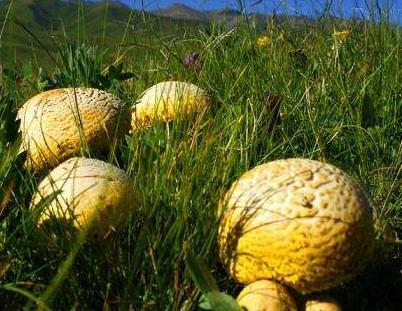
Qinghai grassland yellow mushroom, also known as yellow mushroom, has long been known as one of Qinghai's “Ten Treasures”, and is highly favored for being plump and tender, fragrant and brightly colored, pure in aroma, and delicious. Qinghai wild yellow mushroom grows on the vast grasslands of the Qinghai Plateau. The yellow mushroom, scientific name Armillaria luteo-virens (Aalb.et Schw:Fr.) Sacc., also known as “imperial mushroom”, has its authentic production area in the Qilian region of Haibei Prefecture, Qinghai Province.
Qinghai grassland yellow mushroom, also known as yellow mushroom, has long been known as one of Qinghai's “Ten Treasures”, and is highly favored for being plump and tender, fragrant and brightly colored, pure in aroma, and delicious. Qinghai wild yellow mushroom grows on the vast grasslands of the Qinghai Plateau. The yellow mushroom, scientific name Armillaria luteo-virens (Aalb.et Schw:Fr.) Sacc., also known as “imperial mushroom”, has its authentic production area in the Qilian region of Haibei Prefecture, Qinghai Province.
Qilian yellow mushroom, a specialty of the Qilian Mountains region, has long been known as one of Qinghai's “Ten Treasures”. Qilian County in Qinghai Province is a famous production area. In the area of the midslopes of the Qilian Mountains in this county, forest and grassland resources are abundant, there is no pollution, and the altitude is high; the yellow mushrooms produced there are large, thick-fleshed, low in moisture, and fine and dense in texture, making them a famous mountain delicacy on the Qinghai-Tibet Plateau. In 2008 it was approved as a China Geographical Indication certification trademark.
During the Yongzheng period, when Nian Gengyao led the Qing army to pacify the Qinghai-Tibet rebellion, the local native kings of Qinghai submitted, and among the tribute offered to the imperial court were yellow mushrooms, hence they are also called “imperial mushroom”.