-
Scientific Planting Techniques for Walnut Seedlings and Walnut Trees
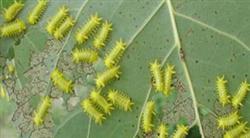
The yellow-spined slug moth mostly has 1 generation per year in the north, and 2 generations per year in the Yangtze River basin. After autumn, the mature larvae often spin silk and form hard cocoons on branch forks, twigs, leaf petioles, and even leaves to overwinter. The cocoon is oval, grayish-white, with several brown longitudinal bands, resembling a bird's egg. In early summer of the following year, the mature larvae pupate inside the cocoon, and after 1 month they emerge as adults and fly out,...
-
What to Do If a Walnut Tree Does Not Bear Fruit? Causes and Solutions
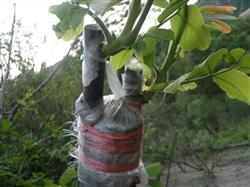
Grafting Types Grafted seedlings are new-variety walnut seedlings grafted onto rootstock seedlings (seedling rootstock). There are mainly two types: tongue grafting and bud grafting. 1. Tongue grafting is divided into bark-tongue grafting and double tongue grafting; 2. Bud grafting is divided into young-bud walnut seedling grafting and square bud grafting. Square bud grafting is currently the most commonly used method in walnut seedling grafting...
-
A Detailed Guide to Grafting and Pruning Techniques for Walnut Trees
Pruning Methods for Trees in Full Fruit Period Pruning of walnut trees refers to pruning in the broad sense, that is, both training and cutting. Trees of different ages have different pruning tasks. Pruning young trees is, on the basis of training the framework, to continue developing and maintaining a high-yielding tree form; pruning trees in the initial fruiting stage is to continue developing the scaffold branches at all levels well, make full use of auxiliary nurturing branches for early fruiting...
-
What are the benefits of planting walnut trees in a scattered layout?
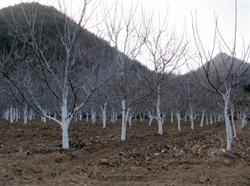
Cold-protection measures for walnut trees can be taken after leaf fall (generally from mid-November to early December). 1. Burying the tree in soil: for 1-2 year old young trees that cannot safely overwinter in the open, bend the entire tree body to one side and cover it with soil; this method is the most effective and reliable measure to prevent branch dieback. 2. Mounding soil for cold protection...
-
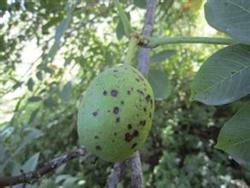
Detailed Explanation of Control Methods for Walnut Bacterial Black Spot
Walnut bacterial black spot mainly damages walnut fruit, with a diseased fruit rate of 10%-40%, causing the fruit to turn black, rot, and drop early, and the walnut kernels to shrivel. In addition, it also damages leaves and tender shoots, with damage rates reaching 20%-40% in some plots. [Symptoms] On affected green young fruit, small brown oil-soaked spots initially appear on the rind...
-
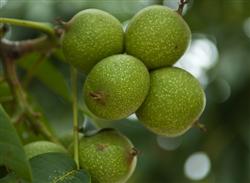
Applying supplemental fertilizer to walnut trees during the rainy season: better to apply less than more
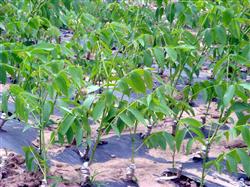
Choose high-quality seedlings for planting. High-quality seedlings refer to robust grafted seedlings with pure varietal characteristics, well-healed graft unions, and no damage or pests and diseases. Choose plots with a soil layer more than 1 m thick, a pH of 7.5-8.0, a soil salt content below 0.25%, and a groundwater level below 2 m for planting. When planting, apply a 600-fold dilution of Xin Gaozhi Mo...
-
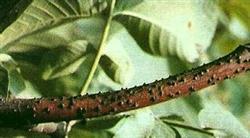
Integrated Control Methods and Technical Key Points for Walnut Branch Blight
Walnut branch blight is caused by fungal infection and mainly damages branches and trunks. It occurs in all regions, with a general diseased plant rate of 20-30%, and in severe cases the diseased plant rate reaches over 80%, causing massive branch dieback and directly affecting tree growth as well as walnut yield and quality. Therefore, timely control is necessary to curb the disease and promote tree...
-
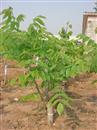
Detailed Explanation of Key Technical Points for Spring Management of Ma Walnut Trees
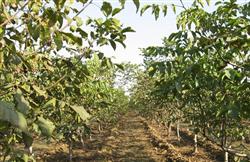
I. Planting of Ma Walnut Trees 1. The suitable time for planting is from March to mid-April, after the soil thaws and before the buds sprout. Early planting makes it easy to survive, with deep rooting. When choosing a site, the specific environmental requirements for walnut growth and development should be considered. The orchard site is best chosen on sunny flat land or gentle slopes, with sandy loam soil being ideal, and requires a soil layer of more than 1 m, with the groundwater level more than 2 m below the surface. The planting area should be leveled, aged, and measures taken to prevent alkalinity and waterlogging. For mountainous areas, fish-scale pits can be built first, then the tree discs gradually expanded. Before planting, large pits must be dug and sufficient base fertilizer applied. The correct method of digging pits is: dig pits 80-100 cm square, keep topsoil and subsoil separate, and apply one small cartload (50-100 kg) of barnyard manure organic fertilizer per tree. When backfilling the pit, first fill with topsoil mixed with base fertilizer, then fill with subsoil, tamping while filling, and water thoroughly before planting.
-
Control Methods for Sclerotial Root Rot in Walnut Seedlings
Sclerotial root rot, also called southern blight, mostly affects one-year-old seedlings, causing the cortex of the main root and lateral roots to rot, the aboveground parts to wither and die, and sometimes the entire plant to die. 1. Disease symptoms: Under high temperature and high humidity, white silky mycelium is produced at the base of the seedling root collar and on the surrounding soil and fallen leaves, after which small sclerotia grow...
-

条件筛选