-
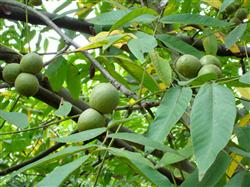
What are the common late-season fruit diseases of walnut trees?
What diseases affect walnut tree fruit in the late season? The following diseases affect walnut tree fruit in the late season: 1. Walnut anthracnose. Disease symptoms: after the fruit is infected, brown to dark brown round or nearly round lesions appear on the rind, with a sunken center and small black dots, sometimes forming concentric rings. When air humidity is high, the lesions bear...
-
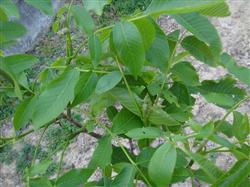
What issues should be noted in walnut tree cultivation?
What issues should be noted in walnut tree cultivation? Please provide an introduction. The following issues should be noted in walnut tree cultivation: Walnuts are widely distributed naturally in China, from southern Liaoning in the north, to northern Fujian in the south, to Shandong and Zhejiang in the east, and to Qinghai, ** and even Sichuan in the west. They can grow normally at altitudes of 500m-2500m...
-
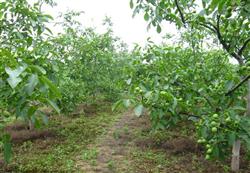
Walnut Management and Pest and Disease Control Techniques for July and August
How should walnuts be managed in July and August? Which pests and diseases need to be controlled? Please give an introduction. For walnuts in July and August, the following methods can be used for management: 1. Water and fertilizer management. For trees that have already set fruit, by July the fruit size has basically become fixed, and they enter the shell-hardening stage. During this period, no artificial watering is needed. Soil moisture that is too...
-
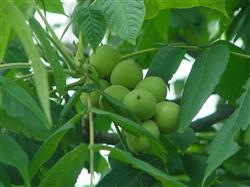
What are the key technical points for summer management of walnut trees?
How to manage walnut trees well in summer? Here are the methods. In summer, walnut new shoots grow fastest and physiological activity is strongest; this is the period with the highest survival rate for bud grafting and the most critical time. Pests such as the yellow slug moth, the walnut fruit moth (walnut black), the walnut yellow weevil, the cloud-banded longhorn beetle, the gypsy moth and the walnut tuft moth begin to emerge and lay eggs. Rot disease...
-
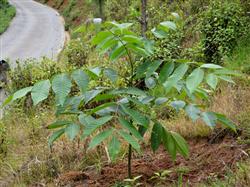
How do you prune a walnut tree? Detailed pruning methods and techniques
How do you prune a walnut tree? Please explain the methods. Walnut tree pruning methods generally vary with tree age; for details, refer to the following: 1. Pruning young trees: this should vary according to the growth and development characteristics of each variety, mainly cutting out weak branches, crossing branches, overlapping branches, parallel branches and diseased branches, in order to...
-
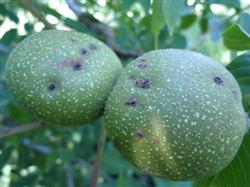
What causes walnut husk rot?
What causes walnut husk rot? Please explain the causes and control methods. The main factor in walnut husk rot is that when air humidity is high, it can cause walnut anthracnose, and the lesions have pink raised bumps. When there are many lesions, they can merge into patches, showing as the fruit turning black and rotting or dropping early. Walnut husk rot control methods...
-
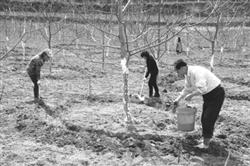
What are the key technical points for managing walnut trees in autumn and winter?
How should walnut trees be managed well in autumn and winter? Please give guidance. Autumn and winter management of walnut trees mainly includes soil, fertilizer and water management, as well as pruning and freeze protection. For detailed operations, you can refer to the following methods: Soil, fertilizer and water management for walnut trees in autumn and winter: For non-bearing trees, after leaf fall and before the soil freezes, deep-till the soil and build tree basins, generally to a depth of 20-25 cm. The base fertilizer should mainly be decomposed organic fertilizer, with an application rate of 25-50 kg per tree, and 2-5 kg of superphosphate can also be added. When fertilizing, the ring trench method can be used, that is, dig a ring-shaped trench 20-40 cm wide and about 30 cm deep around the outer edge of the canopy, placing topsoil and subsoil separately. After digging, put the fertilizer in, then fill in topsoil and mix evenly, and finally fill in an appropriate amount of subsoil to level with the original ground surface.
-
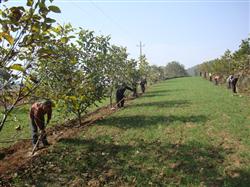
What are the key points of autumn management techniques for walnut trees?
How should walnut trees be managed in autumn? What should be noted about walnut trees in autumn? Please introduce them one by one. In autumn, during the fruiting period, walnut trees consume a large amount of tree nutrients due to the needs of the fruit, and the trees mostly show weakened vigor and a marked increase in pests and diseases; even the structure of the tree has changed. Therefore, after the walnuts...
-
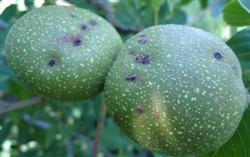
What are the control methods for walnut anthracnose?
What harm does anthracnose do to walnuts? How is walnut anthracnose controlled? We ask experienced netizens to help explain. Zhongdiwang has compiled the harm and control methods of walnut anthracnose, listed in detail below for netizens' reference. Harm of walnut anthracnose: Anthracnose generally develops from June to August, and in orchards with heavy rainfall, weak walnut tree vigor, dense branches and leaves, and extensive management, the disease is severe; the pathogen spores invade through wounds or natural openings.
-
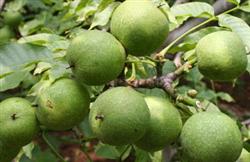
How should walnut trees be managed to set more fruit?
How can walnut trees set more fruit? What methods can make walnut trees set more fruit? Experienced netizens are also asked to help explain. With the improvement of living standards, walnuts are becoming more and more popular, and walnuts are also the newest trendy item for handling and play, but the low fruit-setting rate of walnuts is the most headache-inducing thing for fruit growers. For this reason, Zhongdi Network has compiled...
条件筛选