Proper application of the four fertilizers is very important for spring peanuts, and the fertilization method must be mastered
Spring peanut cultivation with plastic film mulching has the advantages of heat preservation, moisture retention, fertilizer retention, improving the soil environment, ensuring uniform and strong seedlings, promoting growth and development, earlier maturity, and increased yield and income. It can usually increase yield by 20%-30%, and increase net income by 50-100 yuan per mu. 1. Fine land preparation and full-layer fertilization for peanut mulching...
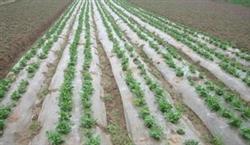 Spring temperatures are suitable, which is beneficial to the rapid growth of peanuts, but if the fertilization method is not mastered properly, it is very easy to cause insufficient plant nutrients and limit the normal growth of peanuts. Grasping the application techniques of the "four fertilizers" plays a very important role in promoting the healthy growth of peanuts and ultimately achieving a high yield.
Apply sufficient base fertilizer. The amount of base fertilizer should account for 80%-90% of the total fertilization amount. Some peanut fields only apply base fertilizer, and high yield can still be obtained without topdressing later. For base fertilizer, 1000-3000 kg of high-quality barnyard manure can be applied per mu.
Increase phosphorus fertilizer application. Peanuts require more phosphorus fertilizer than general crops, and their absorption and utilization rate of phosphorus fertilizer is also high. Experiments have proved that applying 10 kg of superphosphate per mu has a significant yield-increasing effect, and the residual effect is also very obvious. When applying phosphorus fertilizer on poor land, adding 2.5-5 kg of urea per mu as seed fertilizer can better exert the yield-increasing effect of phosphorus fertilizer. However, when applying seed fertilizer, the fertilizer and seeds must be separated to avoid damaging the seeds and affecting their germination and emergence.
Calcium fertilizer. Applying 10 kg of calcium sulfate per mu to peanuts can not only regulate soil pH and improve the nitrogen-fixing ability of rhizobia, but also improve nitrogen nutrition, promote pod development, and reduce empty pods and rotten pods.
Bacterial fertilizer. Artificial inoculation of peanut rhizobia can make peanuts form root nodules earlier and more abundantly, and improve the nitrogen-fixing ability of peanut plants. The peanut rhizobium agent (rhizobium fertilizer) currently promoted in production is generally used at 25 grams per mu. When using it, add an appropriate amount of water to make a paste and mix it evenly with the seeds. Note that it should be mixed and sown immediately, prevent exposure to sunlight, and also avoid mixed use or contact with fungicides.