What are the prevention measures for rose black spot disease? Explained clearly in one article
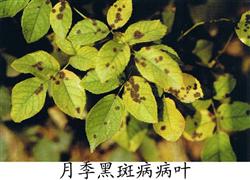
Rose black spot disease is a stubborn disease that harms roses, mainly occurring on leaves, young shoots and flower stalks. The lesions mostly occur on the upper surface of the leaves. On severely affected plants, all the leaves from the lower to the middle part fall off, making the plants grow weakly and susceptible to low-temperature damage to flower buds, affecting flowering the following year, and even causing branches to die. The author...
 1. Choose disease-resistant varieties.
2. Remove the pathogen. Persist in removing dead plants and fallen leaves and diseased leaves every year to reduce the sources of infection.
3. Enhance resistance. Strengthen field management, fertilize reasonably, apply more phosphorus and potassium fertilizer, clear ditches and drain waterlogging, do not use sprinkler methods for watering, prune moderately, loosen the soil and mound the soil, improve root vitality, improve growth vigor, and enhance plant disease resistance.
4. Chemical control. In early spring of the following year, before roses and rugosa roses sprout, spray 100 times diluted crystal calcium polysulfide solution. In summer, when new leaves have just unfolded, begin spraying until winter. In the early stage of the disease, alternately spray 75% chlorothalonil wettable powder at 1000 times dilution, or 45% thiabendazole (Tecto) suspension concentrate at 500 to 600 times dilution, 40% flusilazole or 25% myclobutanil emulsifiable concentrate at 800 times dilution, or 40% lime sulfur suspension concentrate or 50% anthracnose Fumei wettable powder or 50% compound thiophanate wettable powder at 800 times dilution, 70% thiophanate-methyl at 700 to 1000 times dilution, 50% thiram wettable powder at 800 to 1000 times dilution, 80% zineb at 800 times dilution, 12.5% Deqing (Banjietuo) emulsifiable concentrate at 1000 times dilution. During the rainy season, spray once every 7 days; during the normal growing period and the plum rain season, spray once every 7 to 10 days, for 4 to 5 consecutive sprays, which can control the spread of the disease. When the disease is severe, spray 70% copper hydroxide, 30% copper oxychloride suspension concentrate at 800 times dilution, 75% chlorothalonil at 500 times dilution, 12.5% Deqing emulsifiable concentrate at 1000 times dilution, for 3 to 5 consecutive sprays, once every 7 to 10 days.