Detailed Explanation of the Onset and Control Measures of Black Spot Disease in Roses
Black spot disease of roses is a worldwide disease with a fairly wide distribution, occurring in every region where roses are cultivated. In recent years, the disease has been severe in many provinces and cities in China. The occurrence of black spot disease can cause premature defoliation of roses, affecting rose growth and the survival rate of stem cuttings, and reducing ornamental and economic value. Black spot disease can also harm Rosa multiflora, rugosa roses and other plants...
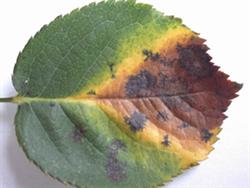
Black spot disease of roses is a worldwide disease with a fairly wide distribution, occurring in every region where roses are cultivated. In recent years, the disease has been severe in many provinces and cities in China. The occurrence of black spot disease can cause premature defoliation of roses, affecting rose growth and the survival rate of stem cuttings, and reducing ornamental and economic value. Black spot disease can also harm Rosa multiflora, rugosa roses and many other plants of the genus Rosa.
Symptoms: Black spot disease mainly harms rose leaves, and can also harm petioles and young shoots. The spots on the leaves are round or nearly round, dark brown, with radiating edges; the spots on petioles and young shoots are elongated strips with no obvious radiating edges.
Disease characteristics: In Beijing, the disease begins in mid-May each year, is severe during the rainy season in July-August, tends to lessen in October, and stops developing in early November. In southern China, the disease mostly occurs in April, is severe during the plum rain season in June-July, gradually eases in August, develops again somewhat in September-October, and stops developing in November. A humid, rainy environment favors the occurrence and spread of the disease. Generally, when the rainy season comes early, with large rainfall amounts and frequent rainfall, the onset period is earlier, the spread is fast, and the damage is severe. In greenhouses with poor ventilation, high humidity, and excessive density of cutting seedlings, creating poorly ventilated, high-humidity conditions, roses suffer severe infection.
Control methods
1. Reduce sources of infection. In autumn, thoroughly clear away dead branches and fallen leaves, and remove diseased branches along with winter pruning; during the dormant period, spray 1% copper sulfate solution to kill overwintering fungal sources on diseased plant debris.
2. Improve cultivation and management measures. Susceptible varieties are best planted alternately with resistant varieties to serve as a barrier, reducing disease spread and transmission. Pay attention to plant spacing when cultivating; it should not be too dense. Daily watering should not be too late, and watering from above should be avoided; root irrigation should be adopted, so that water droplets do not splash and spread fungal spores onto neighboring leaves. Greenhouses should be ventilated and humidity controlled to reduce conditions for disease onset. Reasonable maintenance and management help enhance plant disease resistance.
3. During the disease period, spray 80% zineb wettable powder at 500 times dilution, or 70% thiophanate-methyl wettable powder at 1000 times dilution, or 50% carbendazim wettable powder at 500-1000 times dilution, or 75% chlorothalonil wettable powder at 1000 times dilution, or Bordeaux mixture with a small amount of lime (because roses are sensitive to lime); the control effect is relatively good. Fungicides such as benomyl, captan, and mancozeb can also be used, sprayed once every 7-10 days. To prevent the development of fungicide resistance in pathogens, the chemicals should be used alternately.
4. In production, select disease-resistant varieties and disease-resistant rootstocks, and eliminate susceptible varieties.