-

How Many Times a Year Does Anthurium Bloom? A Detailed Guide to Its Blooming Patterns
Anthurium can usually bloom twice a year, but with careful care, it can be made to bloom all year round. Temperature must be controlled, with 18 to 28 degrees being optimal. Air humidity should also be increased to support its growth. Attention must be paid to light management: it cannot be exposed to direct strong light, nor should the light be insufficient, and water and fertilizer must be managed correctly.
-

Before Mid-Autumn, water the clivia with this and it will grow grid-patterned leaves, with strong roots and leaves and more flowers
As people's living standards improve, more and more people have fallen in love with growing flowers. It is said that growing flowers has already become a nationwide activity. In fact, the benefits of growing flowers are truly many. In summary, growing flowers has the following benefits: 1. A pot of flowers at home...
-

Inflammation of the throat caused by deficiency fire flaring upward has two patterns and must be treated according to the pattern
In traditional Chinese medicine, deficiency fire flaring upward refers to the signs of deficiency fire rising caused by long-standing illness, loss of yin qi and relatively excessive yang qi, manifesting as sore throat and red eyes, mouth and tongue sores, dizziness and blurred vision, restlessness and insomnia, tinnitus and forgetfulness, heat in the palms and soles...
-

What are the changing patterns of the physiological habits of laying hens?
The changing patterns of the physiological habits of laying hens
-

What are the living habits of scorpions? A comprehensive analysis of scorpion behavior patterns
The living habits of scorpions
-

After the weather turns cool, water the Clivia with "root-nourishing water" - it grows grid-patterned leaves and shoots out 3 flower spikes, with great results
After the weather turns cool, water the Clivia with "root-nourishing water" - it grows grid-patterned leaves and shoots out 3 flower spikes, really works! As people's living standards rise, more and more people like to keep a pot of flowers at home. According to surveys, the higher people's living standards...
-
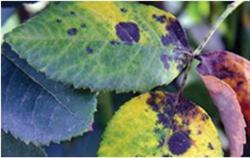
Occurrence patterns and control methods of black spot disease in Chinese roses
Black spot disease of Chinese roses (Rosa chinensis) and roses is a worldwide disease, occurring commonly across China. It mainly damages the leaves, followed by petioles, leaf tips, young tender shoots and flower stalks. It occurs severely in both southern and northern regions and other areas. The disease causes leaves to turn yellow and drop early. When the disease is severe in summer during April and May and in late summer during August and September, the leaves can drop completely, causing Chinese roses...
-
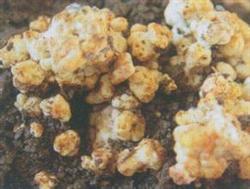
What to Do When Oyster Mushrooms Get Walnut Meat Fungus Disease? Occurrence Patterns and Integrated Control
Recently, many readers have reported that the oyster mushrooms they cultivate have been affected by walnut meat fungus (Diehliomyces microsporus). We are therefore reposting an article titled "Occurrence Patterns and Control Techniques of Walnut Meat Fungus in Oyster Mushrooms" published by Yang Yongheng, An Xiurong and others of the Tai'an City Institute of Agricultural Sciences, Shandong, for growers' reference: In recent years, Tai'an City and its surrounding...
-
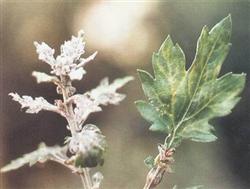
Detailed Explanation of the Occurrence Patterns and Control Methods of Chrysanthemum Powdery Mildew
Chrysanthemum powdery mildew is one of the common diseases in flowers, and it is distributed in both southern and northern China. Chrysanthemum powdery mildew causes poor plant growth, leaf death, and even failure to bloom, seriously affecting greening and beautification results and flower production; it also harms cineraria, pot marigold, coneflower, African daisy, cosmos, aster, dahlia...
-
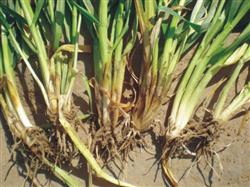
Spring Occurrence Patterns and Control Methods of Wheat Sharp Eyespot
Wheat sharp eyespot is a fungal disease mainly spread through the soil. As yield levels have increased, with the promotion of high-yielding varieties and wheat field management involving heavy watering and heavy fertilization, its damage has become increasingly serious. The pathogen of wheat sharp eyespot has a broad host range; besides infecting wheat, it can also infect corn, rice, foxtail millet, sorghum and many other...
条件筛选