After the weather turns cool, water the Clivia with "root-nourishing water" - it grows grid-patterned leaves and shoots out 3 flower spikes, with great results
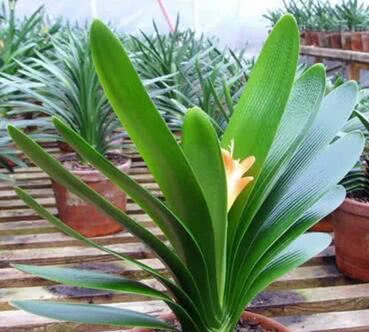
After the weather turns cool, water the Clivia with "root-nourishing water" - it grows grid-patterned leaves and shoots out 3 flower spikes, really works!
As people's living standards rise, more and more people like to keep a pot of flowers at home. According to surveys, the higher people's living standards, the greater the demand for flowers, plants and greenery, and life becomes more and more inseparable from flowers and plants. In fact, growing flowers is an activity suitable for all ages, and it has many benefits. For example, if you can keep a few pots of flowers at home, most flowers and plants can purify the air, giving the home a comfortable and healthy living environment, beautifying the room, making it warm and pretty. In the process of caring for flowers and plants, you can also cultivate your character - it's really great. Especially for some elderly friends: after flower enthusiast Old Zhou started growing flowers himself, he gained spiritual sustenance. Tending flowers and plants every day, his health improved and he became more active. Old Zhou says that seeing the lush flowers and plants makes him feel full of vitality.
You see, isn't growing flowers great? So what are the most popular potted plants right now?
That would definitely be relatively easy-to-grow potted plants like pothos, spider plant, snake plant, money tree, succulents, and Clivia. But speaking of Clivia, Xiaohua will share a little care tip about Clivia today, which is also the theme of today's sharing. Although it's about Clivia, other flowers and plants work the same way - for example, pothos, spider plant, snake plant, money tree... they can all use it. Let's take a look together!
After the weather turns cool, water the Clivia with "root-nourishing water" - it grows grid-patterned leaves and shoots out 3 flower spikes, really works!
(1)
Soak willow branches, and Clivia loves it - nourishes roots and grows leaves
Seeing the subheading, I believe flower enthusiasts already know what the root-nourishing water for Clivia is. That's right, it's made by soaking willow branches. But why willow branches and not branches from other trees?
Why exactly? Let's first look at the principle behind willow branches nourishing flowers!
Willow trees can be seen in most parts of the country. Whether in the hot south or the cold north, they grow well. I remember as a child, willows were planted by the riverbanks and field edges at home. Xiaohua even asked Mom why willows were planted instead of other trees. Mom said, "Willows are easy to keep alive! You see, just cut a branch casually and stick it in the soil and it'll grow - simple and effortless."
So why are willows so easy to keep alive?
According to scientific research, this is because willow trees contain a large amount of "salicylic acid" and a small amount of "aspirin" in their bodies. These two substances are truly greatly beneficial to the growth of willows.
Salicylic acid can promote plant rooting and sprouting - in plain terms, it's a kind of plant growth hormone. And aspirin has a preservative effect, preventing plants from root rot. That's why willows can grow so well!
Later, some expert gardeners used this characteristic of willows to grow flowers, especially with special effects for Clivia and orchids. The method is as follows:
Break off a few willow branches of the current year's growth, remove the leaves, and use a knife to score the bark. Cut them into small pieces 3-4 cm long, soak them in clean water - the amount of water should be roughly enough to submerge the willow branches with a bit extra. Seal the container, and after 3-4 days take the water to water the Clivia. Especially now, using it on Clivia when the weather turns cool can make the Clivia grow fast without root rot. It's recommended that flower enthusiasts use it twice a month.
If you can keep using it, then the Clivia's leaves will have clear veins, with obvious grid patterns on the leaves, like grid-patterned leaves. When the flowering season comes, the flower spikes also shoot up fast, and the flowers bloom large and vibrant.
(2)
If you want your Clivia to grow well, other care is indispensable
Of course, if you want your Clivia's leaves to grow well and bloom abundantly, other care is also very important. Let's take a look together!
1. Light
Clivia doesn't like strong light, but it can't go without sunlight either. For home care, you can place it on a windowsill with bright light and good ventilation. But if the midday heat is strong or the summer temperature is too high, be sure to shade it. Also, you need to rotate the pot frequently, because Clivia is phototropic - only by rotating the pot can its leaves grow evenly.
2. Watering
The Clivia's fleshy roots and thick leaves can both store water, so Clivia is fairly drought-tolerant, and there's no need to water it too much. Just keep the potting soil moist but on the dry side. You can often wipe the leaves with a soft cloth dipped in beer water or sesame oil water - this cleans the leaf surface while also achieving the effect of a foliar fertilizer.
Note that when watering, you must not pour water into the heart of the Clivia's leaves.
3. Fertilizing
Clivia likes fertilizer, and it prefers oily fertilizers. So when potting it, we can add 5% roasted sesame seeds or castor beans to the potting soil. During the growing season, water with fermented rice-washing water or soybean water, and add phosphorus fertilizer at the flowering stage, and it will grow well.