-
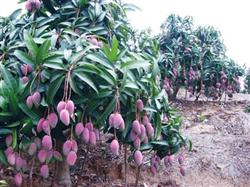
Integrated management with new techniques makes mangoes retain flowers and fruits, with more fruit set
Mango jujube sets fruit easily but retaining it is difficult; from the young fruit stage to the white-ripe stage it keeps dropping fruit, and puzzlingly, it always drops the large ones and keeps the small ones, which distresses jujube growers greatly. In recent years, various flower- and fruit-retention measures were tested on mango, and the following integrated management new techniques were developed to solve this problem: 1...
-
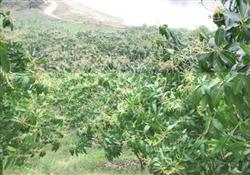
How to grow four-season mango? Detailed explanation of cultivation techniques
The flowering and fruit-setting period of mango is an extremely critical period in mango production management. The management measures during its flowering and fruit-setting period include the following aspects: 1. Trimming of flowering branches and shoots. About 2 months before flower bud differentiation, remove overly dense branches, shaded weak branches and diseased and pest-infested branches, leaving only 1-2 shoots per branch, which can increase the tree canopy's...
-
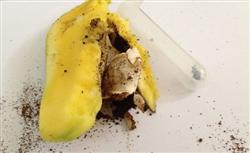
How to prevent early flowering in mango? These methods are worth mastering
1. The mango leaf-cutting weevil is widely distributed. Adult beetles feed on young mango leaves, causing the leaves to dry up; or the female beetles lay eggs on the young leaves and bite the young leaves off at the base, affecting plant growth. Control methods: ① During the growth period of young shoots, pick up the bitten-off fallen leaves from affected plants once every 3 days, dry them in the sun and burn them to kill the larvae;...
-
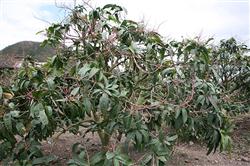
Detailed Explanation of Key Points of Mango Tree Cultivation and Management Techniques
I. Orchard Construction and Field Planting 1. Building Ridges in the Orchard and Keeping Ring Ditches Clear According to the terrain and slope of the orchard, ridges should be built properly to prevent waterlogging from rain and soil erosion. Dredge the drainage channels; the field ditches and ring ditches throughout the orchard must be kept clear. Achieve automatic drainage when it rains and no standing water after rain, so as to achieve the purpose of artificial water control; at the same time, the footpaths and tractor roads in the orchard must also be kept clear to facilitate management work.
-
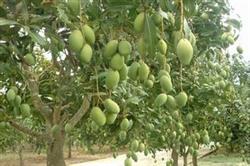
Detailed Explanation of Key Points for Irrigation and Fertilization Techniques for Mango Trees
For every 1000 kg of fresh mangoes produced, N: 1.74 kg, P2O5: 0.23 kg, K2O: 2.0 kg are required. The greatest demand is for potassium, followed by nitrogen and phosphorus. In production, nitrogen, phosphorus, and potassium fertilizers are generally applied at a ratio of N:P2O5:K2O = 1:0.5:0.5 to 1, but for mangoes of different tree ages, in different regions, and at different yield levels...
-
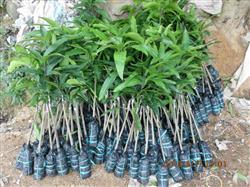
How to cultivate Ganoderma lucidum with mango sawdust? Detailed technical points
1. Scion selection: Collect scions from a superior mother tree in a certified mother stock orchard or from outstanding individual adult trees. The mother plant must be of a pure variety, high-yielding, consistently productive, of high quality, and free of quarantine pests and diseases. Where conditions permit, nurseries should establish a scion orchard dedicated to supplying scions for collection. Select branches from the outer canopy facing the sun, vigorous, well-filled, with plump buds, and disease-free...
-
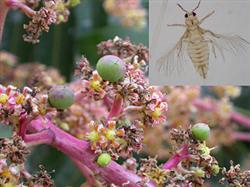
How to prevent and control diseases and pests during the mango flower spike stage? A detailed practical guide
After mango flower spikes are damaged by diseases and pests, the spikes become deformed, flower quality declines, buds drop, flowers dry up, and they cannot bloom or set fruit. The control methods for the diseases and pests harming mango flower spikes are as follows: 1. Anthracnose Anthracnose is the most serious disease harming flower spikes. It strikes as soon as the flower spikes emerge, first appearing as black...
-
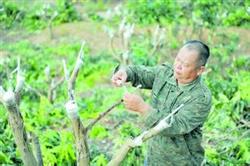
Detailed Explanation of Mango Top-Grafting and Re-Varietying Methods and Technical Points
I. Pre-Grafting Preparation Before re-varietying, strengthen fertilizer and water management for the trees to be re-varietyed. Prune the above-ground part appropriately, removing diseased branches, dead branches, shaded branches, overly dense branches, and crossing branches; for large perennial trees, saw off the main and side branches in spring or autumn at 1.2-1.5 m above the ground (saw in spring and graft in autumn, or saw in autumn and graft the following spring)...
-
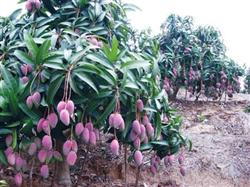
What are the key points to note for high-yield fertilization of mango
For high-yield mango cultivation, the first step is to select good varieties. After the grafted seedlings survive, timely management measures such as expanding the planting holes and deep plowing, as well as pest and disease control, should be carried out. Scientific and rational fertilization runs through the entire tree age cycle and is an important link related to high yield and good fruit quality. Points to note: 1. Young mango trees have small root systems and fibrous roots...
-
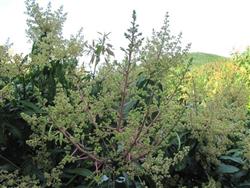
What are the key measures for flower and fruit retention in mango?
Mango often suffers from heavy flower and fruit drop due to unfavorable weather, pest and disease damage, or improper fertilizer and water management, resulting in losses. Therefore, action must be taken early, and all effective measures should be adopted to ensure normal flowering and fruiting of mango. According to the experience of fruit growers in Huazhou City, the following measures should be implemented: 1. Strengthen fertilizer and water management, and irrigate...
条件筛选