How to grow four-season mango? Detailed explanation of cultivation techniques
The flowering and fruit-setting period of mango is an extremely critical period in mango production management. The management measures during its flowering and fruit-setting period include the following aspects: 1. Trimming of flowering branches and shoots. About 2 months before flower bud differentiation, remove overly dense branches, shaded weak branches and diseased and pest-infested branches, leaving only 1-2 shoots per branch, which can increase the tree canopy's...
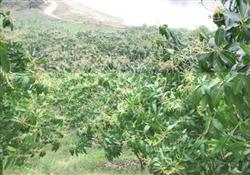 This variety was introduced from Thailand in 1990, and was developed through several years of selecting the best among the best from its superior individual plants propagated asexually as a population. After four consecutive years of multi-point planting and performance trials in Guangdong, Guangxi, Yunnan and other places from 1996 to 1999, the genetic characteristics and traits of its various excellent properties have shown stable performance, with the following features:
1. It can flower and bear fruit in all four seasons of the year
The first crop flowers from late February to late March, and the fruit ripens from late June to late July; the second crop flowers in late April, and the fruit ripens in late July; the third crop flowers from late July to early August, and the fruit ripens in late November; the fourth crop flowers in late September, and the fruit ripens in March-April of the following year.
2. The flowering period can be artificially regulated, with very strong off-season fruiting characteristics
Four-season mango does not require low temperatures for flower formation. Under natural conditions, as long as cultivation techniques are used (such as pruning, shaping, spraying or drenching with growth regulators), flowering and fruiting can be regulated at will to any season.
3. It is easy to grow and bears fruit early
Like other mango varieties, four-season mango has a fast growth rate and can still produce a yield even with extensive management. Grafted seedlings planted in spring can flower and bear fruit in autumn of the same year.
4. Strong resistance and wide adaptability
Four-season mango is resistant to stem-end rot and moderately resistant to anthracnose and angular leaf spot. As long as fruit bagging is carried out, more than 90% high-quality commercial fruit can be obtained. It has relatively strong drought tolerance and is more cold-tolerant than Zihua mango. During the flowering period at 35°C, it can still flower and set fruit, and it takes about 80 days from flower drop to fruit maturity. Wherever ordinary mango trees can survive, four-season mango is suitable for planting.
5. High yield and good high-yield performance
In the second year after planting, the average annual yield per tree reaches more than 3 kg, in the third year it can reach more than 15 kg, and in the fourth year it can reach more than 30 kg. It is currently one of the highest-yielding mango varieties in China.
6. Beautiful fruit appearance and excellent quality
The fruit of four-season mango has a beautiful appearance, with a single fruit weight of 200-300 grams. The flesh is thick, golden yellow, with few fibers, an edible rate of 76-83%, and soluble solids of 20-24%. The stone is thin and slender. More than 60% of fruits that mature after September show no kernel. Its quality is superior to the world-famous mango, the Luzon mango.
Because this variety has strong off-season fruiting characteristics, its production period is easy to regulate artificially, and it can obtain relatively good economic benefits, it is a variety worthy of vigorous promotion and planting.
Key points of cultivation techniques:
1. Choose loose, fertile soil for planting: Because four-season mango has a large fruit load, many fruiting cycles and a fast growth rate, it requires more fertilizer and water than other varieties. As long as the tree vigor is strong, high yield and high-quality fruit can be obtained.
2. Prevent sporadic flowering of young trees and mature trees, and promote vigorous vegetative growth. During seasons when flowering and fruit setting are not needed, spray gibberellin + 0.3%-0.5% urea solution once a month. (Note: the gibberellin dosage is 50-80 ppm in summer and autumn, and 100-150 ppm in winter and spring.)
3. Artificial flowering period regulation method: From April to October each year, about 50 days before the selected flowering period, when the new shoots are mature, spray once with 15% paclobutrazol (300 grams/100 jin of water) + 300 ppm ethephon (ethephon content 40%) + 0.5% potassium dihydrogen phosphate (preferably potassium nitrate). About 30 days after application, flowering begins.
4. Apply flower-promoting and flower-strengthening fertilizer well: When the flower spikes emerge 5 cm, spray 400 times cytokinin + Lüwang No. 2 (high nitrogen), and at the same time drench with 1-2 dan of decomposed liquid fertilizer and add 0.5% multi-element compound fertilizer.
5. Bagging: After fruit thinning is completed, spray fungicide pesticide, then bag the fruit. In summer, use green-blue plastic mesh bags; in winter, use non-woven bags, or use wax-treated paper bags throughout the year.
6. Pest and disease control: Four-season mango has relatively few insect pests, so disease prevention is the main focus.
(1) Pay attention to controlling mango fruit borer at the beginning of each flower spike emergence. When insect entry holes are found, spray 20% fenvalerate 2000-3000 times, 40% Lorsban 1000 times or 40% omethoate 800 times.
(2) Mango diseases are mainly anthracnose, bacterial angular leaf spot and downy mildew. In the annual fruit preservation work, the key to disease control is before flowering and after fruit setting. The pesticide application sequence is: first spray Sporgon or thiophanate-methyl or Miebingwei 1-2 times, then spray Bordeaux mixture or 77% Kocide or copper oxychloride.