-
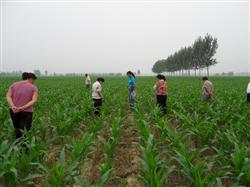
How to manage corn at the seedling stage when it encounters summer high temperatures?
How to manage corn at the seedling stage when planted in summer high temperatures? Please give an introduction. The corn seedling stage is the foundational period for ensuring a high yield. The management goals at this stage are: promote root development, grow more roots, drive roots deep, and cultivate strong seedlings, so as to meet the requirements of sufficient seedlings, uniform seedlings, and strong seedlings. The focus of management is to strengthen water and fertilizer management and disease...
-
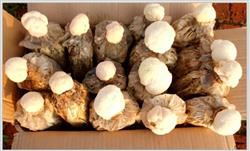
What are the high-yield cultivation methods for lion's mane mushroom?
What methods can achieve high yields when cultivating lion's mane mushroom? Please provide guidance. To achieve high yields in cultivating lion's mane mushroom, attention should be paid to the following aspects: First, select good-quality spawn. The mother culture used for production should have excellent traits, shown by fast growth, uniform and neat growth, and covering the slant within two weeks at the optimal temperature. When stored in a refrigerator, primordia often form, and microscopic examination shows a small number of chlamydospores. If there are too many spores, the yield tends to be low. If the mycelium turns yellow, is thin and weak, or sparse, it indicates that the spawn has degenerated. Uneven or irregular growth, or antagonistic phenomena, indicates that the spawn is not pure, and none of these should be used. All stock spawn should be dense and white, uniform from top to bottom, with no breaks in the mycelium, and vigorous mycelium on the surface. If the substrate shrinks, separates from the container wall, and the color darkens, it indicates that the spawn has aged. If stripes or spots of various colors appear around the wall, it indicates contamination in the spawn, and it cannot be used. Second, the age of the spawn must be appropriate. Generally, mother cultures and stock spawn stored in a refrigerator should not exceed 3 months, and at room temperature (20°C) should not exceed 20 days. If the spawn age is too long, its vigor declines, resulting not only in slow growth and low yield, but also poor stress resistance and high susceptibility to contamination. In addition, excellent varieties suitable for local production should be selected.
-
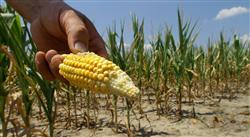
What are the factors affecting high corn yields?
Which factors affect high corn yields? Please provide an introduction and control methods. The reasons affecting high corn yields can refer to the following factors: 1. Careless seed selection. Because the current seed propagation system is still not perfect, substandard corn seeds still account for a relatively large proportion. Some farmers, greedy for cheap prices, buy from small vendors or irregular...
-
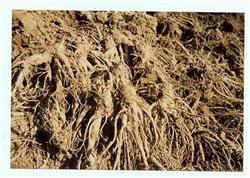
How to Grow Angelica sinensis for High Yield? Key Technical Points Explained
How to grow Angelica sinensis for high yield? Methods explained. Angelica sinensis, also known as Qin Gui, Minshan Gui, Xi Danggui, and Yun Gui, contains various volatile oils, with main components including n-butylenyl phthalide, ligustilide, carvacrol, angelica aromatic ketone, palmitic acid, sesquiterpene A, B, etc. The root is used as medicine, with effects of regulating menstruation and relieving pain, moistening dryness and lubricating the intestines, ...
-
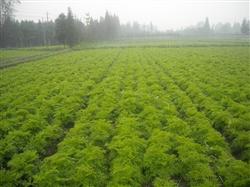
What are the key points of high-efficiency Angelica sinensis cultivation techniques?
How to cultivate Angelica sinensis efficiently? Please introduce the methods. For high-efficiency cultivation of Angelica sinensis, you can refer to the following cultivation methods: 1. Seed collection: In mid-to-late November, when wild Angelica sinensis seeds mature, go up the mountain to collect the seeds, dry them in the sun, and store them in cloth bags or woolen mesh bags in a ventilated, airy place for sowing in March of the following year. 2. Seedling raising: Raise...
-
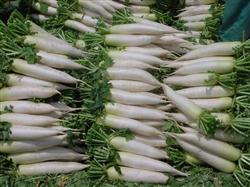
How to grow autumn radishes for high yields? Detailed growing methods
How can autumn radishes be grown for high yields? Please explain the methods. To grow autumn radishes, you can refer to the following methods: 1. Varieties and planting time. There are many radish varieties. By season, they can be divided into four types: autumn radish, spring radish, summer radish and four-season radish. Using idle yards to grow autumn radishes...
-
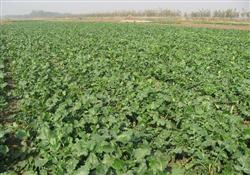
How to grow autumn radishes for high yields? Detailed planting techniques
How can autumn radishes be grown for high yields? Please advise. To achieve high yields when growing autumn radishes, you can refer to the following methods: 1. Choose good varieties. For green-skinned radishes, you can choose Lu Radish No. 1, Qingyuancui, and Qingpicui; for Xinlimei radishes, you can choose Lu Radish No. 6; for red-skinned radishes, you can choose Lu Radish No. 3, Dahongpao, and Xuecheng Changhong. 2....
-
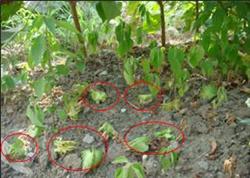
How to prevent and control boll shedding in cotton during high temperatures?
How to prevent and control boll shedding in cotton during high temperatures? Please introduce control methods. Boll shedding in cotton during high temperatures can be prevented and controlled by referring to the following methods: 1. Apply heavy boll fertilizer. Boll fertilizer is generally applied in 2-3 applications. The first and second applications are made at flowering and about 10 days after flowering. Quick-acting nitrogen fertilizer can be applied as a top dressing at 10-15 kg per mu, potassium...
-

Aloe polyphylla, also known as spiral aloe or queen aloe, has spirally arranged leaves with extremely high ornamental value.
Aloe polyphylla, commonly called queen aloe, generally refers to Aloe polyphylla. Aloe polyphylla (scientific name: Aloe polyphylla Pillans), also known as spiral aloe or queen aloe, is an aloe species endemic to the Drakensberg Mountains of Lesotho. Aloe polyphylla plants...
-
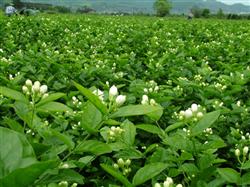
How do you grow jasmine to get a high yield?
How can jasmine cultivation achieve a high yield? Please advise. For high-yield jasmine cultivation, you can refer to the following methods: 1. Reasonable close planting. It is best to choose fertile sandy loam with convenient drainage and irrigation. Deeply plow and prepare the soil, and make turtle-back-shaped beds 1.3 m wide. The planting row spacing is 65 cm, the hole spacing is 33 cm, and the hole depth is 25 cm. Apply 3000 kg of farmyard manure and 25 kg of superphosphate per 667 sq m as base fertilizer at the bottom of the holes. Plant 3 plants per hole, with a plant spacing of 10 cm, in a triangular arrangement. Plant about 10,000 plants per 667 sq m. After planting, cover with soil and press firm, level the bed surface, and water thoroughly to settle the seedlings.
条件筛选