How to Grow Angelica sinensis for High Yield? Key Technical Points Explained
How to grow Angelica sinensis for high yield? Methods explained. Angelica sinensis, also known as Qin Gui, Minshan Gui, Xi Danggui, and Yun Gui, contains various volatile oils, with main components including n-butylenyl phthalide, ligustilide, carvacrol, angelica aromatic ketone, palmitic acid, sesquiterpene A, B, etc. The root is used as medicine, with effects of regulating menstruation and relieving pain, moistening dryness and lubricating the intestines, ...
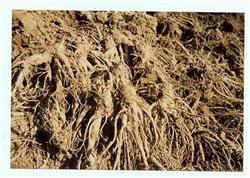
How to grow Angelica sinensis for high yield? Methods explained
Angelica sinensis, also known as Qin Gui, Minshan Gui, Xi Danggui, and Yun Gui, contains various volatile oils, with main components including n-butylenyl phthalide, ligustilide, carvacrol, angelica aromatic ketone, palmitic acid, sesquiterpene A, B, etc. The root is used as medicine, with effects of regulating menstruation and relieving pain, moistening dryness and lubricating the intestines, and breaking blood stasis to promote tissue regeneration. It is a commonly used gynecological tonic in traditional Chinese medicine. With the continuous development of China's traditional Chinese medicine industry and the "traditional Chinese medicine craze" sweeping the world, the demand for Chinese medicinal materials is increasing day by day. As a major commonly used Chinese medicinal material, Angelica sinensis has an extremely broad market prospect and is a new path for farmers in the high-altitude mountainous areas of Yunnan Province to escape poverty and become prosperous.
1. Characteristics and traits
(1) Botanical characteristics
Angelica sinensis belongs to the Apiaceae family and is a perennial herbaceous plant, with a plant height of 80-150 cm. The main root is fleshy, thick and sturdy, cylindrical in shape, with several to a dozen or more lateral roots. The root length is 30-35 cm, and the epidermis is yellow. The growth period is over 780 days.
(2) Growth habits
Angelica sinensis prefers a cool and humid climate and has special requirements for environmental conditions. It grows well in the mountainous areas of Yunnan at an altitude of 2600-2800 m with high air humidity in the natural environment. Angelica sinensis is a low-temperature long-day plant. During its growth and development, when transitioning from vegetative growth to reproductive growth, it needs to pass through a low-temperature stage of about 0 degrees C and a long-day stage of more than 12 hours. During the seedling stage, Angelica sinensis prefers shade and avoids direct sunlight, with an appropriate shading degree of 80%-90%, and the light transmittance gradually increases afterward. Angelica sinensis has strict temperature requirements. When the average temperature reaches 5-8 degrees C, the Angelica sinensis planting material (one-year-old roots used for propagation) begins to germinate; at 9-10 degrees C, seedlings begin to emerge; above 14 degrees C, the aboveground parts and roots grow rapidly; when the average temperature in August reaches 16-17 degrees C, growth slows down again; when the average temperature drops to 8-13 degrees C in September-October, the aboveground parts begin to senesce, nutrients transfer to the roots, and root growth enters its second peak; from late October to early November, the aboveground parts wither and the fleshy roots enter dormancy. Throughout its entire growth period, Angelica sinensis has relatively high water requirements. The seedling stage requires sufficient rainfall, and in the second year of growth it is relatively drought-tolerant, but sufficient water is also a major condition for high yield. Too little rain will increase the bolting rate, while too much rain can easily cause waterlogging, lower soil temperature, affect growth, and make root rot more likely to occur. Angelica sinensis is best planted in deep, fertile, loose, well-drained sandy loam soil rich in humus and in semi-shaded, semi-sunny virgin wasteland, but continuous cropping should be avoided.
2. Cultivation techniques
(1) Site selection and land preparation
① Selection and preparation of the seedling nursery. In Yunnan, it is best to choose a cool and humid hillside or flat land at an altitude of 2800-3200 m with loose, fertile sandy loam soil as the seedling nursery. After selecting the seedling nursery, plow it promptly. In April-May, shovel up the sod together with the soil and dry it in the sun, pile it into a round heap that is round outside and hollow inside, place firewood and grass inside, burn it into ash soil, and spread it evenly. Before sowing, apply 2500-3000 kg of farmyard manure per mu during land preparation, turn it into the soil as base fertilizer, level the land and make beds 1 m wide, then sow immediately.
② Selection and preparation of the transplanting site. The planting site for Angelica sinensis should preferably be mature land of black soil or chicken-manure soil. The previous crop is best wheat, rye, highland barley, or hemp. After harvesting the previous crop, plow and harrow once promptly to allow the soil to weather, then plow and harrow once more before planting, and apply 2500-3000 kg of farmyard manure per mu as base fertilizer. Level the plot and then transplant the seedlings.
(2) Cultivating strong seedlings
① Seed reservation. Select three-year-old Angelica sinensis plants as seed plants. In autumn, when the Angelica sinensis flowers droop and the seed surface turns pinkish-white, harvest in batches, tie into small bundles, hang in a ventilated place, and after drying, thresh and store for later use.
② Sowing. Determine the sowing time according to the altitude and climatic conditions of the production area. Sowing time: mid-to-late June in Yunnan. Sowing rate: 4-5 kg per mu. Sowing method: open horizontal furrows 3-5 cm deep in the prepared seedling nursery at a row spacing of 20 cm, and keep the furrow bottom level. Before sowing, soak the seeds in warm boiled water at 30 degrees C for 24 hours, remove and air-dry them, mix with plant ash 10 times the volume of the seeds, spread evenly in the sowing furrows, cover with about 1 cm of fine soil, and then cover with 2-3 cm of grass.
③ Seedling stage management. Keep the soil moist after sowing Angelica sinensis to facilitate emergence. Seedlings generally emerge in 15-20 days. When the seedlings are about 1 cm tall, gradually remove the covering grass. When the seedlings are about 3 cm tall and have 3 true leaves, thin them and pull out weeds so that the seedling spacing is about 1 cm. In the middle stage of seedling growth, human feces and urine can be appropriately applied to promote seedling growth.
④ Storage. By late October, dig out the planting material, tie it into small bundles weighing about 200 g, cut off the leaves, and air-dry to remove part of the moisture. When the moisture content reaches 60%-65%, it can be stored. Heap storage: in a smokeless room, first spread a layer of fresh dry soil 5-7 cm thick on the ground, place a layer of small bundles of Angelica sinensis seedlings on top with the seedling heads facing outward, fill the gaps with soil, compact, then spread another layer of soil and another layer of seedlings, arranging 5-6 layers in sequence. This method is suitable for storing young Angelica sinensis seedlings and not for large seedlings; the seedlings have strong drought resistance. Pit storage: choose a cool, dry place and dig a rectangular pit according to the amount of seedlings. Spread a layer of about 5 cm of fresh soil at the bottom of the pit, place a layer of small bundles of Angelica sinensis root seedlings on the soil, fill and compact with soil, then spread another layer of soil and another layer of seedlings, arranging 6-7 layers in sequence, then pile the topmost layer about 3 t above ground level to prevent water accumulation, and dig drainage ditches around the pit. Seedlings stored by this method have relatively poor cold resistance. Sealed storage: use wooden barrels, plastic barrels, iron barrels, or other containers, adopt the method of one layer of soil and one layer of seedlings, fill and compact without leaving gaps, seal after burying, and place in a cool, dry, low-temperature place, keeping the temperature at 1-5 degrees C to promote the Angelica sinensis seedlings to complete the vernalization stage.
(3) Transplanting
Transplanting in early to mid-April each year is more suitable. Too early makes the plants susceptible to frost damage, while too late means the seedlings have already germinated, which reduces the survival rate. When transplanting, dig holes in a triangular crossed pattern at a plant spacing of 25 x 30 cm, with a hole depth of about 20 cm, and plant 3 seedlings per hole arranged in a triangular pattern. Cover with soil and press firmly while planting. After the holes are filled with soil, rake level to avoid water accumulation.
Click to get more Angelica sinensis cultivation techniques
Click to get more medicinal herb cultivation techniques