What are the key points of high-efficiency Angelica sinensis cultivation techniques?
How to cultivate Angelica sinensis efficiently? Please introduce the methods. For high-efficiency cultivation of Angelica sinensis, you can refer to the following cultivation methods: 1. Seed collection: In mid-to-late November, when wild Angelica sinensis seeds mature, go up the mountain to collect the seeds, dry them in the sun, and store them in cloth bags or woolen mesh bags in a ventilated, airy place for sowing in March of the following year. 2. Seedling raising: Raise...
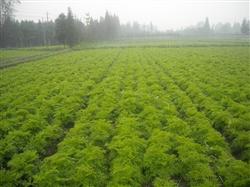
How to cultivate Angelica sinensis efficiently? Please introduce the methods
For high-efficiency cultivation of Angelica sinensis, you can refer to the following cultivation methods:
1. Seed collection: In mid-to-late November, when wild Angelica sinensis seeds mature, go up the mountain to collect the seeds, dry them in the sun, and store them in cloth bags or woolen mesh bags in a ventilated, airy place for sowing in March of the following year.
2. Seedling raising: Choose a sunny, wind-sheltered hillside plot for the seedling bed. From January to February, dig the soil, expose the clods to the sun, burn weeds and shrubs, and turn them into the soil to enrich the soil, improve aeration, and aid drainage. Before sowing in March, break up the soil and rake the clods level, dig furrows and make beds 1-1.2 m wide with furrows 0.3 m wide. Before sowing, pretreat the seeds in 28-30°C warm water for 24 hours, take them out, dry them in the sun, mix them with fine sand, and broadcast them on the seedling bed. Then cover the bed with 1-2 cm of fine sandy soil, and cover the fine sandy soil with a layer of dry pine needles to prevent mud and sand from splashing up when watering. After sowing, fix a shade net with thin wire 1-1.5 m above the seedling bed to reduce direct sunlight exposure. About 15 days after sowing, Angelica sinensis seeds will germinate and emerge. At this time, gradually remove the pine needles from the bed, pull out weeds, and thin out weak seedlings to cultivate strong seedlings, with a plant spacing of about 1-1.5 cm.
3. Transplanting: In June-July, when the rainy season begins and Angelica sinensis seedlings are 20-30 cm tall, choose fallow land or second-year wasteland with deep soil, cut down weeds and shrubs, plow 25 cm deep, apply 3000 kg of organic barnyard manure per mu as base fertilizer, and dig furrows and make beds 1.2-1.5 m wide with furrows 0.3 m wide. Transplant on cloudy and rainy days, with a spacing of 20 x 30 cm. Dig holes for transplanting, with 1-2 seedlings per hole.
4. Field management: After the transplanted seedlings survive, promptly remove weeds in the field, loosen the roots, and bank up soil. When new seedlings grow to 10-15 cm, promptly apply nitrogen, phosphorus, and potassium compound fertilizer as a top dressing, at 50-80 kg per mu. Normally, strengthen the prevention and control of pests and diseases. To grow Chinese medicinal materials according to national GAP standards, generally do not spray chemical pesticides, so as to ensure the quality and medicinal efficacy of Angelica sinensis.
5. Harvesting: In December, when the leaves of Angelica sinensis plants wither, they can be dug up, processed, and sold on the market. Generally, one-year-old Angelica sinensis roots are small, pale in color, and low in yield. If not dug up and allowed to overwinter naturally in the field, then continue growing for another year, the yield can be significantly increased, generally reaching 250-300 kg of dried Angelica sinensis per mu.
Click to get more Angelica sinensis cultivation techniques
Click to get more medicinal herb cultivation techniques