How to grow autumn radishes for high yields? Detailed planting techniques
How can autumn radishes be grown for high yields? Please advise. To achieve high yields when growing autumn radishes, you can refer to the following methods: 1. Choose good varieties. For green-skinned radishes, you can choose Lu Radish No. 1, Qingyuancui, and Qingpicui; for Xinlimei radishes, you can choose Lu Radish No. 6; for red-skinned radishes, you can choose Lu Radish No. 3, Dahongpao, and Xuecheng Changhong. 2....
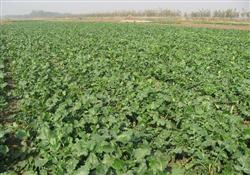
How can autumn radishes be grown for high yields? Please advise
To achieve high yields when growing autumn radishes, you can refer to the following methods:
I. Choose good varieties
For green-skinned radishes, you can choose Lu Radish No. 1, Qingyuancui, and Qingpicui; for Xinlimei radishes, you can choose Lu Radish No. 6; for red-skinned radishes, you can choose Lu Radish No. 3, Dahongpao, and Xuecheng Changhong.
II. Sow at the right time
If autumn radishes are sown too early, pests and diseases will be severe; if sown too late, yields will decline. Generally, sow around the Beginning of Autumn.
III. Fertilize and form ridges
Choose a plot with convenient drainage and irrigation and loose, fertile soil. Apply 3000-5000 kg of decomposed organic fertilizer and 200 kg of plant ash per mu. After fertilizing, plow the soil deeply and harrow it finely, make ridges at 60 cm spacing, sow two rows per ridge with a row spacing of 15-20 cm, and cover with soil after sowing.
IV. Field management
1. Thin and finalize seedlings in time. When the seedlings grow until the cotyledons are fully expanded, carry out the first thinning; when they grow to 3 true leaves, carry out the second thinning; when they grow to 4 true leaves, carry out the final thinning, after which the seedlings can be finalized. The planting density is 800 plants per mu; for large varieties, the planting density can be appropriately thinner.
2. Watering. During the peak leaf growth period, generally do not water unless the soil is dry; water only when the soil turns white. After entering the root-setting stage, sufficient water should be supplied, and watering should stop one week before harvest. In rainy seasons, attention should be paid to timely drainage.
3. Fertilization. After finalizing the seedlings, carry out the first topdressing, applying 10-15 kg of ammonium sulfate per mu; during the rosette stage, carry out the second topdressing, applying 10-15 kg of ternary compound fertilizer per mu. During the peak fleshy root growth period, ternary compound fertilizer should be applied as topdressing to prevent premature leaf senescence and promote fleshy root growth. In addition, during the fleshy root enlargement period, a 0.3% borax solution should also be sprayed on the leaves to promote its growth.
V. Pest and disease control
From the seedling stage onward, spray with 40% dimethoate 800-1000 times solution, 20% methomyl 1500-2000 times solution, or 2.5% yashilike emulsifiable concentrate 3000 times solution to control aphids, striped flea beetles, cabbage caterpillars, and so on. In the later stage, spray with 75% chlorothalonil 600 times solution or 65% zineb 500 times solution to control downy mildew; spray with 50% zineb 800 times solution, 47% kasugamycin-copper 500 times solution, or 50% copper hydroxide 500 times solution to control soft rot.
Click to get more radish growing techniques
Click to get more vegetable growing techniques