Aloe polyphylla, also known as spiral aloe or queen aloe, has spirally arranged leaves with extremely high ornamental value.
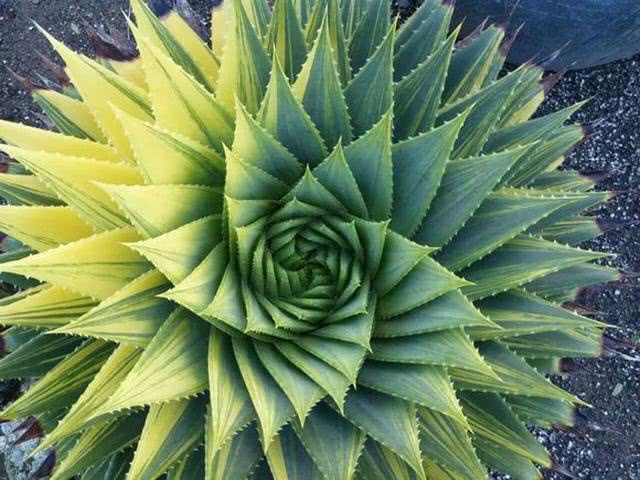
Aloe polyphylla
Queen aloe generally refers to Aloe polyphylla.
Aloe polyphylla (scientific name: Aloe polyphylla Pillans), also known as spiral aloe or queen aloe, is an aloe species endemic to the Drakensberg Mountains of Lesotho.
Aloe polyphylla plants are mostly solitary. The leaves are alternate, nearly triangular, and arranged in a spiral. The leaves are green to yellow-green. The flowers are red, and the flower stalks are branched.
Morphological characteristics
A stemless succulent plant, with each plant growing independently and singly; the plant reaches 90 cm in diameter and 30 cm in height.
The leaves are arranged in a rosette spiral pattern, emerald green to gray-green, fleshy and soft, juicy and thick.
The leaf base is broad, the leaf tip is sharp and black, and the leaf margins have irregular serrations.
When the plant begins to form a spiral, its diameter must reach at least 20 cm; when the leaves first form a spiral, there are 5 rows in total, with about 15-30 leaves per row, and once mature, each plant has 130-150 leaves; the spiral is sometimes clockwise and sometimes counterclockwise.
The flower stem is 60 cm tall, and the flowers are red to flesh-pink, sometimes yellow; the capitulum is branched, with one flower at the end of each branch, and the flowers are compact; the flowering period is from spring to early summer.
Growing environment
This species grows in grassland areas at an altitude of 2000-2500 m, and sometimes occurs at higher elevations. Because the climate in high mountain areas is cold, Aloe polyphylla usually grows on the east-facing side of slopes, so that in winter the plants can receive as much sunlight as possible. This species can withstand winter snowfall.
To maintain good drainage, Aloe polyphylla generally roots in cracks of loose basalt on steep slopes in nature. In its native Lesotho, Aloe polyphylla populations are often located in moist mountain areas within fog belts and cloud belts. Although it needs well-drained soil, it also needs a humid environment. In the high mountain areas of Lesotho within the fog belt and cloud belt, continuous water flow supplies this species in summer. In addition, rainfall in high-altitude areas is relatively high, and the environment is humid and cool, which is very suitable for the survival of Aloe polyphylla.
Place of origin and distribution
Aloe polyphylla is only distributed in moist highland grasslands at an altitude of 2,000 m in South Africa, in places covered by clouds and mist year-round.
Conservation status
Illegal harvesting, changes in water conditions and overgrazing are the reasons for the decline in the population of this species.
Although Aloe polyphylla has been described as an endangered species, it has not been listed on the IUCN Red List. However, they are also protected under Appendix I of the Convention on International Trade in Endangered Species of Wild Fauna and Flora.
Cultivation techniques
Aloe polyphylla cannot reproduce asexually and can only be grown from seed. After the plant flowers, it can self-pollinate, but it cannot be determined whether the resulting seeds are viable.
Cold-moist stratification treatment can break embryo dormancy. Hydrogen peroxide, alcohol, hydrochloric acid and sodium hydroxide can increase the permeability of the inner seed coat, but do not increase the germination rate. Soaking in gibberellic acid will not increase the germination rate.
Pest and disease control
Common aloe diseases mainly include anthracnose, brown spot, leaf blight, southern blight and bacterial diseases. Before diseases occur, or after removing the diseased parts of plants that have already become diseased, apply 0.5-0.8 lime equivalent Bordeaux mixture (that is, add 0.5-0.8 kg each of copper sulfate and lime per 100 kg of water) to the aloe leaf surface, which can effectively prevent and inhibit pathogen invasion and spread. Disease treatment. After diseases occur, systemic therapeutic agents such as thiophanate-methyl and ridomil, as well as antibiotics such as streptomycin sulfate, agricultural streptomycin, kasugamycin and validamycin, can be applied directly to kill pathogenic bacteria inside the aloe and control the spread of the disease.
Aloe polyphylla is susceptible to Fusarium crown rot, and this pathogen is mainly caused when the roots do not receive sufficient oxygen during cultivation. Therefore, in cultivation this species is suitable for using large-particle coarse stone as the upper layer of growing medium, combined with carbendazim to control the disease.
Main value
Aloe polyphylla has extremely high ornamental value, and seedlings can usually only be obtained through sowing and artificial intervention to damage the growing point. Therefore, the price of Aloe polyphylla seeds is also among the most expensive of almost all plants, because it does not bloom often and even when it blooms, it is difficult to set seed without suitable opportunities and pollination, so the price of a single seed has even been recorded at more than 10 euros.