-
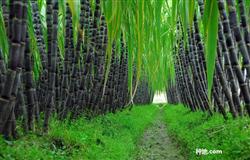
How should black sugarcane be fertilized to achieve high yield?
How should black sugarcane be fertilized to achieve high yield? Please advise. Black-skinned chewing cane has entered the late growth stage and has basically stopped growing, and many growers think that further fertilization is useless. Actually, this is not the case. During the late growth stage, black-skinned chewing cane is in the most important period for accumulating sugar. According to surveys, applying tail-strengthening fertilizer in time during the late growth stage of black-skinned chewing cane, keeping the leaves dark green, and preventing the cane tail from becoming smaller can increase yield by about 15%. Therefore, the tail-strengthening fertilizer for black-skinned chewing cane should be applied in time. The specific application method is as follows:
-
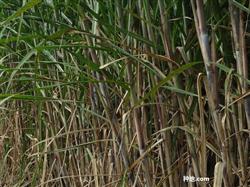
How to Fertilize Sugarcane for High Yield? A Detailed Guide to the Methods
How can sugarcane be fertilized for high yield? Please explain. Sugarcane has a long growth period and high yield, generally producing 5000-8000 kg of cane stalks per mu. It absorbs a large amount of nutrients throughout its growth period, making it one of the crops with relatively high fertilizer requirements. According to research, for every 1000 kg of sugarcane grown, it needs to absorb 1.5-2 kg of nitrogen, 1-1... from the soil.
-
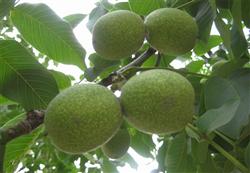
How can thin-shelled walnuts be cultivated to achieve high yields?
How can thin-shelled walnuts be cultivated for high yields? Please explain and guide. Thin-shelled walnut cultivation can refer to the following planting methods: 1. Apply base fertilizer in autumn. After the walnuts are harvested that year (around September 20) and before leaf fall, apply base fertilizer. For trees in the initial fruiting stage, dig a strip ditch or ring ditch at the vertical projection of the canopy, with a ditch depth of 60cm and width of 50cm. For large trees in full fruiting stage...
-
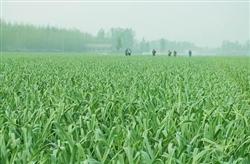
How to Grow Garlic Effectively? High-Yield Cultivation Techniques Shared
How can garlic be grown effectively? Please let me explain. Taking the most commonly used autumn-sowing cultivation method in southern China as an example, here is a brief description of each cultivation technique. 4.1 Soil preparation and basal fertilizer application. The soil preparation and fertilization work before sowing is basically similar to that for onions. Avoid continuous cropping; the soil should preferably be fertile, well-drained sandy loam...
-
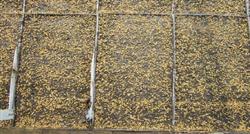
Detailed Explanation of Key Technical Points for Seedling Cultivation in High-Quality Rice Production
During the seedling cultivation period, in response to low-temperature cold wave weather, the Provincial Agricultural Technology General Station recommends the following measures: First, seize the time to sow and reseed. In areas where large-scale sowing has not yet been carried out, it is essential to seize the current favorable opportunity of rising temperatures and sow promptly; where seed rot, seedling rot, or seedling death has occurred, reseeding should be done promptly according to the degree of damage. Especially for machine transplanting...
-
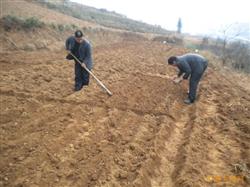
Controlling Pests and Diseases at Peanut Sowing Time Is Highly Effective
Many types of pests and diseases harm peanuts, they occur over a wide range, and the damage is severe. Because the occurrence, distribution, epidemic patterns, damage periods, and living habits of the various pests and diseases all differ, it is quite difficult to time control measures properly in production. Practice has shown that controlling pests and diseases at sowing time can save part of the major losses peanuts suffer from pests and diseases...
-
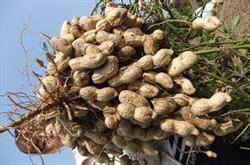
What are the key techniques for high-yield peanut cultivation?
The peanut planting area in China is about 70 million mu, accounting for 1/3 of the national oilseed area, with total output at 48% of the national oilseed total, ranking first among oilseed crops. With the continuous innovation of cultivation techniques and the breeding and promotion of early-maturing varieties, peanut farming systems have also shifted from one crop per year to...
-
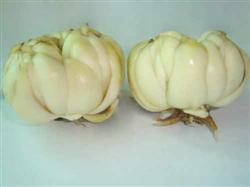
Detailed Guide to High-Yield Cultivation Techniques for Edible Lilies
Lilies are a cross-year crop. After planting in the autumn of the first year, they do not break through the soil and emerge until the following spring, spending nearly half a year developing and growing underground in the meantime. To achieve high yields, the following technical steps should be grasped in cultivation: 1. Select suitable improved varieties. Lilies are divided into two major categories, edible and medicinal, with more than 10 varieties in total. Edible...
-
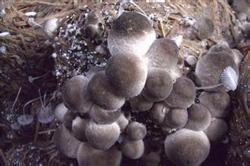
How to cultivate straw mushrooms for high yields? Master these five key elements
1. Reasonably arrange the production season. Straw mushrooms are high-temperature edible fungi. To ensure that straw mushrooms can normally develop mycelium and produce mushrooms after spawning, the cultivation season should be chosen when the daily average temperature is above 25°C. This is beneficial to the growth of mycelium and the development of fruiting bodies. With a plastic greenhouse, spawning can be advanced to mid-May; with a greenhouse mushroom house, they can be cultivated all year round.
-
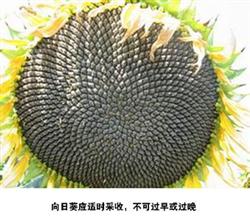
How should sunflowers be planted to achieve high yields?
A reader called in: My hometown is now planting sunflowers on a large scale for rural tourism, but the locals have no experience growing sunflowers. How can we grow beautiful, high-yielding sunflowers? Answer: To get high returns from sunflowers, you need to start from several aspects: a. Site selection and land preparation. Sunflowers are not very demanding about the previous crop. Apart from deep-rooted crops such as sugar beet...
条件筛选