What are the key techniques for high-yield peanut cultivation?
The peanut planting area in China is about 70 million mu, accounting for 1/3 of the national oilseed area, with total output at 48% of the national oilseed total, ranking first among oilseed crops. With the continuous innovation of cultivation techniques and the breeding and promotion of early-maturing varieties, peanut farming systems have also shifted from one crop per year to...
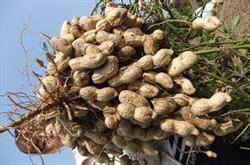
The peanut planting area in China is about 70 million mu, accounting for 1/3 of the national oilseed area, with total output at 48% of the national oilseed total, ranking first among oilseed crops.
Peanut farming methods
With the continuous innovation of cultivation techniques and the breeding and promotion of early-maturing varieties, peanut farming systems have also developed from one crop per year to multiple crops per year, and from sole cropping to intercropping and relay intercropping. At the same time, rotation methods in the main production areas are also constantly changing. Due to differences in terrain, rainfall and temperature, peanut planting methods fall into three types: flat planting with furrow sowing on level ground, ridge planting after deep loosening and soil preparation, and bed planting that facilitates drainage. Ridge planting is further divided into single-row ridge planting and double-row ridge planting.
Technical steps in peanut cultivation
Soil requirements for peanuts: First, no continuous cropping, otherwise it will cause pests and diseases and autotoxicity in the peanut root system. Second, the soil pH value should be between 6-7, the soil should be loose, well aerated, with sand on top and loam below, and virtual on top and solid below. Third, it needs to contain organic matter and sufficient calcium.
Once the soil conditions are met, the seeds should be sun-dried before sowing, shelled and graded by seed size. To reduce seed rot and disease, seed treatment with fungicide and micro-fertilizer should be used to improve the germination rate and emergence rate of the seeds.
Due to geographical differences, the most suitable sowing time in northern regions is from late April to early May, while in the middle and lower reaches of the Yangtze River the sowing time is around Qingming and Guyu. Summer relay-intercropped peanuts can be sown 25-30 days before the previous crop is harvested, while plastic film mulching cultivation can be 10-15 days earlier than open-field cultivation.
In terms of sowing methods, the main ones at present are manual dibbling, mechanical sowing, and sowing on stubble without tillage. The requirements for mechanical sowing are that the sowing depth should be about 5 cm. For plots with lower ground temperature or high soil moisture, sowing can be appropriately shallower, but the shallowest must not be less than 3 cm; otherwise it can be appropriately deeper, but not more than 6 cm. The main problems with mechanical sowing are unstable operation quality, missing holes, missing seeds, a relatively large proportion of three-seed holes, inconsistent sowing depth, and uneven row spacing. Therefore, to solve the defects of mechanical sowing, first improve the quality of land preparation, second control the amount of machine fertilization, select good seeds, and control ridge spacing well.
The nutrient requirement characteristics of peanuts are strong tolerance to poor soil; using a small amount of fertilizer can obtain considerable yield. The absorption of major nutrient elements is nitrogen > potassium > phosphorus > calcium. Peanuts absorb less fertilizer at the seedling stage, gradually increase at the flowering stage, absorb the most at the pod-setting stage, and then decrease again at the maturity stage.
The specific principles of peanut fertilization are: first, organic fertilizer as the main component and chemical fertilizer as a supplement; second, base fertilizer as the main component and topdressing as a supplement; third, topdressing mainly for seedling growth, with flower fertilizer and pod-strengthening fertilizer as supplements; fourth, combined use of nitrogen, phosphorus and potassium.
The main field management technical measures for peanuts are: First, check seedlings and fill gaps. For spring-sown peanuts, check seedlings and fill gaps 10-15 days after sowing, and for summer-sown peanuts, 7-8 days after sowing. Second, clear the seedlings and promote root development. This means that after the peanuts have emerged uniformly, during the first intertillage, scrape away the surface soil around the seedlings so that the two cotyledons and the lateral branches in the cotyledon axils are exposed above the soil, which helps the first pair of lateral branches and the seedlings grow robustly. Third, intertillage and weed control. Intertillage and weed control require "the first pass shallow, the second pass deep, and the third pass without injuring roots." Fourth, prevent insect pests.
Using plastic film mulching during peanut planting can increase yield by more than 35%, and high yields can reach 70%-90%. Its advantages include raising ground temperature, preserving and improving soil moisture, enhancing drought resistance and waterlogging prevention, keeping the soil loose, and reducing fertilizer loss. Conventional polyethylene plastic film is often selected, with a width of 90 cm and a thickness of no less than 0.004 mm.
Key points of relay intercropping cultivation of peanuts
Relay intercropping peanuts in wheat rows is a cultivation method aimed at increasing the multiple cropping index and making full use of land and light resources. The technical key points of relay intercropping in wheat rows are: First, reserve peanut rows on the basis of wheat sown at the specified spacing. For double-row relay intercropping, beds can be opened at 0.8 m, with two rows of wheat sown per bed, and 0.5 m reserved for sowing two rows of peanuts later. Second, select good varieties and sow early at the right time. For wheat, it is advisable to choose high-yield and high-quality varieties that are early-maturing, short-stemmed and not prone to lodging; for peanuts, choose high-yield varieties that mature earlier, have a compact plant type and strong shade tolerance. Generally, sowing 25-30 days before wheat harvest is appropriate, and the symbiotic period between peanut seedlings and wheat should be controlled at 15-20 days. Third, rationally increase fertilizer application. Because the early growth of relay-intercropped peanuts is affected by a certain degree of shading from wheat, on the premise of applying sufficient base fertilizer when sowing wheat, early and skillful topdressing according to peanut seedling conditions is the key to obtaining high peanut yield. After the peanuts emerge uniformly, 7-8 kg of urea per mu can be used to promote seedling growth, and at the full flowering stage, 0.2% potassium dihydrogen phosphate can be used as foliar topdressing and sprayed 1-2 times.